| Gyeongju Nam-san Yongjang-saji 南山 茸長寺址 Mushroom Everlasting Temple-Site a key site high up on the ultra-sacred South Mountain Part of the Gyeongju National Park, and the "Gyeongju Historic Areas" UNESCO World Cultural Heritage Site |
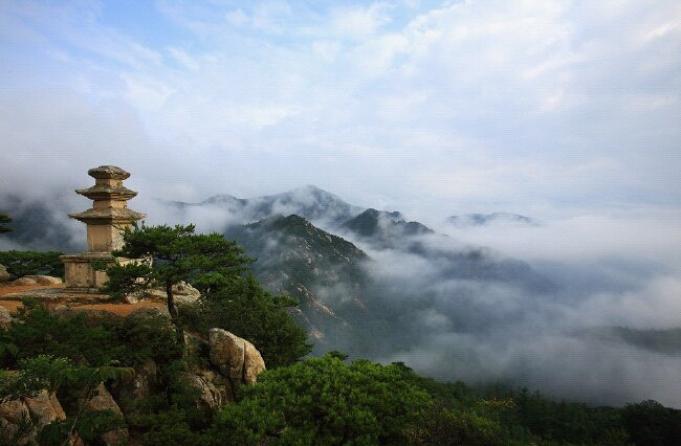
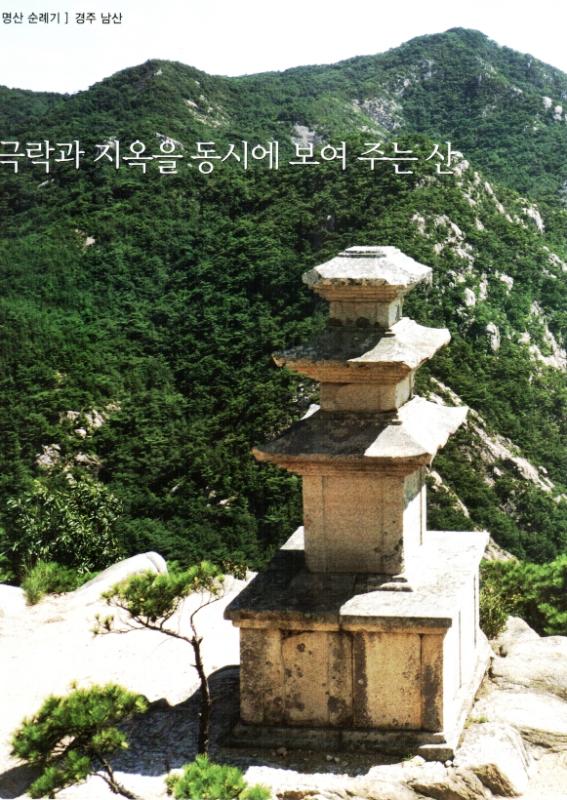
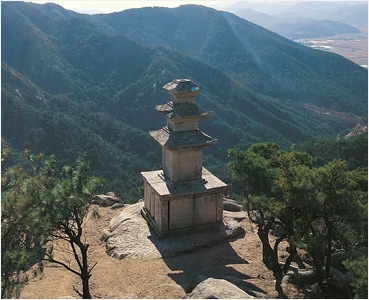
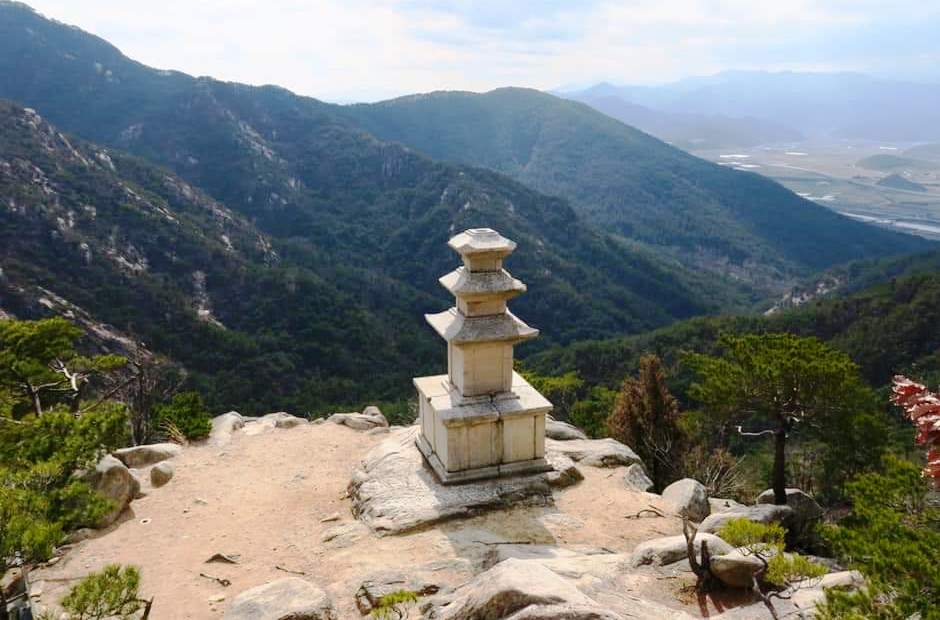
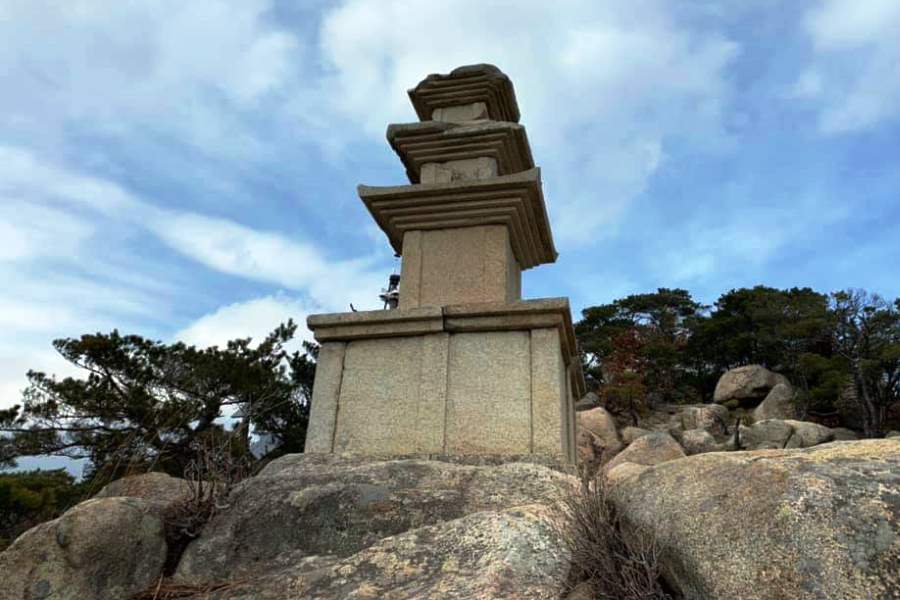
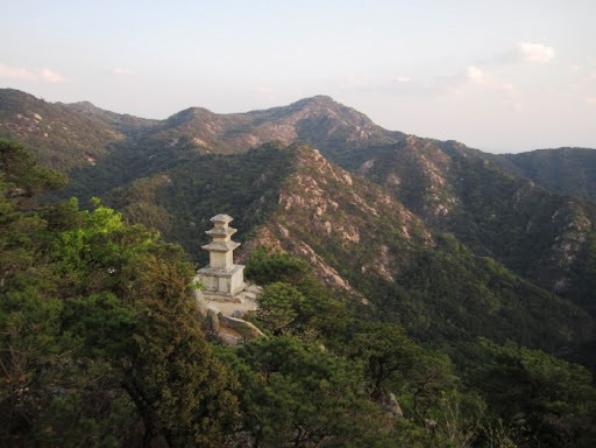
| Yongjang-saji-tap Pagoda, on top of the northern ridge, is Korean Treasure #168. It is built to seem like the entire mountain-peak is its foundation! It is considered excellent among the surviving Shilla 3-story pagodas. |
| Gyeongju Namsan Index Page Bori-sa Buddha Statue Chilbul-am Hermitage Samneung-gol, Three Tombs Valley Sangseon-am Cliff-Buddha Sangseo-jang Shrine for Goun Choi Chi-won |
-saji 寺址 means "temple-site", the ruins of an
ancient Buddhist temple; this place was a
flourishing temple with just a few resident
monks by the late 700s, and it is not known
when it ceased to function and fell into ruins.
ancient Buddhist temple; this place was a
flourishing temple with just a few resident
monks by the late 700s, and it is not known
when it ceased to function and fell into ruins.
The name of this 1200+ year-old temple-site is yong-jang, which most Koreans would rather
automatically take to mean "Dragon-Guardian-General", a Shamanic-sounding name that is
fairly common, and is regarded as sacredly powerful.
But that is not the name, to my surprise; it is quite different Chinese characters. This yong
茸 means the burgeoning fine-haired antler of a young deer, or a fine-haired mushroom, both
regarded as sacred herbal medicines granting vitality. The jang 長 that follows can mean
everlasting, permanent, distant, constantly, perfectly straight, upright, good, strength, merit
or advantage. So, this name is clearly an auspicious one, but very difficult to translate clearly!
The best that I can make of it, "Mushroom Everlasting", may designate the famous bullocho,
the "Immortality Mushroom" always found in artworks of high craggy places highly suitable for
attainment of enlightenment like this site; common in Sanshin icons.
automatically take to mean "Dragon-Guardian-General", a Shamanic-sounding name that is
fairly common, and is regarded as sacredly powerful.
But that is not the name, to my surprise; it is quite different Chinese characters. This yong
茸 means the burgeoning fine-haired antler of a young deer, or a fine-haired mushroom, both
regarded as sacred herbal medicines granting vitality. The jang 長 that follows can mean
everlasting, permanent, distant, constantly, perfectly straight, upright, good, strength, merit
or advantage. So, this name is clearly an auspicious one, but very difficult to translate clearly!
The best that I can make of it, "Mushroom Everlasting", may designate the famous bullocho,
the "Immortality Mushroom" always found in artworks of high craggy places highly suitable for
attainment of enlightenment like this site; common in Sanshin icons.
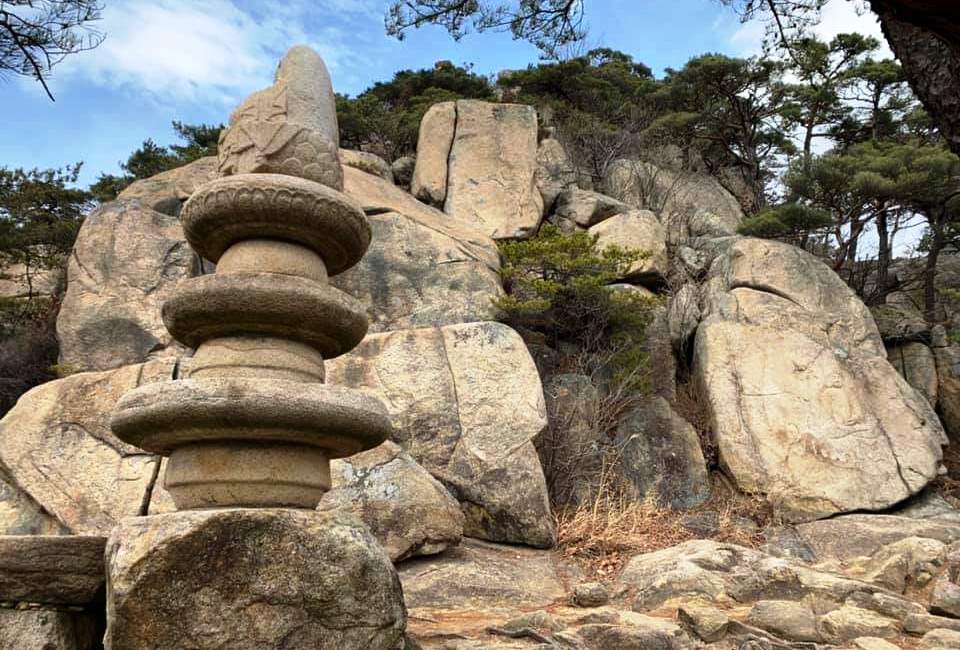
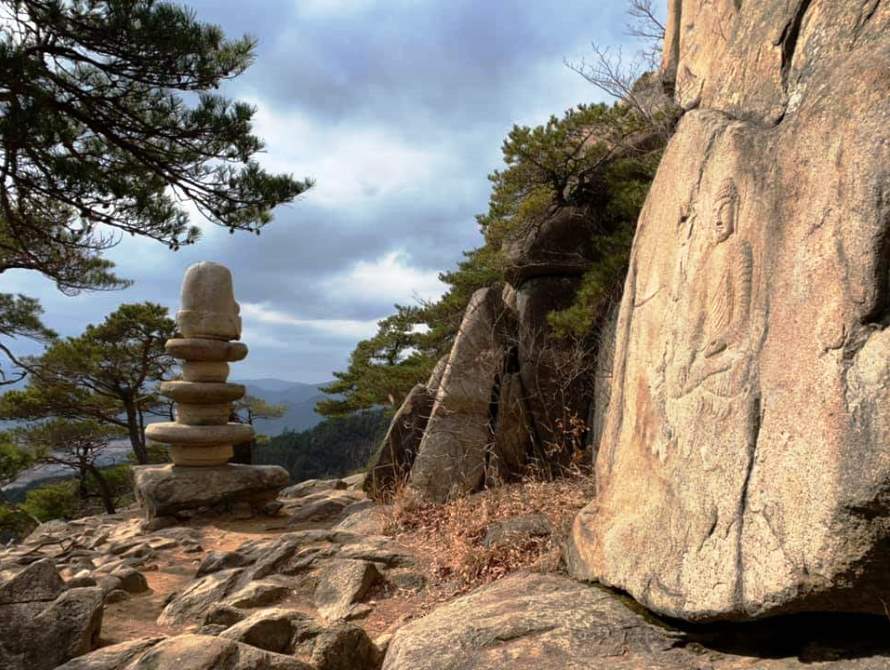
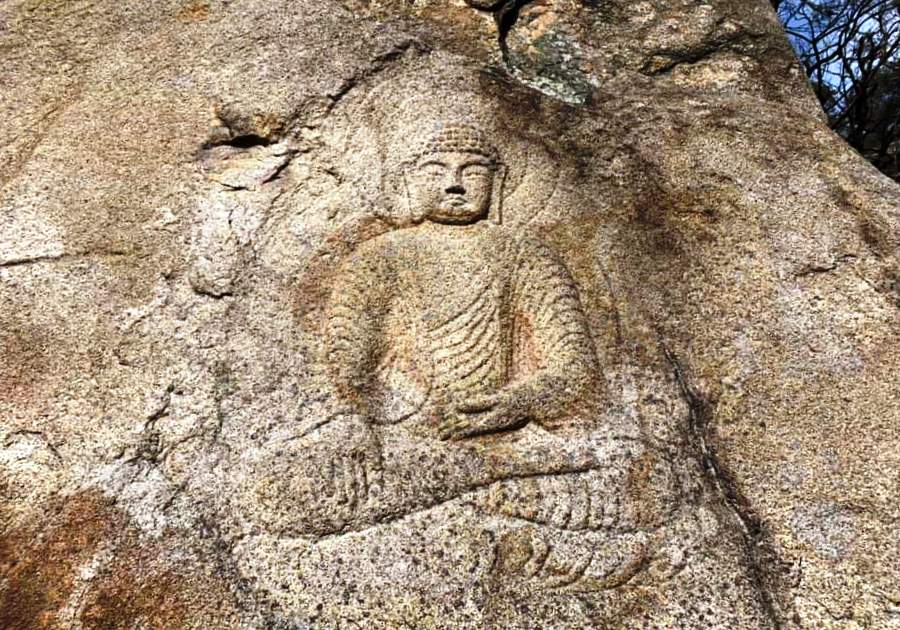
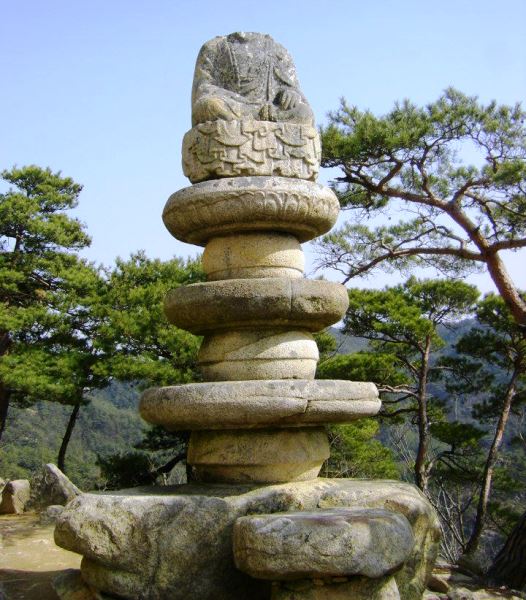
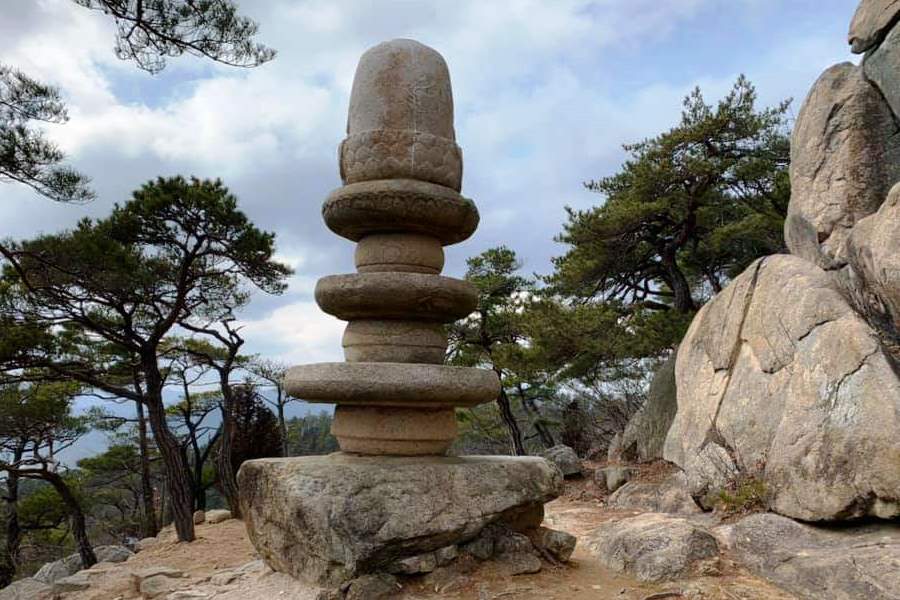
The headless buddha statue with a unique 3-story round high "pagoda" pedestal, on a square boulder
base, is listed as Korean Treasure #187. The chubby-faced rock-relief-carved Sakyamuni Buddha
image with a simple double-line halo (far-right background & below) is Korean Treasure #913.
base, is listed as Korean Treasure #187. The chubby-faced rock-relief-carved Sakyamuni Buddha
image with a simple double-line halo (far-right background & below) is Korean Treasure #913.
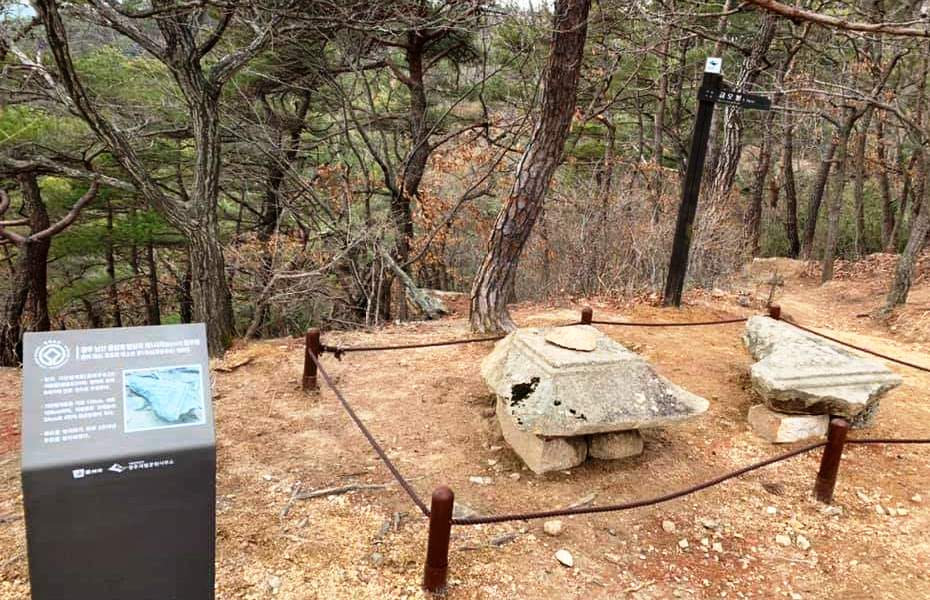
| partial pagoda remains from a nearby ruined site |
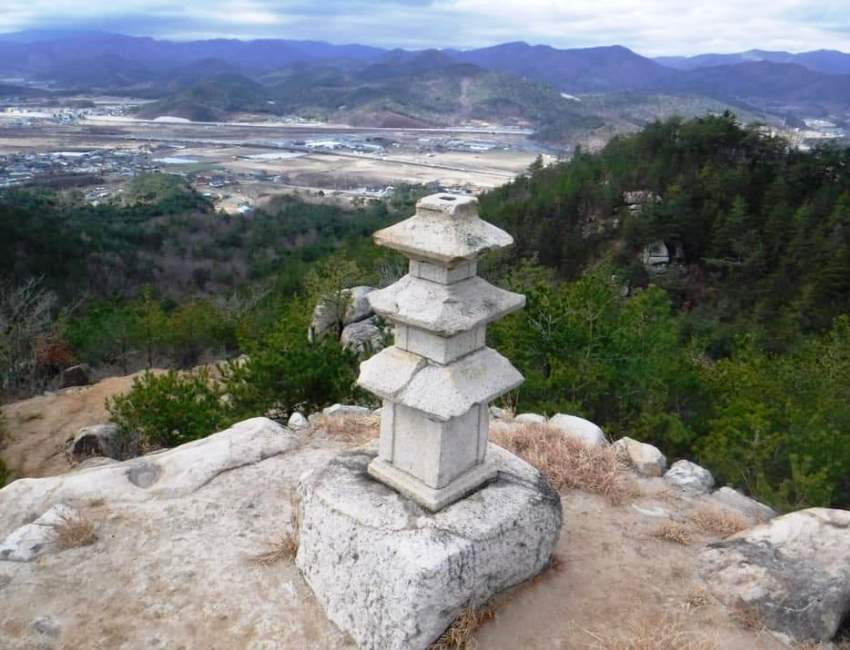
| Another late-Shilla 3-story pagoda; it was excavated from a temple-site in Bipa-gok, the valley between Yongjang-gok Valley and the famous Samneung Valley to the north, all on the western slopes of Nam-san. The CHA experts reconstructed it here in 2001, for better display and preservation. |
We don't know very much about this high-remote ridgetop hermitage; it never could have been a
very big temple housing more than a handful of monks. There is now no water-supply spring at it,
as hermitages always have, and no indication of a former one. Whatever buildings were here are
long-gone, and no typical foundation-stones remain. We don't know who founded it or when -- just
that three magnificent large artworks are viewed here today, beloved by intrepid hikers.
A legend in the Samguk Yusa briefly mentions that during the reign of King Gyeongdeok (742-65,
the final high peak of Korea's First Golden Age), a monk named Taehyeon made this his residence.
He was a famed Master of the Yogacara scriptural school, and was reputed to wield magical powers;
the legend says that he resolved a crippling drought in the Saro [now Gyeongju] area by casting a
spell in a mystic ritual, quickly bringing a refreshing rain.
We do know that the temple operated here in the 15th Cen, because Kim Si-seup (1435–93) retired to
live here as a Buddhist monk after escaping the backlash of protesting the deposing and assassination
of King Danjong by his uncle King Sejo. Kim was a famed Neo-Confucian scholar-official and author,
as well as Buddhist devotee, and wrote the "first Korean novel" here. It was entitled Geumo Shinhwa
[金鰲新話, 금오신화], which means "New Stories from Geumo", meaning Mt Geomo, the southern peak
of what we now call Nam-san.
very big temple housing more than a handful of monks. There is now no water-supply spring at it,
as hermitages always have, and no indication of a former one. Whatever buildings were here are
long-gone, and no typical foundation-stones remain. We don't know who founded it or when -- just
that three magnificent large artworks are viewed here today, beloved by intrepid hikers.
A legend in the Samguk Yusa briefly mentions that during the reign of King Gyeongdeok (742-65,
the final high peak of Korea's First Golden Age), a monk named Taehyeon made this his residence.
He was a famed Master of the Yogacara scriptural school, and was reputed to wield magical powers;
the legend says that he resolved a crippling drought in the Saro [now Gyeongju] area by casting a
spell in a mystic ritual, quickly bringing a refreshing rain.
We do know that the temple operated here in the 15th Cen, because Kim Si-seup (1435–93) retired to
live here as a Buddhist monk after escaping the backlash of protesting the deposing and assassination
of King Danjong by his uncle King Sejo. Kim was a famed Neo-Confucian scholar-official and author,
as well as Buddhist devotee, and wrote the "first Korean novel" here. It was entitled Geumo Shinhwa
[金鰲新話, 금오신화], which means "New Stories from Geumo", meaning Mt Geomo, the southern peak
of what we now call Nam-san.
This is believed to have been a Mireuk-bul [Maitreya the Future Buddha] statue, which might explain
its strange pedestal. According to the Samguk Yusa legend, when Master Taehyeon circumambulated
it in meditative prayer, its head would rotate to keep facing him! That head, which was probably of the
same excellent artistic quality as the body, seems to have broken-off and been lost when relic-thieves
toppeled the monument in 1923; tragically, it has never been found.
its strange pedestal. According to the Samguk Yusa legend, when Master Taehyeon circumambulated
it in meditative prayer, its head would rotate to keep facing him! That head, which was probably of the
same excellent artistic quality as the body, seems to have broken-off and been lost when relic-thieves
toppeled the monument in 1923; tragically, it has never been found.