| Gyeongju City's Seondo-san Tomb of King Beopheung |
| Three-Story Stone Pagoda of Hyohyeon-dong Seondo-san Immortal-Peach Mtn Page Sacred Mountains of Gyeongju Index San-shin Site Contents Page |
| Beopheung-wang 法興王, or "Dharma-Promoting* King", reigned from 514 to 540 CE. His original name was Kim Won-jong, the eldest son of Kin Jijeung, and he is recorded as the 23rd sovereign of the Shilla Kingdom. He established a "Ministry of Warfare", annexed the nearby "Geumgwan-guk" tribal-federation, and in general began Shilla's centralization of governing power and aggressive expansion. There is a great historic temple named after him, Beopheung-sa, located in Yeongwol-gun County of Gangwon-do Province, one of the six Jeokmyeol-bogung temples established by great Master Jajang in the 640s. *this heung can also be translated as thriving, prospering, flourishing and arising |
| Beopheung-wang founded Shilla's first Buddhist Temple, Heungnyun-sa, and retired there as a monk after abdicating the throne to his son in 540 -- the only Shilla ruler to abdicate in this way; and his Queen did the same to Shilla's first biguni (Buddhist Nuns) temple. |
| King Beopheung declared the acceptance of Buddhism as state religion in 527, following the dramatic martyrdom of Ichadon in the royal palace -- about 150 years after rival kingdoms Goguryeo and Baekje had done-so, a remarkably long stretch of stubborn resistance! Therefore he accepted the full panoply of Iron-Age Chinese culture along with the Buddhism leading it in the imported "one package", becoming the first Shilla ruler to use the Chinese title "Wang" [king]. |
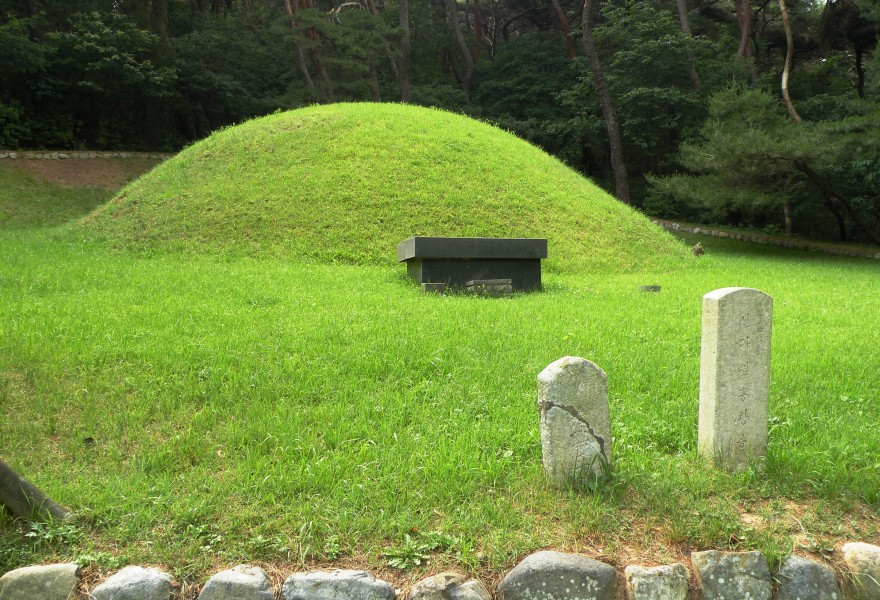
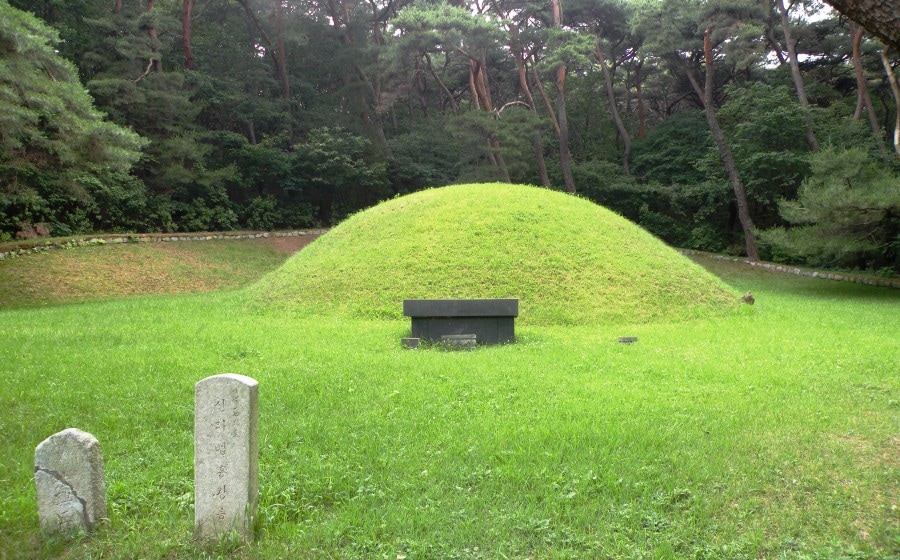

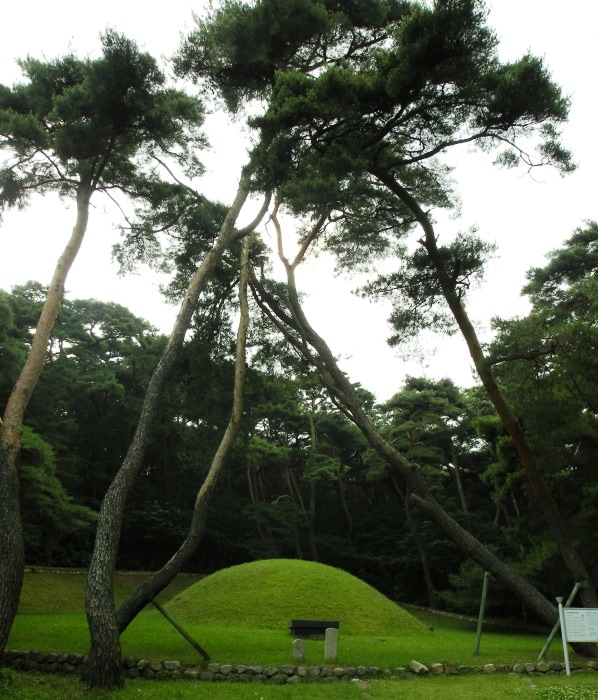
| This slightly-oval stone-lined earthen tomb, relatively simple compared to later Shilla royal ones, is 3 meters high and 13 meters in diameter. It has a lovely natural triangular "gate" of leaning pines in front of it, a rare feature. It is surrounded by a luxuriant forest of some of Korea's tallest & oldest red pine trees (highly sacred, "king of all plants"), and the pathway walking in from Hyohyeon-dong Village on the southern foot of Seondo-san is remarkably peaceful and beautiful. We felt that this tomb would make an excellent site for meditation... I |


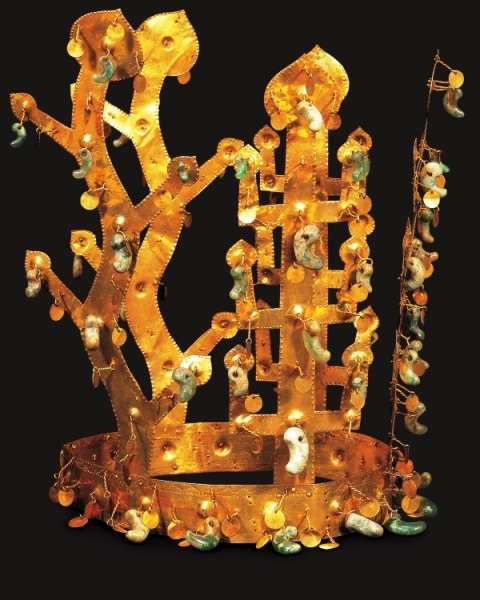
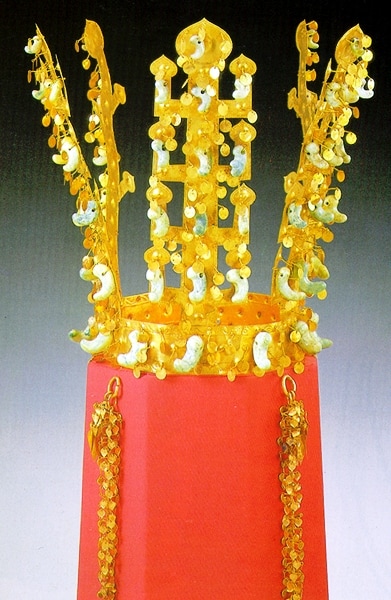
| Gold Crowns from King Beopheung's general era, found in royal tombs andnow in the Gyeongju National Museum. Emblems of a Shaman-King, they feature sacred birch trees and deer antlers, with cashew-shaped jades and gold bangles; Beopheung would likely have worn one like this, and there may well be one in his yet-unopened tomb. |