| My Visit to India in Dec. 2006 |
That's All, folks! thanks for viewing...
San-shin Site Contents Page
.
San-shin Site Contents Page
.
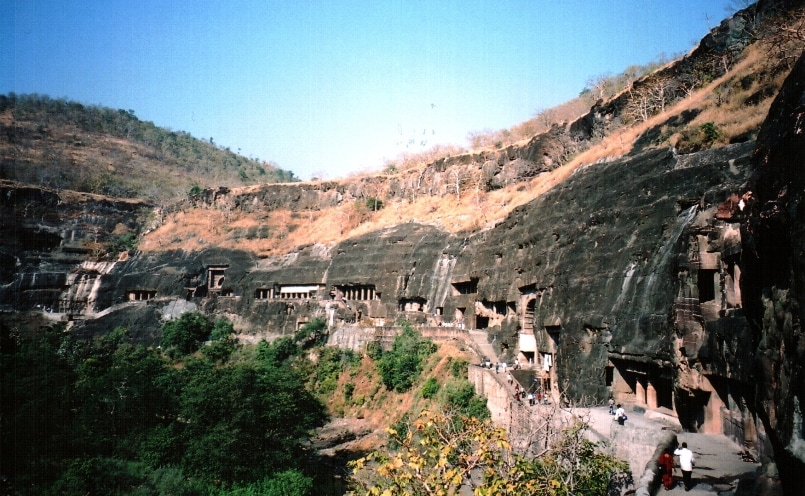
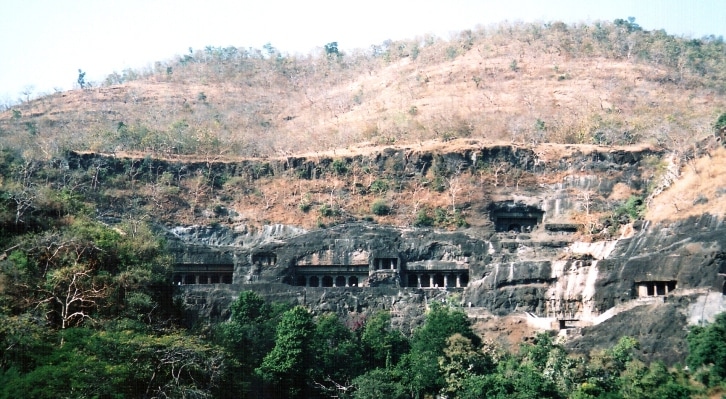
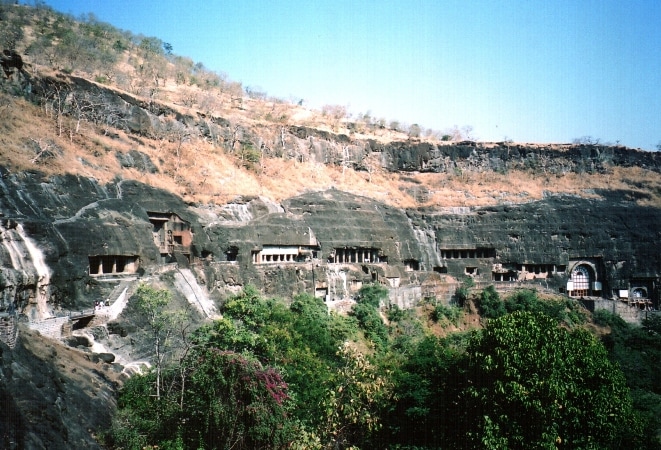
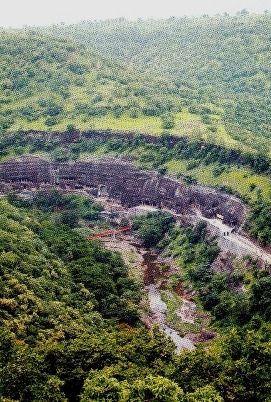
On our final day of sightseeing we visited the Ajanta Caves, in Maharashtra State about a day's drive from Mumbai
(Bombay). Set in a horseshoe-shaped bend of the Waghora River, they were mostly-Buddhist worship-sites and
study-&-meditation halls, holding hundreds of monks, continuously carved from 150 BCE thru 750 CE. They are yet
another UNESCO-designated World Heritage Site, and regarded as one of the world's great treasures of religious art.
(Bombay). Set in a horseshoe-shaped bend of the Waghora River, they were mostly-Buddhist worship-sites and
study-&-meditation halls, holding hundreds of monks, continuously carved from 150 BCE thru 750 CE. They are yet
another UNESCO-designated World Heritage Site, and regarded as one of the world's great treasures of religious art.
| This site had been one of my major world-travel goals ever since I first heard of it about 30 years ago -- I was thrilled to finally be able to look it over. |
| Page Five (final) -- the Ajanta & Ellora Caves |
| Dr. Lee Sang-oak of SNU, a top leader of the Korean Studies field and the "guru" of the conference and our tour. |
| the amazingly well-preserved thousand-year-old Hindu temples of Khajuraho, another of India's famous UNESCO-designated World Heritage Sites |
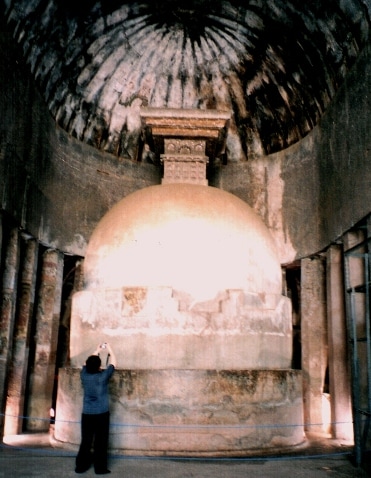
| This is one of the oldest caves, used by the Theravada monks, featuring a model of one of Ashoka's Stupas and some of the oldest known Theravada paintings of the Buddha, sadly faded and damaged. |

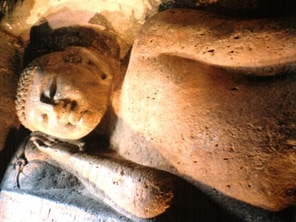
the above "laying down" image of
Sakyamuni Buddha attaining nirvana
upon his death is thought to be the
oldest surviving one ever made --
this became a very popular image-
motif in Theravada countries such
as Thailand, but not at all in Korea...
Sakyamuni Buddha attaining nirvana
upon his death is thought to be the
oldest surviving one ever made --
this became a very popular image-
motif in Theravada countries such
as Thailand, but not at all in Korea...

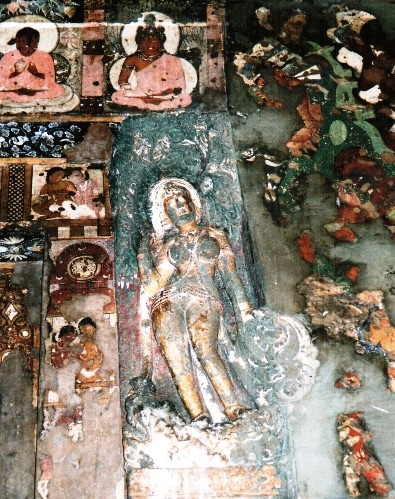
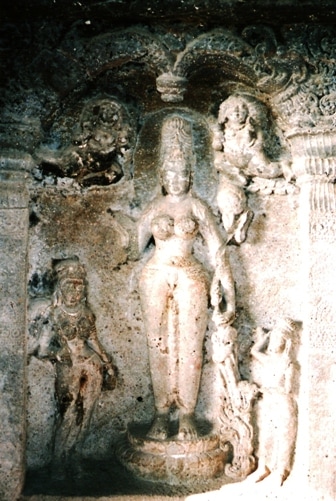

| Our final actual sight seen, at the end of that day, was the Ellora Caves, a few hours north of the Ajanta area. These were Hindu, Buddhist and Jain worship/study caves, carved out of sheer rock from the Fifth to the Tenth Centuries. Yup, another UNESCO-designated World Heritage Site. |
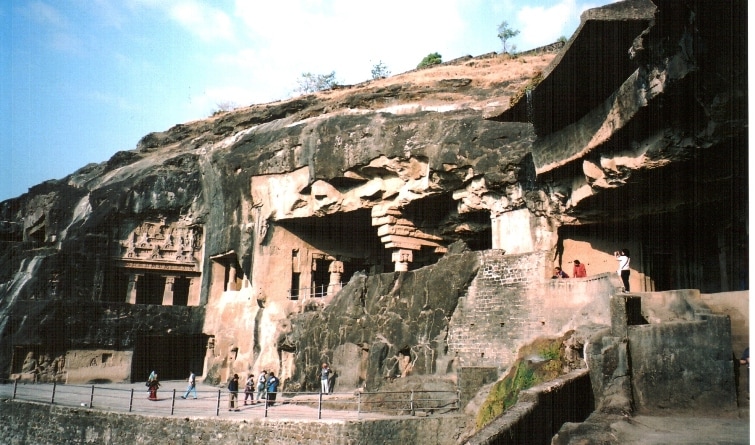
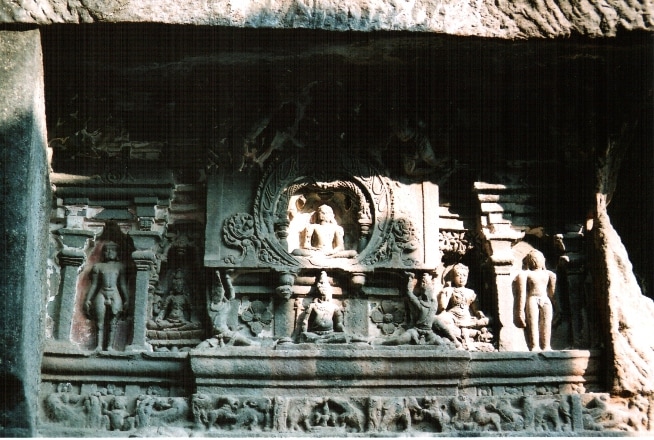
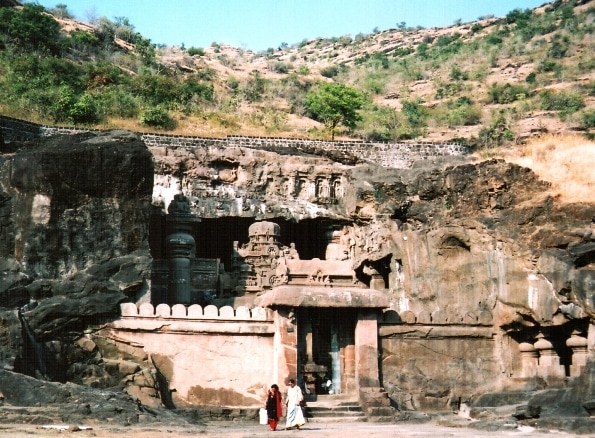
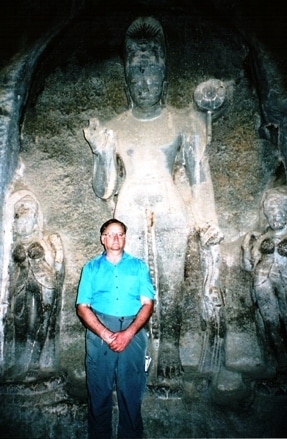
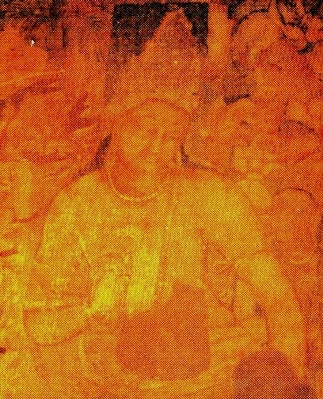
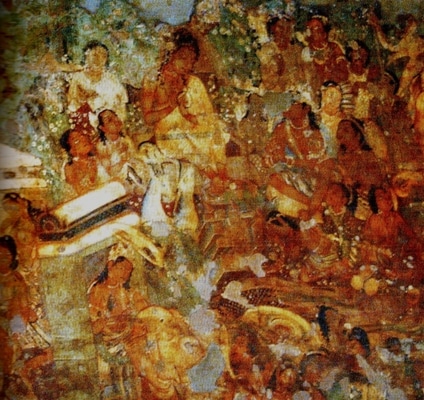
| flash photography is not permitted inside the caves to prevent further fading of the famous wall-paintings, so I took a lot of shots in very low light, experimenting with different settings -- most didn't come out very well, but these are some of the best. |
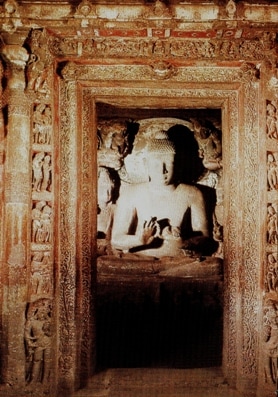
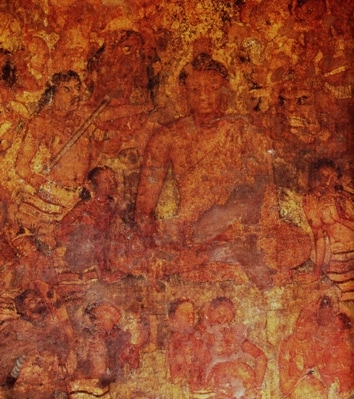
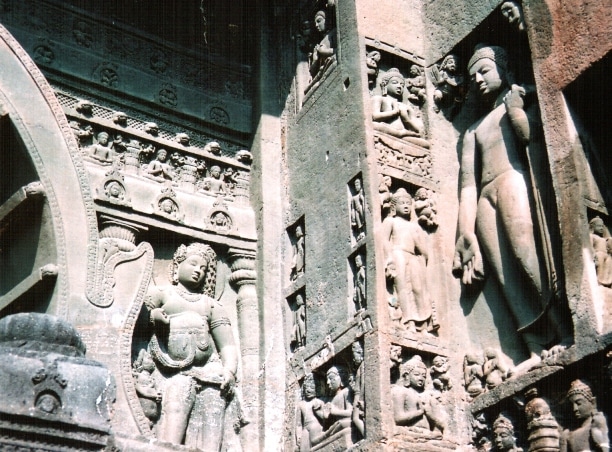
| Left: Sakyamuni resists Mara and his demons just prior to his enlightenment. Right: Buddha in teaching pose. |
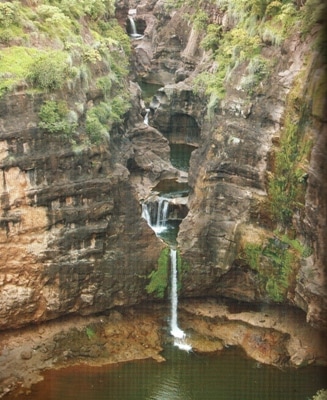
| an aerial view of the Ajanta Valley, and the beautiful gorge further on up the Waghora River -- both scanned from the tourist-brochure I was given |
| The Ellora site includes a stunning complete Hindu Shiva Temple fully carved out of one gigantic cliff of rock, named Kailasanatha (designed to symbolize Mt. Kailash), that in itself took thousands of workers over 100 years to complete, from about 750 CE! |
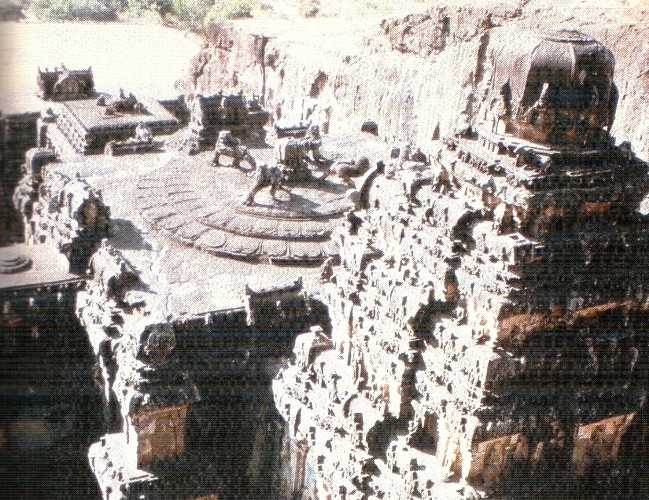
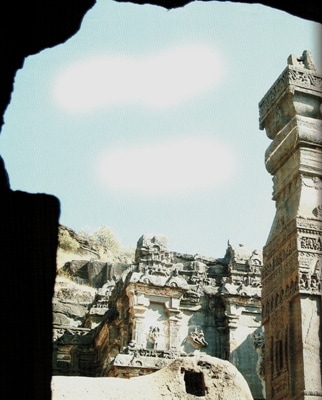
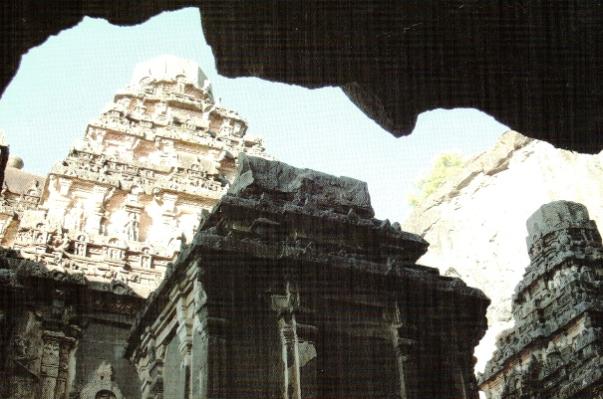
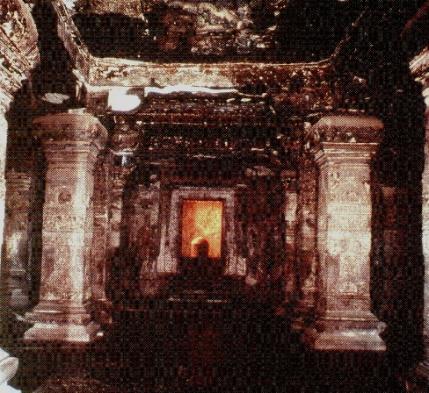
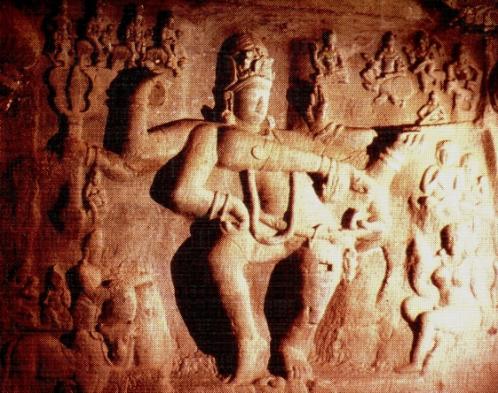
| inside that amazing temple, Shiva is depicted in phallic lingam and six-armed-dancing motifs |
| I scanned these from a booklet, because my own photos were overexposed in the bright sunlight. |
