| the San-cheon-dan [Mountain-Heaven Altar] the Ancient Site for Paying Respect to Halla-san |
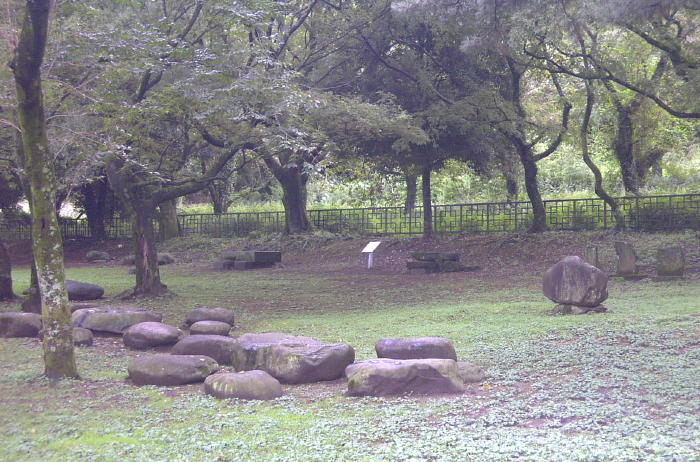
The ways in which the native Tanma people worshipped
Halla-san are not well-known. Since the 1105CE conquest
by Korea's Goryeo Dynasty (and maybe before), annual
ceremonies were held in the peak crater, at the beginning of
the Second Moon (late February or early March). However,
there were several incidents of participants freezing to death,
or suffering severe frostbite up there. In 1470 CE the stone
altars were moved down to this location on the lower NE slope
by Jeju Governor Lee Yak-dong. It is now on Highway 11, just
south of Jeju City, between Gwaneum-sa and the old northern
mountain-fortress wall. I find it curious that it was not placed
on the southern slope as would be more common; perhaps
the proximity to Gwaneum-sa, greatest temple on Jeju in
those days, was the key factor in that.
Halla-san are not well-known. Since the 1105CE conquest
by Korea's Goryeo Dynasty (and maybe before), annual
ceremonies were held in the peak crater, at the beginning of
the Second Moon (late February or early March). However,
there were several incidents of participants freezing to death,
or suffering severe frostbite up there. In 1470 CE the stone
altars were moved down to this location on the lower NE slope
by Jeju Governor Lee Yak-dong. It is now on Highway 11, just
south of Jeju City, between Gwaneum-sa and the old northern
mountain-fortress wall. I find it curious that it was not placed
on the southern slope as would be more common; perhaps
the proximity to Gwaneum-sa, greatest temple on Jeju in
those days, was the key factor in that.
The name Sancheon-dan
[Mountain-Heaven Altar]
means that it is a place for
respecting both the San-shin
and the Heavenly spirits, at
the peak-point where they
are closest, where their
communication is clearest.
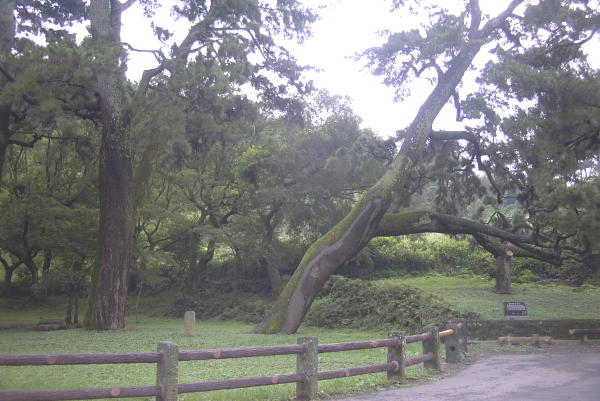
This site includes six giant
Black Pine trees, a very rare
species, thought to be over
500 years old (planted when
the shrine was moved here).
[Mountain-Heaven Altar]
means that it is a place for
respecting both the San-shin
and the Heavenly spirits, at
the peak-point where they
are closest, where their
communication is clearest.
This site includes six giant
Black Pine trees, a very rare
species, thought to be over
500 years old (planted when
the shrine was moved here).
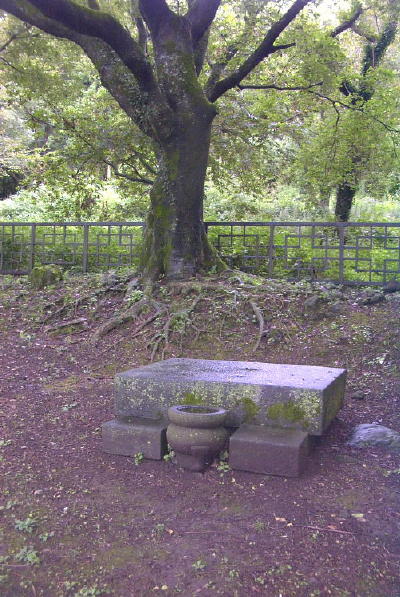
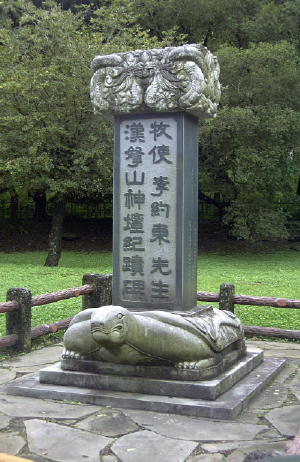
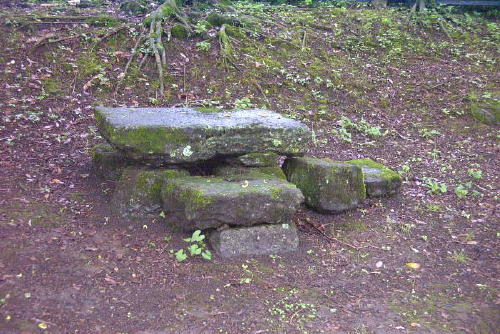
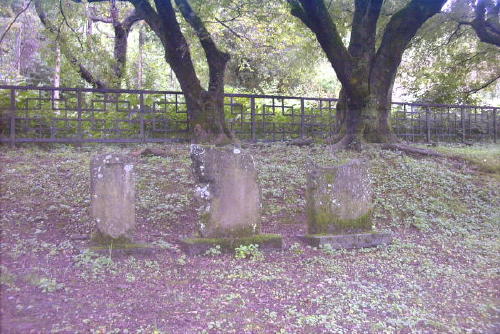
Simple carved native-stone altars are used to
make offerings and prayers. The standing stones
are inscribed with Chinese characters declaring
various forms of respect for the Halla-sanshin.
make offerings and prayers. The standing stones
are inscribed with Chinese characters declaring
various forms of respect for the Halla-sanshin.
The annual ceremony was held on February
12th in 2003, 12th day of the First Moon by
Korea's lunar calendar; it was held on
March 3rd in 2011, which was Lunar 1.29.
The exact date each year is determined
by the elders of the local village.
12th in 2003, 12th day of the First Moon by
Korea's lunar calendar; it was held on
March 3rd in 2011, which was Lunar 1.29.
The exact date each year is determined
by the elders of the local village.
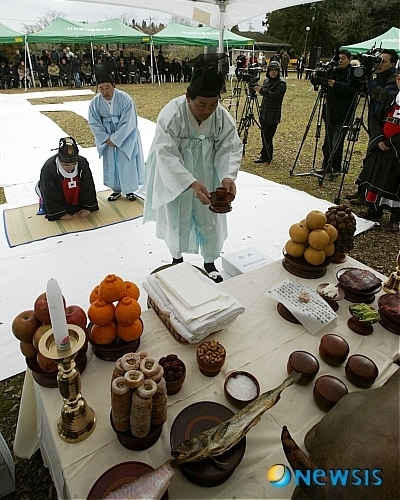
Newsis photo of the March
3rd 2011 Sanshin-je ritual .
It looks like the typical Confucian
style, same as on the mainland.
I have never been able to attend
this ceremony, due to logistics.
3rd 2011 Sanshin-je ritual .
It looks like the typical Confucian
style, same as on the mainland.
I have never been able to attend
this ceremony, due to logistics.