 |
 |
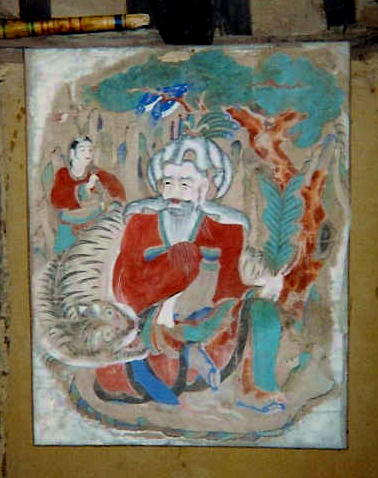 |
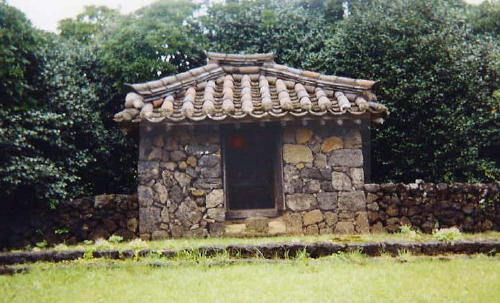
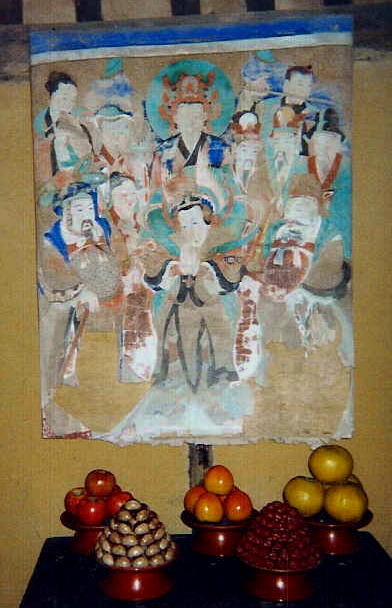
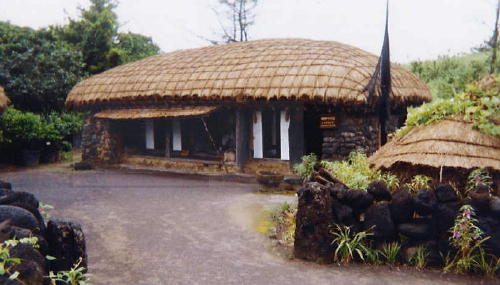
| This San-shin-gak is solidly built from volcanic Jeju stone, with a Korean-style tile roof. It is presented as Jeju-folk-style, but there is no indication of what era -- I guess fairly recent. The San-shin painting found there is an excellent antique, a major discovery for me. His hat is unique, a Daoist "cloud"-style white cloth, floating on his head with many folds, almost like a canopy. He holds a leaf-fan, the attendant-boy brings herbs of longevity, and the folky tiger-pet glares upwards at two nagging (blue) magpies. |
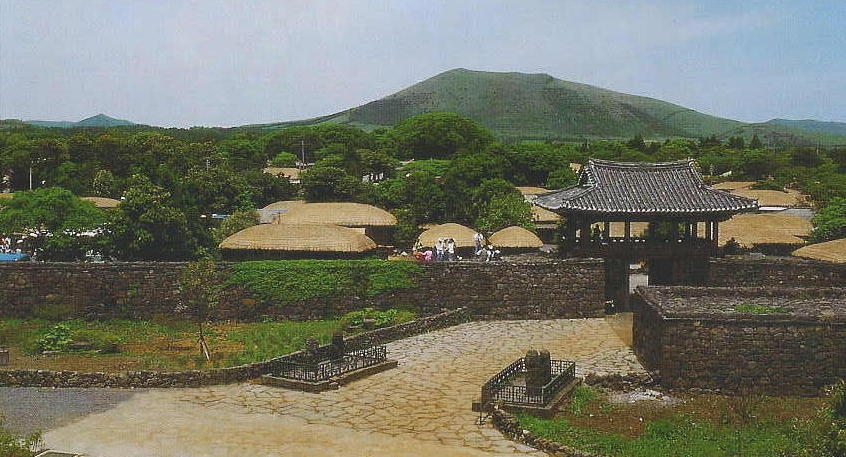
| Jeju Folk Village An open-air museum of traditions, near Pyoseon Beach on the Southeast Coast |
 |
 |
 |
 |
 |
 |
 |
 |
 |
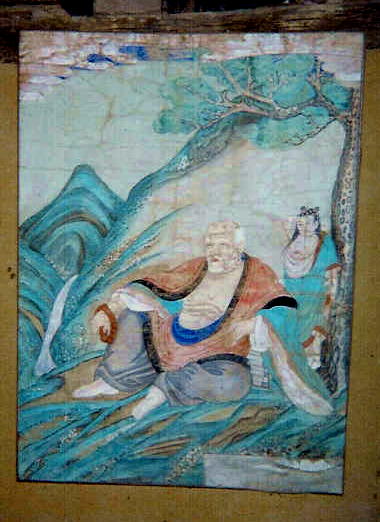
| These fine old Dok-seong and Shin-jung paintings are also now displayed in that San-shin-gak. It is evident that some people still worship there. |
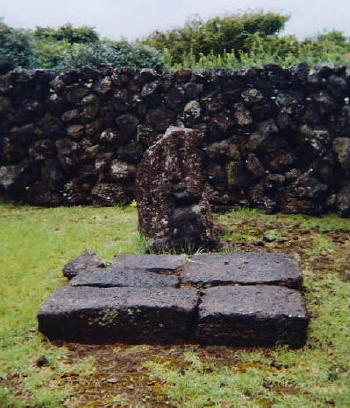
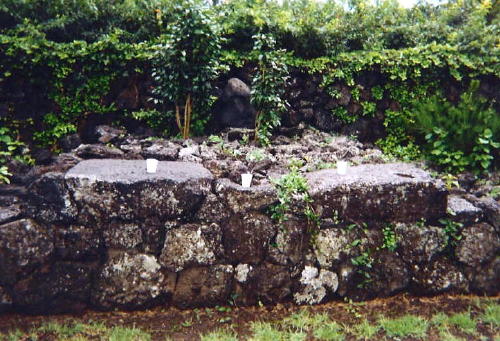
| These crude volcanic stone altars show the older way that Jeju commoners respected spirits like San-shin, Yong-wang, Chil-seong, Sam-shin and Cheon-shin. |
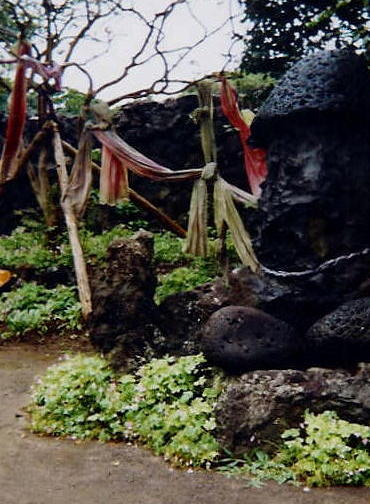
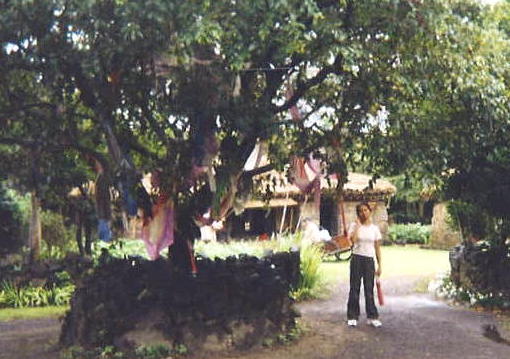
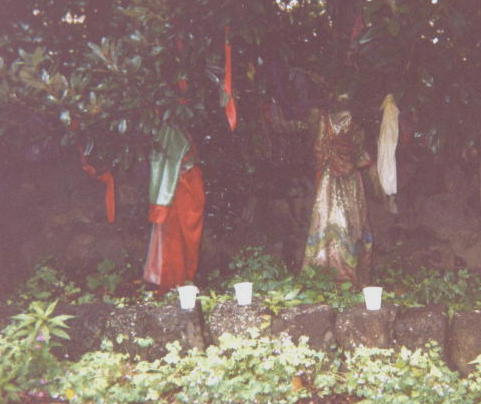
| Left, above & below: Clothing and strips of old clothes are tied onto sacred trees to form sites for holding Shamanic rituals to placate the ghosts of villagers who died premature or unnatural deaths. |
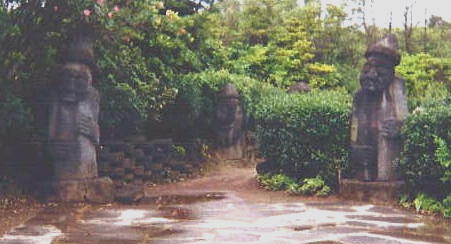
| Dol-harubang [Stone Grandfathers], old Shamanic figures of mysterious origin and function (widely assumed to be for fertility); now the popular symbols of Jeju-do and its tourism. |