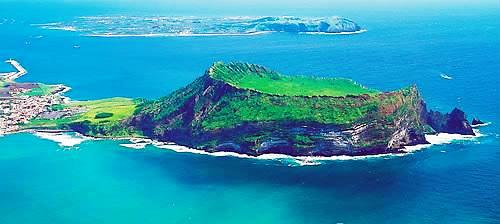
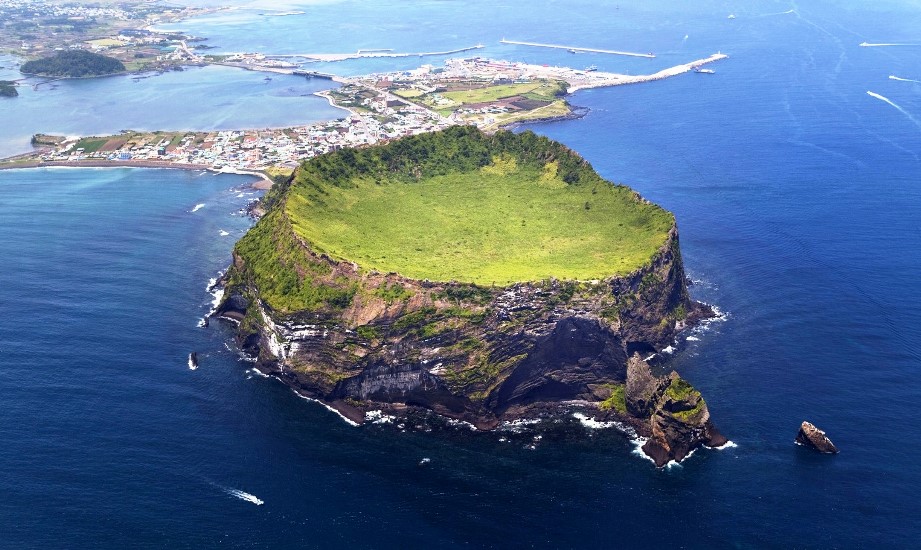
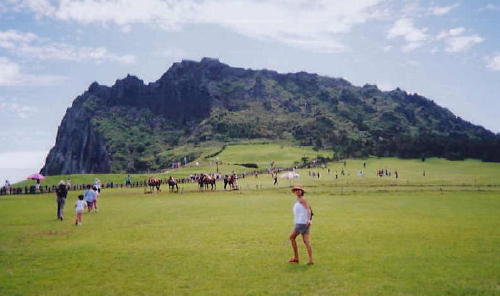
On the extreme north-eastern
tip of Jeju-do, the huge volcano
sub-cone Il-chul-bong [Sunrise
Peak] is the best-known tourist
attraction. Many people get up
early and hike up to the rim to
watch the dawn unfold from the
sea. The crater interior is
preserved as a unique wilderness.
One temple at the main entrance
offers good spring-water and an
altar for ritual-respect of this
one-of-a-kind scenic mountain.
tip of Jeju-do, the huge volcano
sub-cone Il-chul-bong [Sunrise
Peak] is the best-known tourist
attraction. Many people get up
early and hike up to the rim to
watch the dawn unfold from the
sea. The crater interior is
preserved as a unique wilderness.
One temple at the main entrance
offers good spring-water and an
altar for ritual-respect of this
one-of-a-kind scenic mountain.
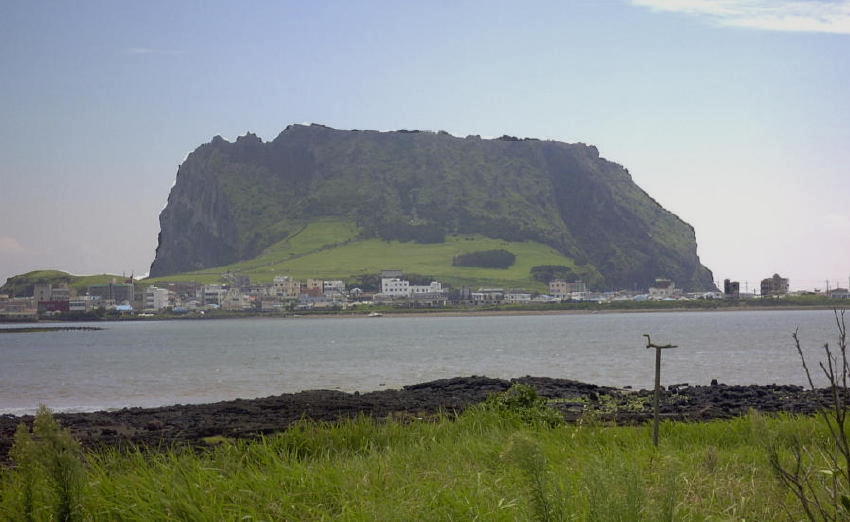
| Sunrise Peak & Eastern Rock Temple the most-visited site on Jeju's NE coast |
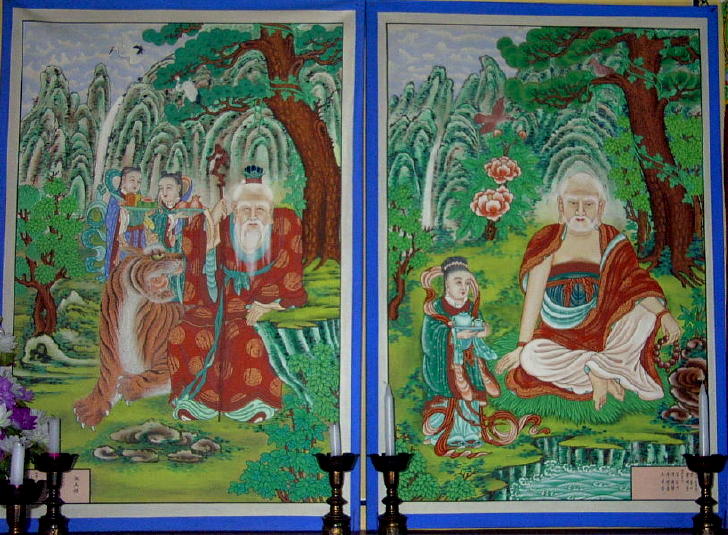
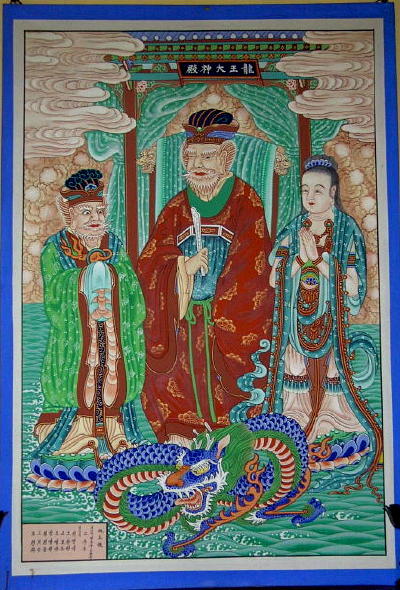
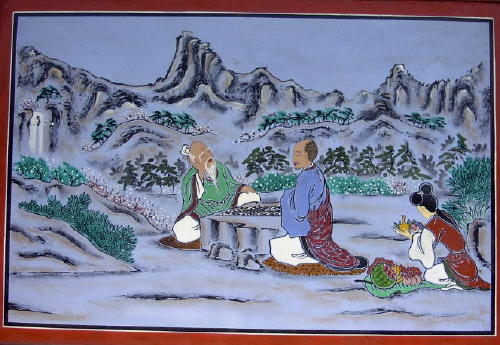
Above: Dong-am-sa [Eastern Rock Temple] features this
excellent matched-set of modern San-shin and Dok-seong
paintings -- again, the same artist as at Tap-sa?
Left: a rare standing Yong-wang, with his son and Daughter.
Below: Sages play the baduk [go] game amid great scenery.
excellent matched-set of modern San-shin and Dok-seong
paintings -- again, the same artist as at Tap-sa?
Left: a rare standing Yong-wang, with his son and Daughter.
Below: Sages play the baduk [go] game amid great scenery.
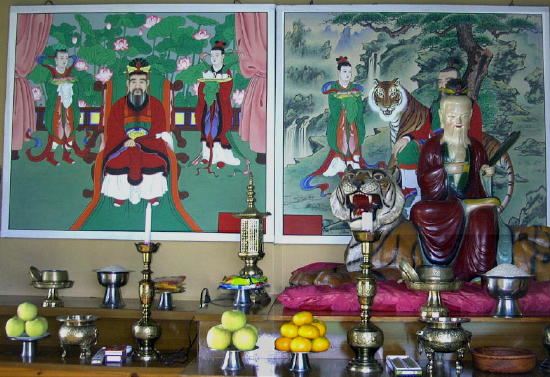
Nearby, a bit north up the coast,
was found the small Dongyeon-sa
[Eastern Self-Nature Temple]. In
its San-shin-gak was this modern
San-shin painting and statue, with
an unusual matched painting
beside it. It appears to be a king,
served by two attendants, with a
Lotus-flower pond as background.
This may be intended as a unique
variation of the Yong-wang, but
I'm not sure. Lotus flowers are a
classic symbol of the Buddha's
enlightenment, but this figure is
not otherwise Buddhist.
was found the small Dongyeon-sa
[Eastern Self-Nature Temple]. In
its San-shin-gak was this modern
San-shin painting and statue, with
an unusual matched painting
beside it. It appears to be a king,
served by two attendants, with a
Lotus-flower pond as background.
This may be intended as a unique
variation of the Yong-wang, but
I'm not sure. Lotus flowers are a
classic symbol of the Buddha's
enlightenment, but this figure is
not otherwise Buddhist.
<--Dong-am-sa
--->
Dong-am-sa
Dong-am-sa
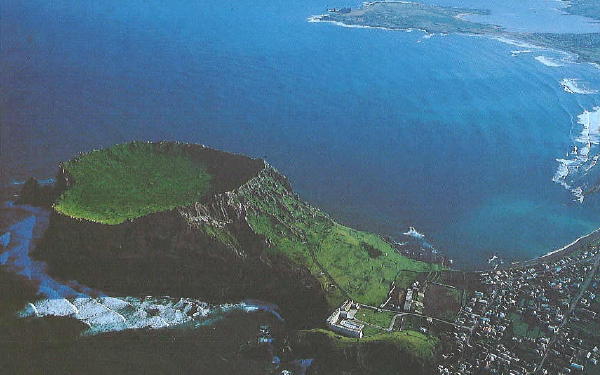
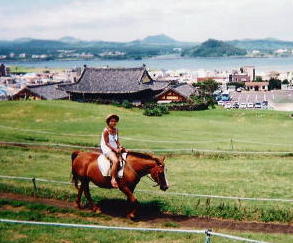
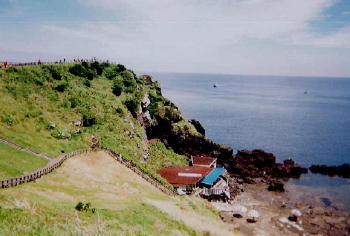
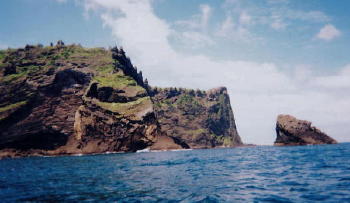
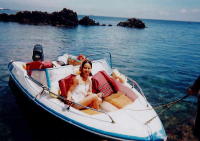
| Plenty of recreation besides hiking is offered in this park -- like picnics, horse-riding, and rides by the cliffs in speedboats. |