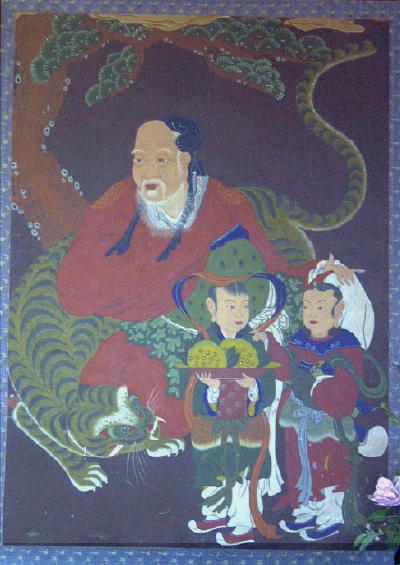
The name of this mountain and temple that overlook Jeju City from the northeast (next to the National Museum) is derived from "Sa-ra-ssang-su", a Sino-Korean term for the four pairs of Sal trees which, according to the Nirvana Sutra, surrounded Sakyamuni Buddha when he passed into nirvana [final death, extinction, cessation] in India over 2400 years ago. Themes of the protection, honor and assistance we can gain from Nature during our spiritual quests and transitions echo here, just as they do in many San-shin paintings.
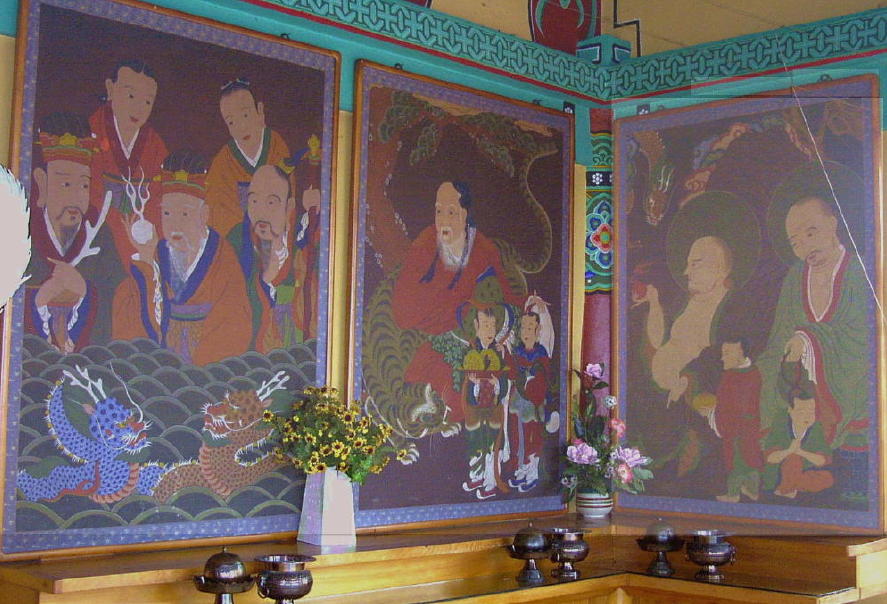
This wonderful spirit-altar was found in a corner of the Main Hall, with San-shin in the highest-status central position. The Yong-wang is on the left, with two attendants above and two dragons below (blue & yellow = east & west); uniquely, it has three main figures (who the two flanking ones are I cannot say). On the right side is the equally unique Deok-seong painting -- he is depicted as an open-robe fat (tho not jolly) monk, similar to Chinese icons of Maitreya; and next to him sits a figure who seems to be a monk, probably the deceased founder of this temple, raised to the status of a Deok-seong.
|