 |
| Mountain-spirit Shrines and Icons found on the South Coast of South Jeolla Province, November 2002 This Page: the Boseong / Beolgyo Area |
| NEXT PAGE---> |
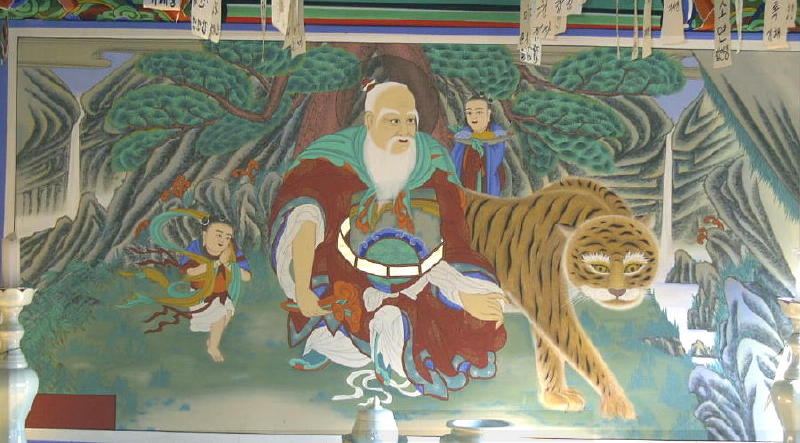
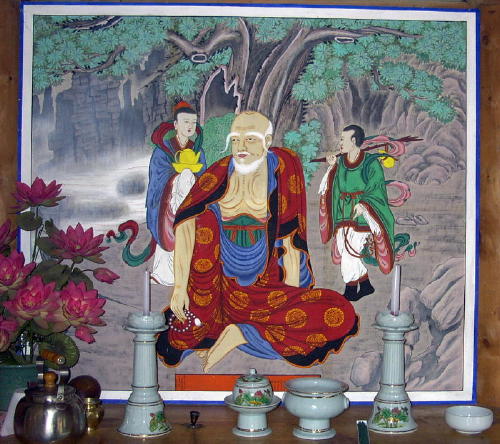
| Kae-un-san Dong-hwa-sa enshrines a beautiful modern San-shin / Deok-seon matched-pair, rich in religious symbols and featuring the very long eyebrows indicating the extreme age and enlightened wisdom of "immortal" disciples of Buddha. |
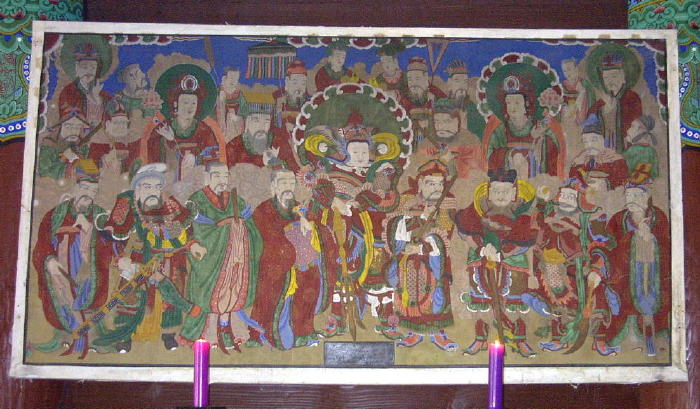
| Kaji-san Bolim-sa is the most important temple of this region, being the very first Korean Meditation-only [Seon, Zen] sect temple, since about 800 AD. The modern San-shin painting in the handsome new Sam-shin-gak holds sprigs of bullocho [herb of immortality, mthical but similar to the red/brown health-enhancing yeongji-beoseot, aka Reshi or Lingzhi]. And then the San-shin portrait in the "Assembly of Spirits" icon (right) is front-and-center, holding up multi-colored bullocho sprigs -- quite unusual. |
 |
 |
| San-shin --> |
 |
 |
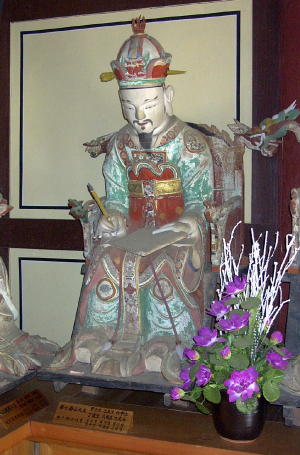 |
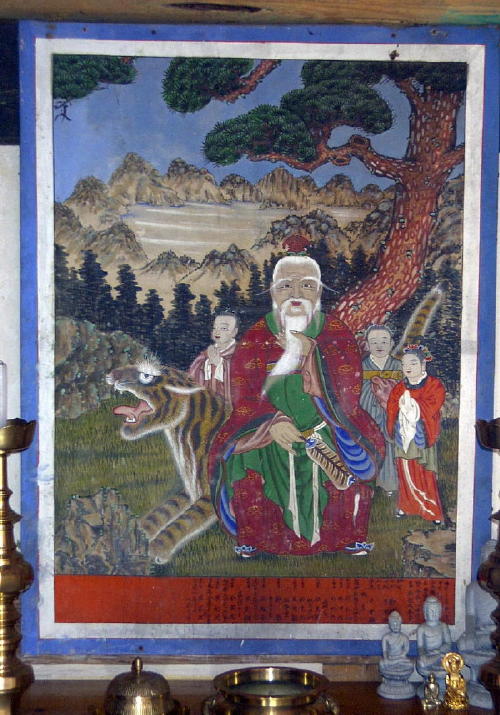
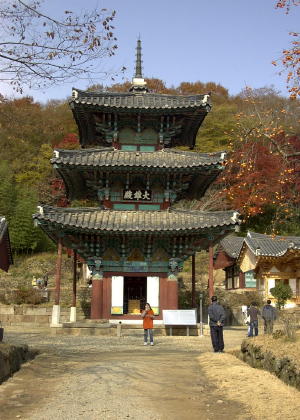
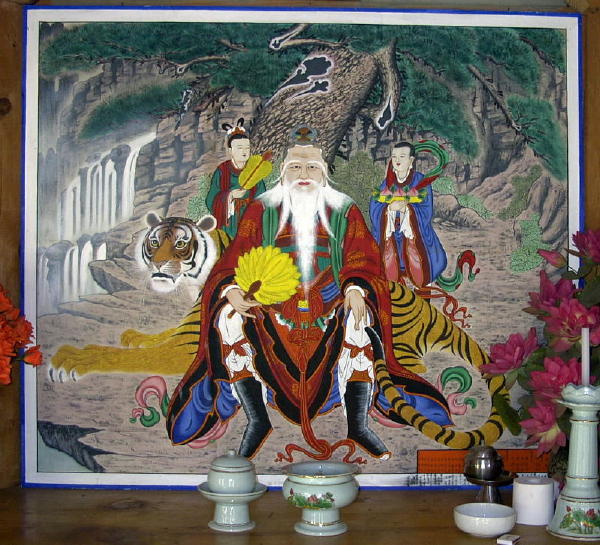
| Kye-dang-san Ssang-bong-sa [Double-peak Temple] is also fairly important in this region, and features a three-storey wooden pagoda-shrine, kind of Japanese-style and thus very rare in Korea. The San-shin painting features a background suggesting Baekdu-san [White-head Mountain], a very sacred extinct-volcano-lake peak on the border of North Korea and China, very important in national identity and the Dan-gun / San-shin cult. I have only found two San-shin paintings with this feature in the entire nation; you'd think it would be more common. Meanwhile, the spirit of China's holiest peak Tae-san [Tai-shan, Grand Mountain] is one of the ten Judge-Kings of Buddhist Hell that you might face after death (right). |
 |
 |
 |
 |
 |
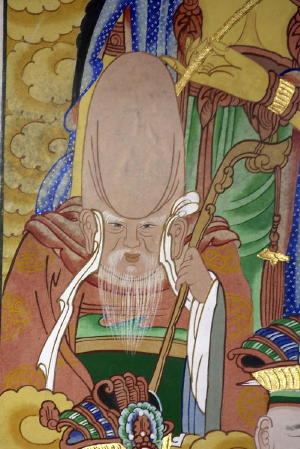 |
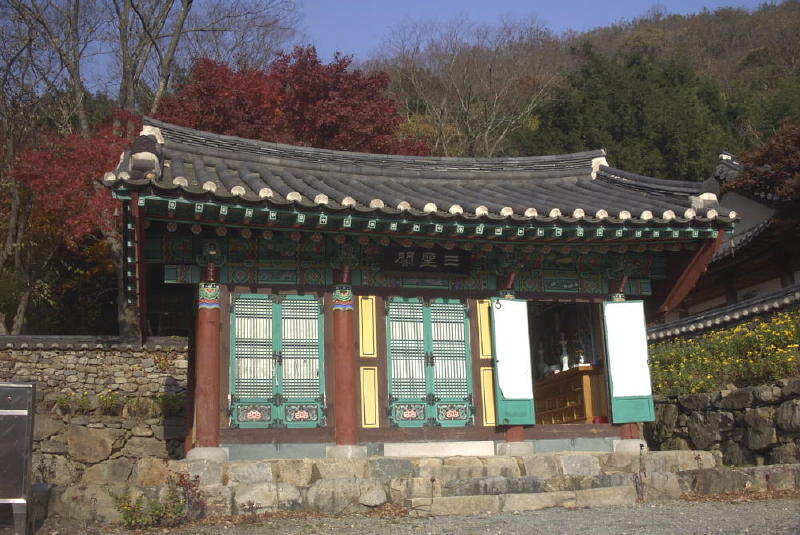
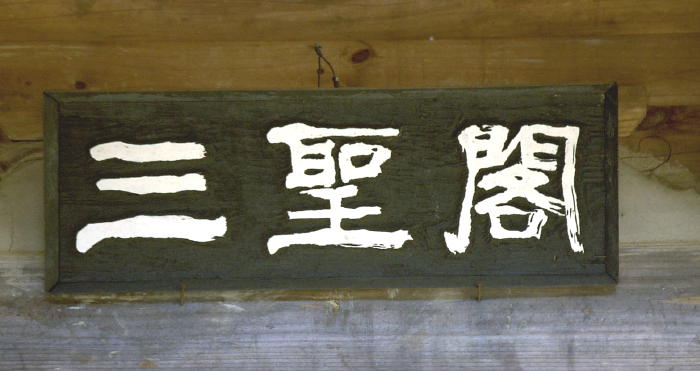
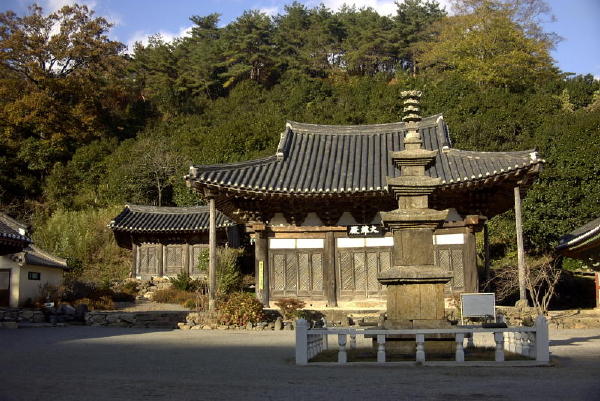
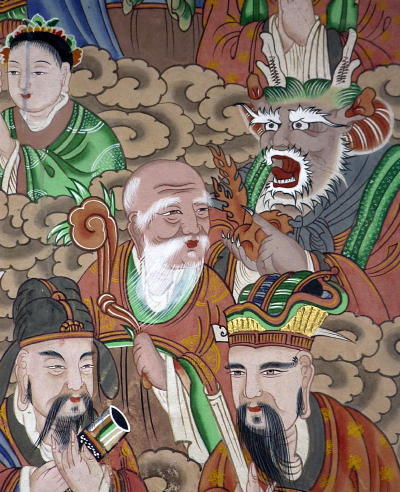
| Also at Dong-hwa-sa: the signboard Sam-seong-gak [Three Sages Shrine] reads left-to-right, quite unusual; San-shin holds a bullocho sprig next to the Yong-wang [Dragon King]; the old Sam-seong-gak can be seen to the left-behind the 18th-Century Main Hall; the 'extra-brain' North-Star Spirit appears in the Chil-seong [Seven Stars] painting. |