| Samgak-san Bogwang-sa the "Treasure Shining Temple" in NE Seoul on the eastern foot of the Triple-Horns Mountains |
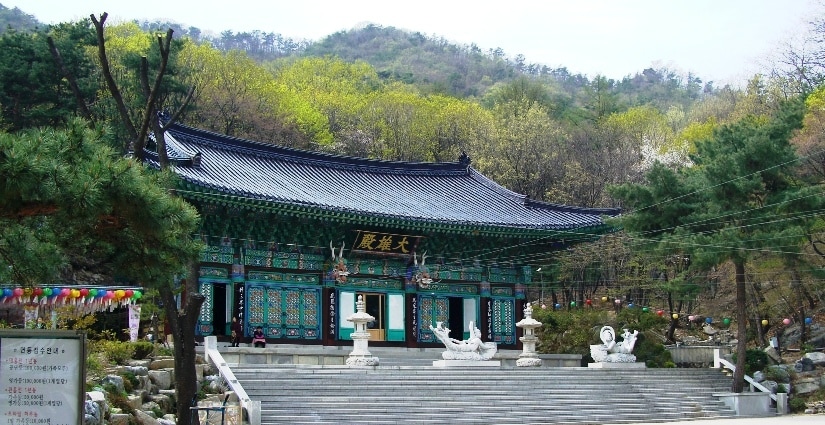
Bo-gwang-sa is a late-20th-Century temple of the Jogye Order, right in-between the great Doseon-sa and
Hwagye-sa monestaries, up behind the new Solbat-gongwon [Pine-Forest Park] of Gangbuk-gu District in NE Seoul.
Strangely, given its location, it does not contain and San-shin shrine or altar -- they said they're planning to build one.
Hwagye-sa monestaries, up behind the new Solbat-gongwon [Pine-Forest Park] of Gangbuk-gu District in NE Seoul.
Strangely, given its location, it does not contain and San-shin shrine or altar -- they said they're planning to build one.
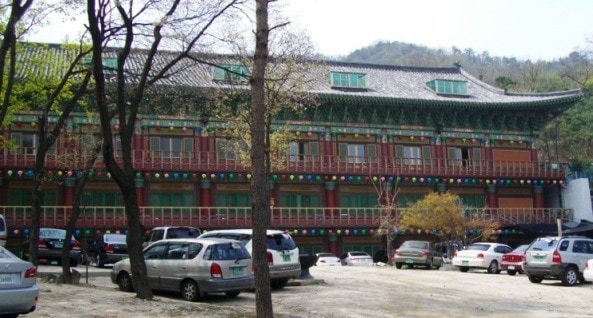
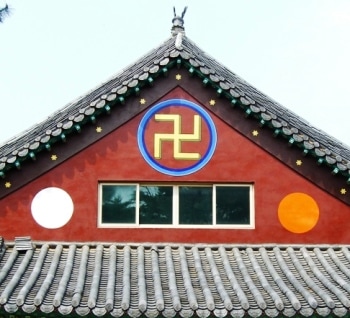
Its large community-services-oriented front-building has a fairly unusual motif on the triangular ends of its roof -- instead of the
now-common three-colored dots representing the Buddha, Dharma & Sangha inside of a circle, they put a Buddhist swastika
inside of the circle with large white and orange dots below it, reminiscent of a traditional Korean il-wol [sun & moon] motif.
now-common three-colored dots representing the Buddha, Dharma & Sangha inside of a circle, they put a Buddhist swastika
inside of the circle with large white and orange dots below it, reminiscent of a traditional Korean il-wol [sun & moon] motif.
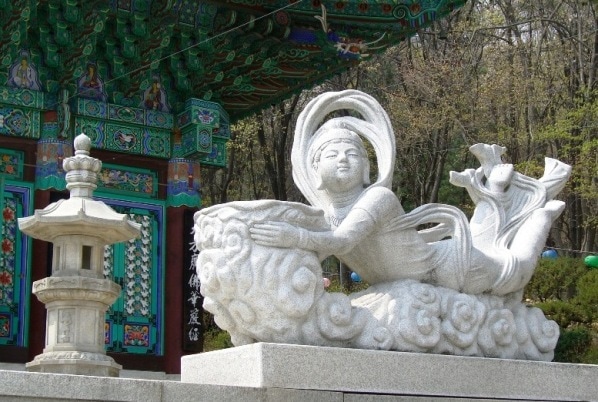
| Unusual artwork: a large white-granite statue of a male biseon [angel] on clouds in front of the Main Hall |
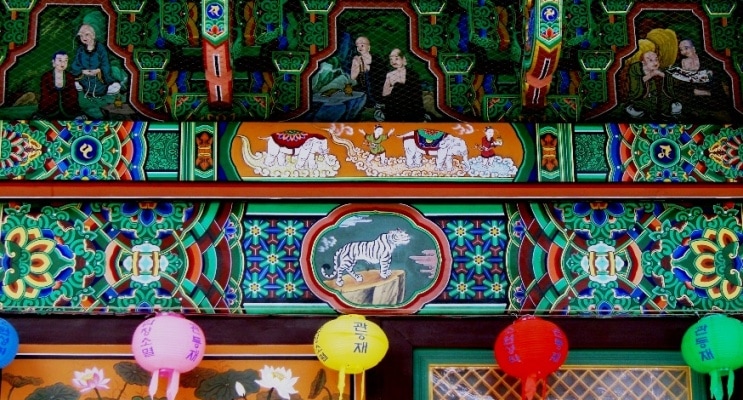
| Unusual Dancheong artwork on the outsde of the Main Hall: Nahan {Buddhist Saints], White Elephants on heavenly clouds (symbolizing the advent of Buddhas), a white tiger on a cliff, and plenty of lotus flowers in various forms. |
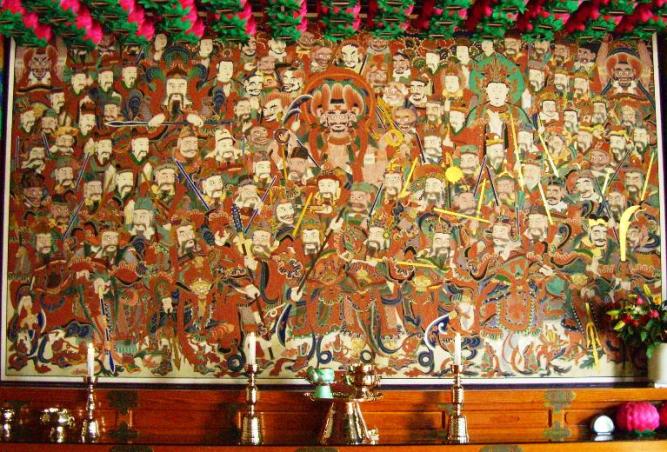
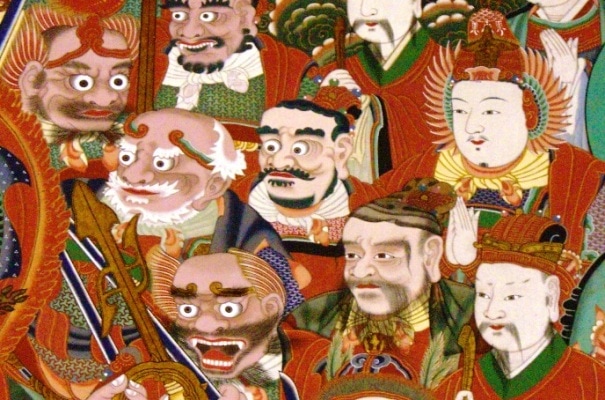
In the 108-figure Shin-jung
Taenghwa, San-shin and Yong-
wang are a bit hard to find.
Taenghwa, San-shin and Yong-
wang are a bit hard to find.
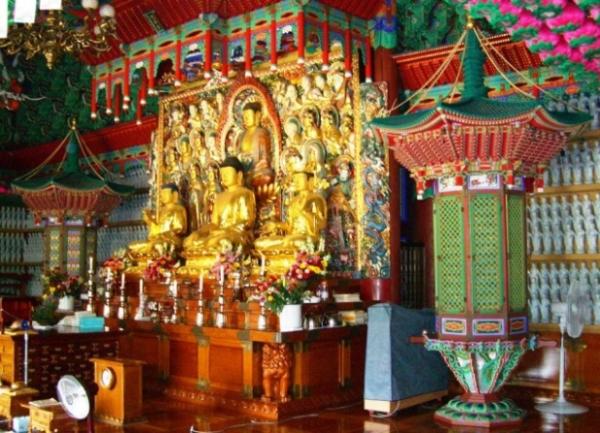
The Main Hall features old-style
rotating-library-pavilions (for holing
scripture-scrolls) flanking the
Sakyamuni-Buddha Altar. The oldest
extant pair of these is found at
Yongmun-sa Temple of northern North
Gyeongsang Prov.
rotating-library-pavilions (for holing
scripture-scrolls) flanking the
Sakyamuni-Buddha Altar. The oldest
extant pair of these is found at
Yongmun-sa Temple of northern North
Gyeongsang Prov.
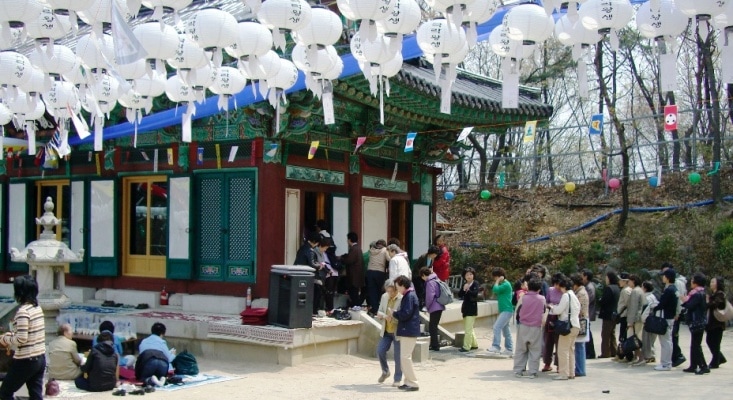
Under a canopy of white
lanterns, members line up
to get a special blessing
in the Gwaneum [Bodhi-
sattva of Compassion] Hall.
lanterns, members line up
to get a special blessing
in the Gwaneum [Bodhi-
sattva of Compassion] Hall.
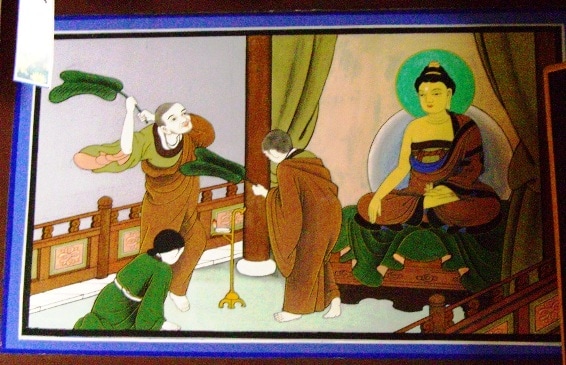
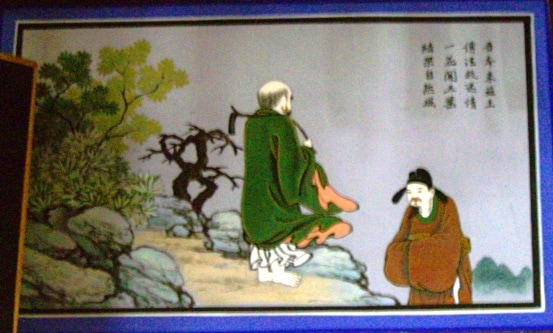
Unusual-motif interior wall-
paintings in the Main Hall.
paintings in the Main Hall.
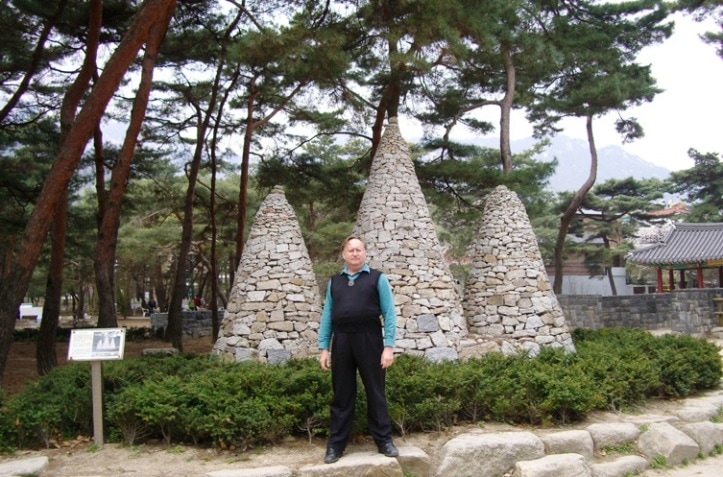
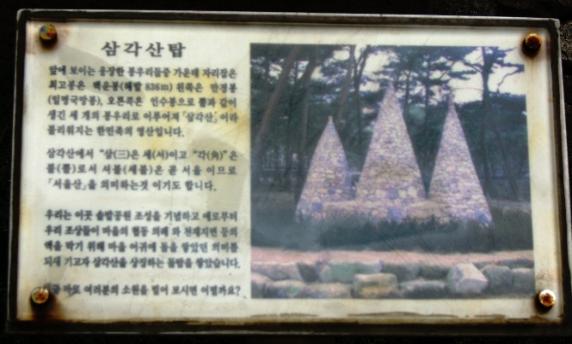
| Myself standing in front of the "Samgak-san Pagodas", a neo-traditionalist stone-cairn triad intended to symbolize the "three horns" peaks of this mountain, at the new Solbat-gongwon [Pine-Forest Park] which is at the foot of Bogwang- sa's entrance-road. The park was the idea of Gangbuk-gu District's Mayor Kim Hyun-pung, who fought hard to gain this 'green patch' (all-too-rare in urban Seoul) for his residents. Below is its signboard with text written by Mayor Kim, explaining the proper name of "Samgak-san" against the revisionists who mistakenly call it "Bukhan-san". |