| Taeha-ri Village Shrines on Ulleung-do Island Korea's Remote Isle of Rich Folklore my photos from my visit in September 1998 |
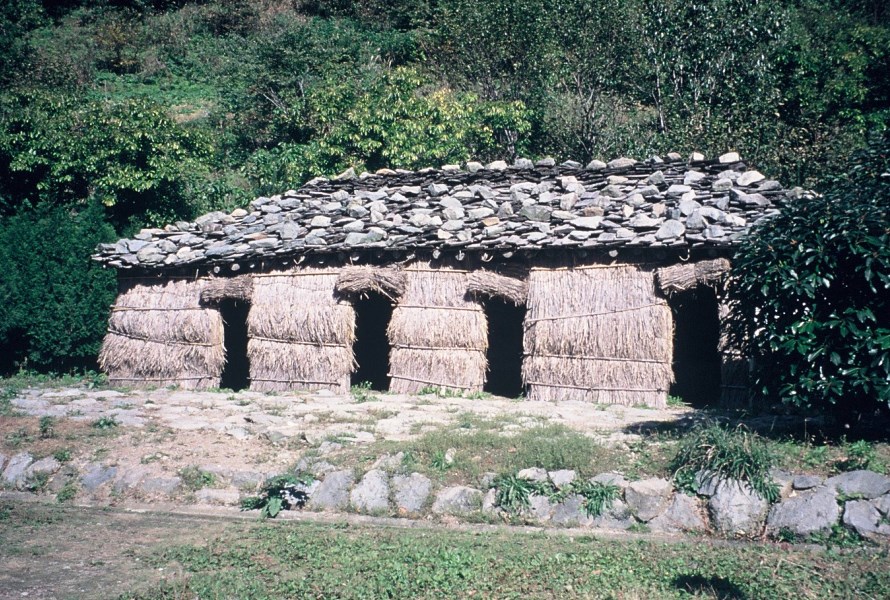
| One of Korea's very few remaining fully authentic neowajip [traditional house of the lowest class, with wood-slat roof held-down by stones], with even the front walls thatched against the sea-borne storms, in west-coast Taeha-ri Village |
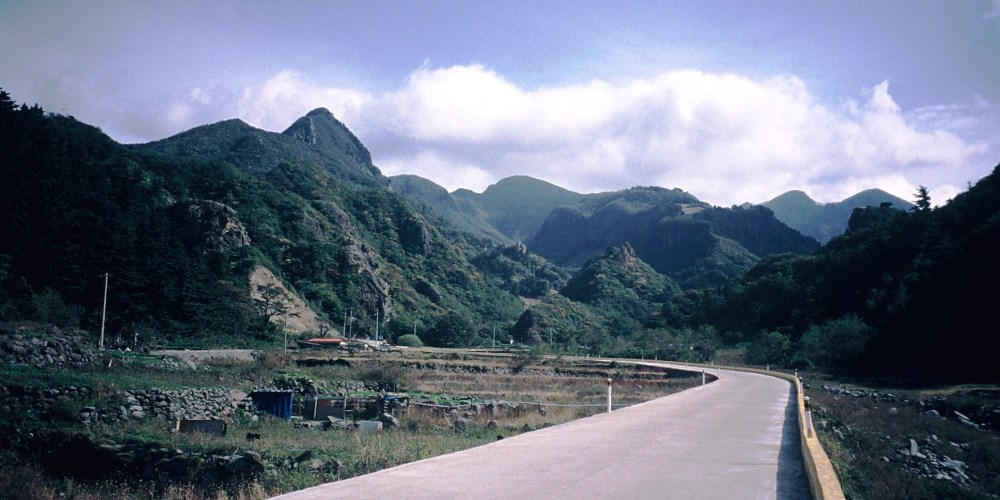
| Walking along the road into Seo-myeon Taeha-ri Village, other side of the island from Dodong and SO much quieter..... |
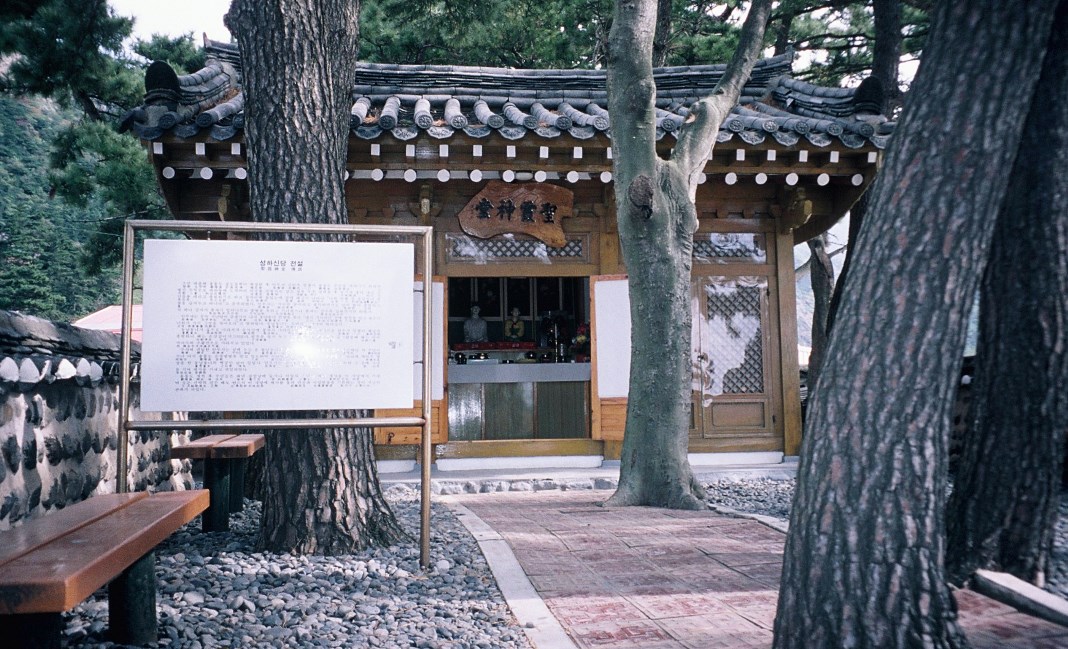
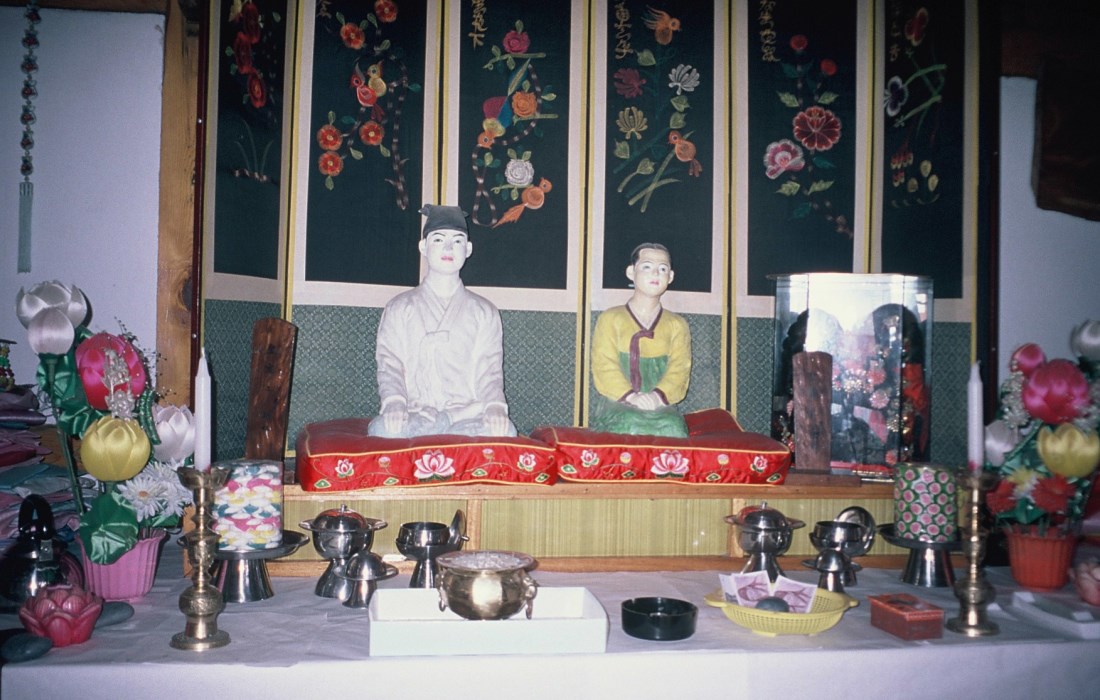
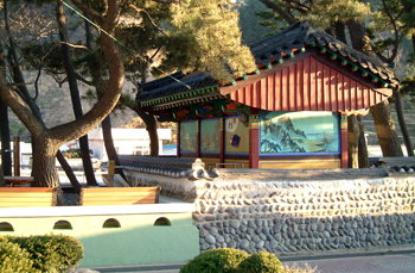
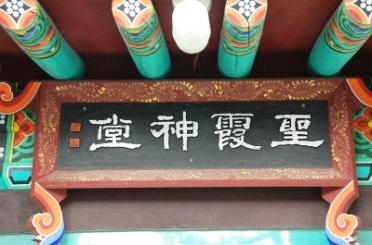
The prominent (in Korean deep-folklore circles) Seongha Shindang 성하신당 聖霞神堂 [Saint Rosy-light Spirit-Shrine]
there. The title characters Seongha 聖霞 성하 mean first a wise sage or saintly person (master-monk, senior scholar or
king) often designated as the tutelary guardian spirit of a village, and then "the light of sunrise and sunset; colorful misty
clouds; foreglow or afterglow" -- difficult to translate effectively -- "Sunset Saints" might apply, in light of the tragic tale.
This shrine memorializes a Joseon-era story of this place. During the reign of the 2nd king Taejong 태종 (1397-1418),
he ordered a temporary evacuation of remote areas such as Ulleung-do due to Japanese pirate attacks. An aristocratic
admiral named Kim In-u was dispatched from Samcheok Town of Gangwon Province to bring Ulleung's residents back
to the mainland. After gathering all of them on his ships he was preparing to leave on the next morning from the last
stop, this village on the west, but during the night he had a strange dream in which a Hae-shin 해신 [Sea Spirit, probably
the Yong-wang or Dragon-King] told him to leave one young boy and one young girl on the island. As an educated Neo-
Confucian rationalist he did not take it seriously, and still prepared to embark the next morning.
However, a strong wind suddenly arose, preventing them from departing; this lasted for a few days and night. Finally
Kim In-u relented to the instructions from his dream, and directed a pre-pubescent male and female pair (unknown if
they were siblings or un-related) to return to the final camp-area of his forces and retrieve a set of inkstone and brushes
that he "had accidentally left-behind." Once these two left for that place and were out-of-sight, the wild wind ceased.
The ships finally embarked, leaving the children behind.
After a few years, Kim In-u went back to Ulleung-do on further royal business, and visited that campground feeling a
regretful curiosity. He found the skeletons of the boy and girl entwined, as if hugging each other against the cold.
Out of remorse, he founded this Seongha Shindang to relieve the forlorn sadness of their souls.
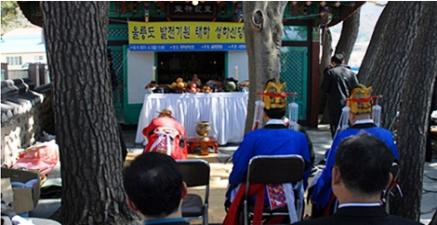
Still today, an annual Jesa ceremony is held (now by February 28th by the Solar Calendar) is held to commemorate
this gloomy legend of human sacrifice, and to supplicate the sea-gods for the safety of ships as well as abundant fishing.
This kind of ritual officiated by a local Shaman held in coastal villages to venerate and pray to Yong-wang for peace,
safety for the fishermen at sea and abundant fish-catches, is called a Haeshin-je [Sea-spirit Ceremony] on Ulleung and
Jeju islands; they are called Byeolshin-gut on the eastern and southern coasts and Pungeo-je on the western coast.
This shrine was rebuilt in a modern way in the early 1990s.
there. The title characters Seongha 聖霞 성하 mean first a wise sage or saintly person (master-monk, senior scholar or
king) often designated as the tutelary guardian spirit of a village, and then "the light of sunrise and sunset; colorful misty
clouds; foreglow or afterglow" -- difficult to translate effectively -- "Sunset Saints" might apply, in light of the tragic tale.
This shrine memorializes a Joseon-era story of this place. During the reign of the 2nd king Taejong 태종 (1397-1418),
he ordered a temporary evacuation of remote areas such as Ulleung-do due to Japanese pirate attacks. An aristocratic
admiral named Kim In-u was dispatched from Samcheok Town of Gangwon Province to bring Ulleung's residents back
to the mainland. After gathering all of them on his ships he was preparing to leave on the next morning from the last
stop, this village on the west, but during the night he had a strange dream in which a Hae-shin 해신 [Sea Spirit, probably
the Yong-wang or Dragon-King] told him to leave one young boy and one young girl on the island. As an educated Neo-
Confucian rationalist he did not take it seriously, and still prepared to embark the next morning.
However, a strong wind suddenly arose, preventing them from departing; this lasted for a few days and night. Finally
Kim In-u relented to the instructions from his dream, and directed a pre-pubescent male and female pair (unknown if
they were siblings or un-related) to return to the final camp-area of his forces and retrieve a set of inkstone and brushes
that he "had accidentally left-behind." Once these two left for that place and were out-of-sight, the wild wind ceased.
The ships finally embarked, leaving the children behind.
After a few years, Kim In-u went back to Ulleung-do on further royal business, and visited that campground feeling a
regretful curiosity. He found the skeletons of the boy and girl entwined, as if hugging each other against the cold.
Out of remorse, he founded this Seongha Shindang to relieve the forlorn sadness of their souls.
Still today, an annual Jesa ceremony is held (now by February 28th by the Solar Calendar) is held to commemorate
this gloomy legend of human sacrifice, and to supplicate the sea-gods for the safety of ships as well as abundant fishing.
This kind of ritual officiated by a local Shaman held in coastal villages to venerate and pray to Yong-wang for peace,
safety for the fishermen at sea and abundant fish-catches, is called a Haeshin-je [Sea-spirit Ceremony] on Ulleung and
Jeju islands; they are called Byeolshin-gut on the eastern and southern coasts and Pungeo-je on the western coast.
This shrine was rebuilt in a modern way in the early 1990s.
| ----> |

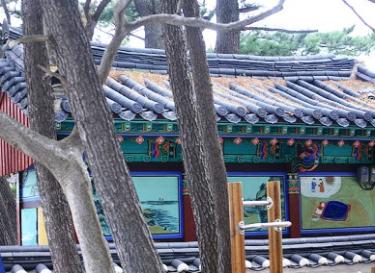
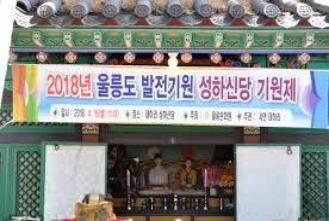
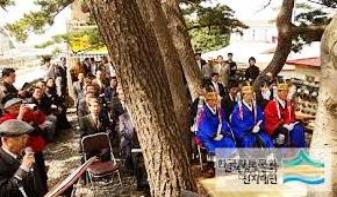
| These 7 smaller photos are not mine, but gathered from Ulleung tourism-promotion pages: |
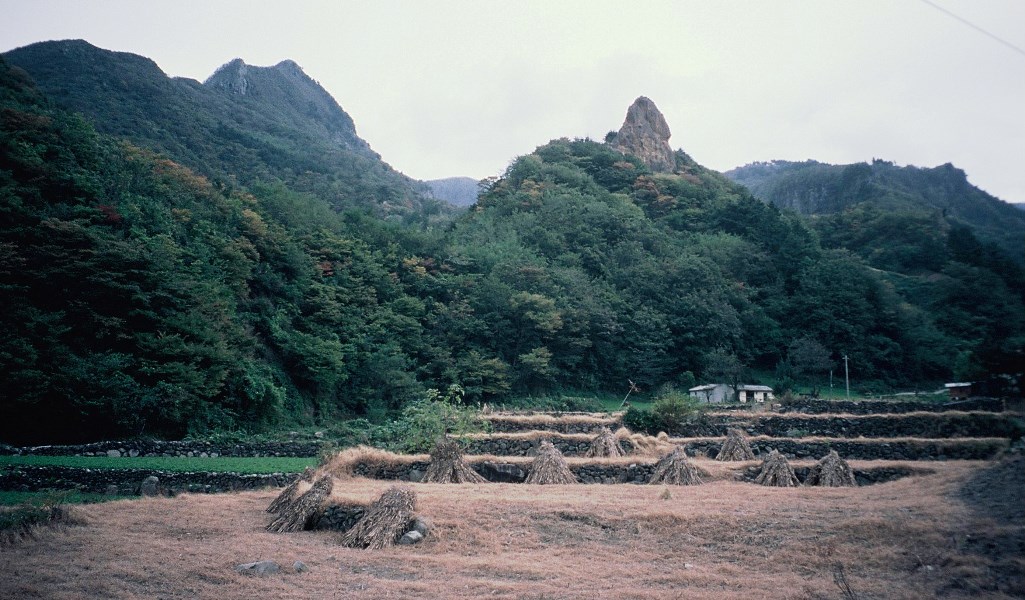
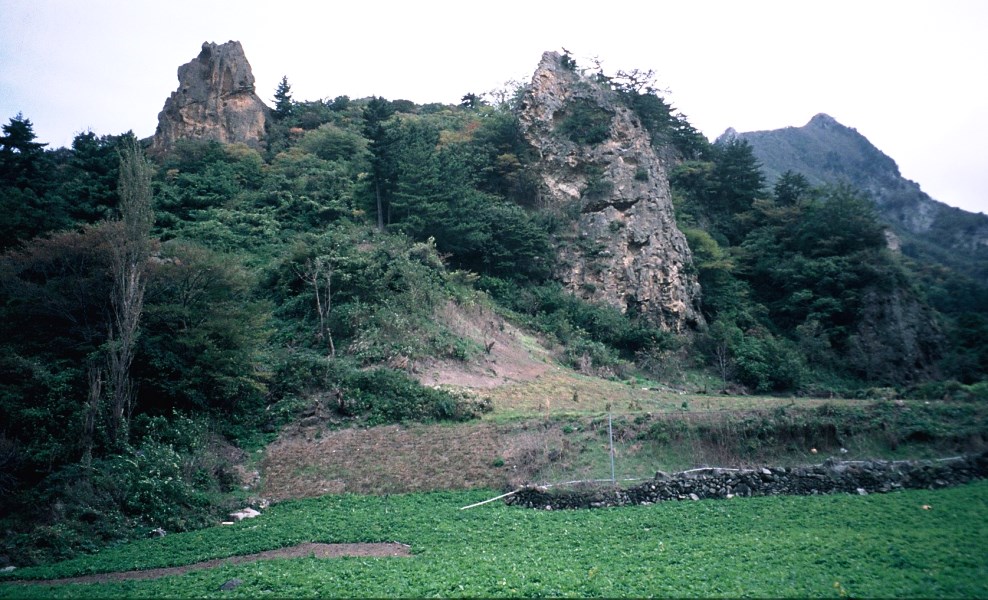
| local crags above fields |
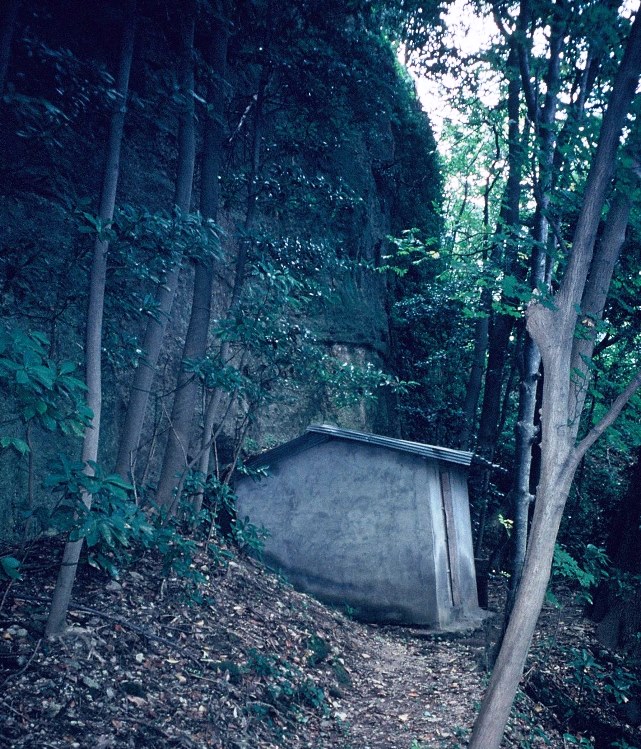
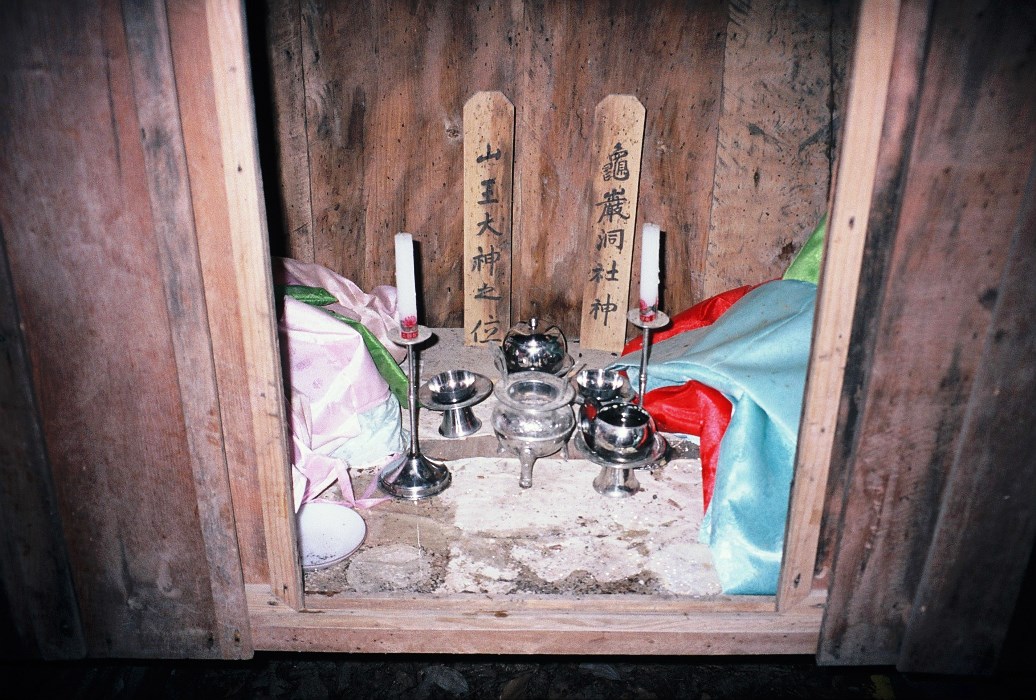
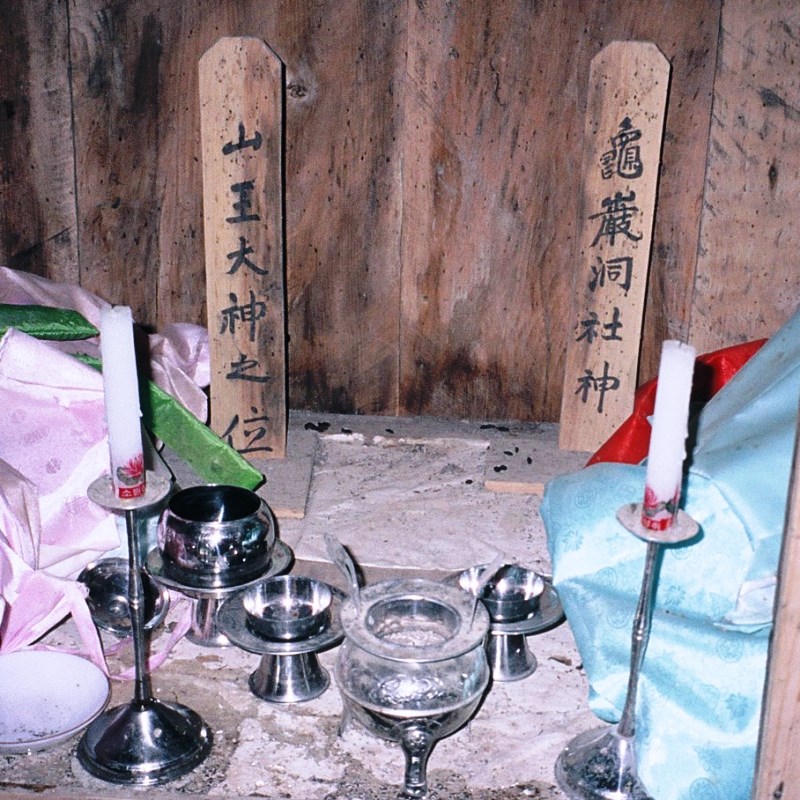
| Above the village, in the high pass through the coastal crags to Hyeonpo-ri Village, I found this Pass-spirit Sanshin Shrine -- one of the few remaining authentic ones in the nation!! The unexpected discovery made my trip seem complete... |
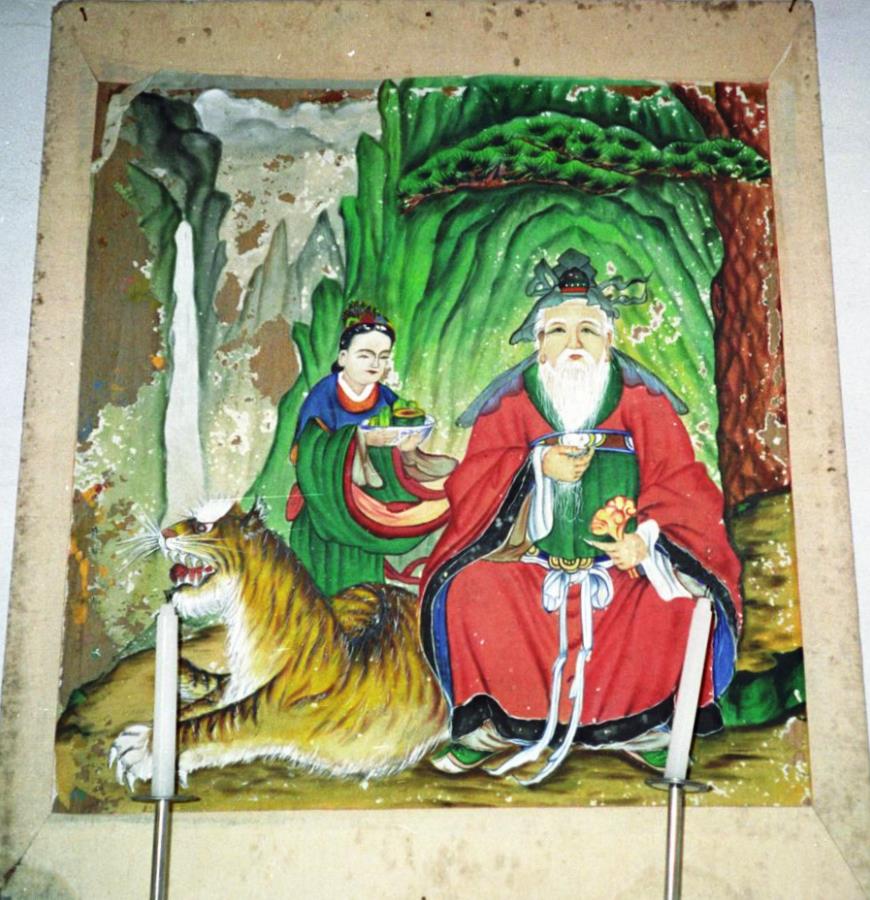
| A Sanshin-do [Montain-spirit Painting] from an unknown village shrine on Ulleung-do. This was sent to me by a friend who said he'd shot it in a northern village in the 1980s. It is fairly standard in modern motifs for this sort of shrine-icon.... |