| San-shin icons at Daewon-jeongsa and Jeong-lim-sa Temples Southern End of the Rooster-Dragon Mountain, at Hamji Peak |
| NEXT PAGE ---> |
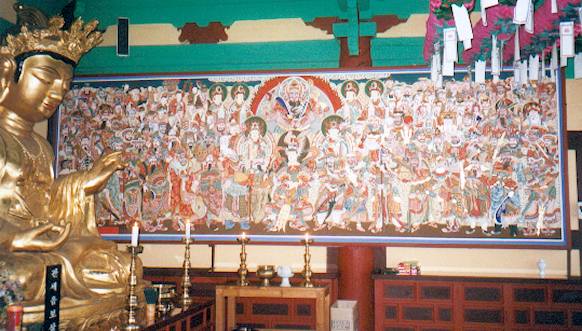
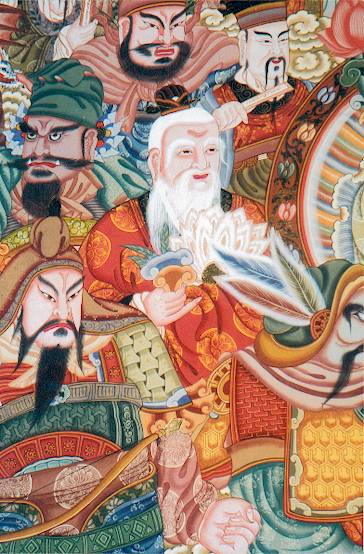
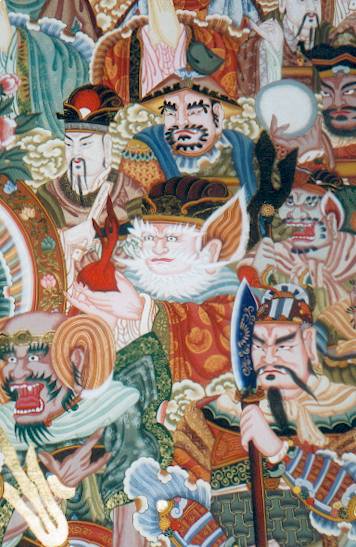
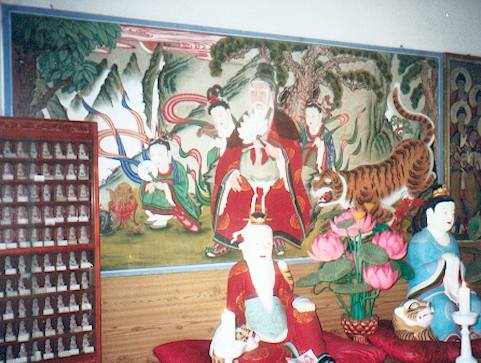
| This is one of the largest and most complex Shin-jung [Assembly of the Guardian Spirits] taeng-hwa [altar paintings I have ever seen, in 800 temples! It contains a full 108 figures, a number sacred to Buddhism. It is enshrined with 3 giant bronze Buddha statues in the Main Hall of Daewon-Jeongsa, a medium-sized Jogye-sect monastery on the western slopes of Hamji-bong (the southern-most peak of Kyeryong-san). To lean more about Shin-jung taeng-hwa and its role in Korean Buddhism, see pages 113-117 in the first edition of my book. BELOW, San-shin is seen in that great painting holding red & blue (yin & yang) bullocho sprigs AND a white-crane-feather fan. Yong-wang [Dragon-king of the Waters] is seen holding his Flaming Pearl (see pgs 110-111). |
 |
 |
 |
 |
 |
 |
 |
 |
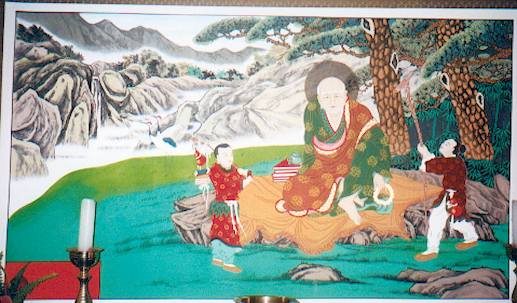
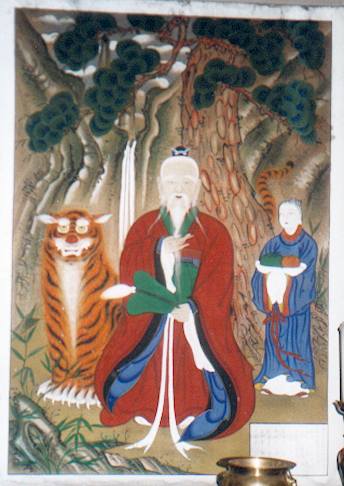
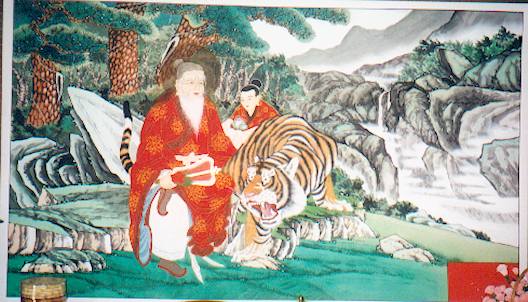
| San-shin and Deok-seong paintings in the San-shin-gak of Daewon-jeongsa -- a fairly typical matched-set. Boy or girl (it's hard to tell) dongja [attendant] offers San-shin a teapot & cup, while two boy dongja bring sutras, a medicine-wine bottle and a great dragon-head staff to Deok-seong. The tiger's tail standing straight up behind San-shin is a standard male-sexual-virility reference and joke. |
 |
| RIGHT: the SECOND San-shin painting of Daewon-jeongsa, enshrined next to a Seven-Stars icon in the Thousand-Buddha Hall. He holds the comon feather-fan. The boy-girl-boy dongja [attendant] trio are depicted as angels of heavenly nymphs [bi-seon] with their flying scarves. There is a Female San-shin statue next to the 'regular' one, making a husband-wife couple -- quite rare nationwide but pretty common around Kyeryong-san (and also the eastern side of Jiri-san). Little plastic San-shin figures in a case on the left maintain lights for the names of donors. |
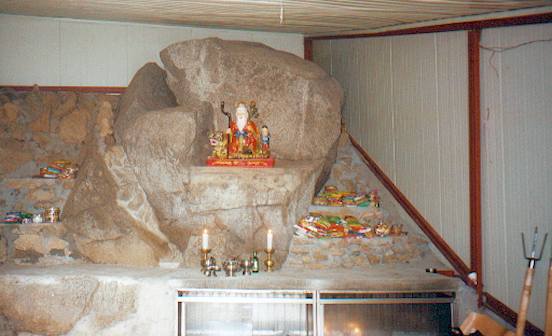
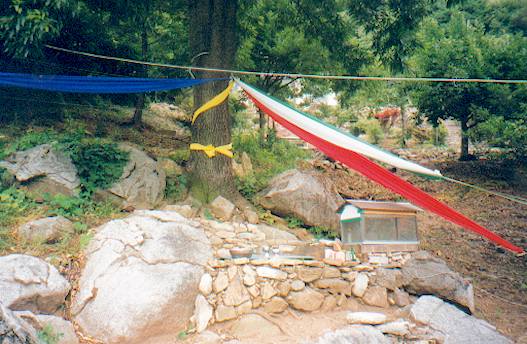
| Jeong-lim-sa is a small Shamanic temple in the same area, but remote and difficult to get to. It also features two San-shin icons, enshrined in different locations. The painting and the statue are both simple and typical. A trident used in shamanic posession-trances is seen to the right of the boulder holding the statue. Jeong-lim-sa also features several outdoor stone San-shin shrines, well-arranged and decorated, like the one below. |