| North Point of Seoul's Dragon: Wongak-sa and Seongbul-sa of Sapae-san |
| NEXT PAGE ---> |
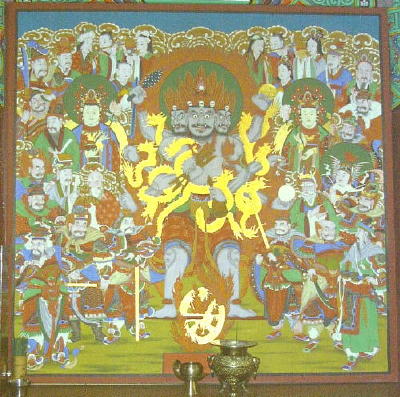
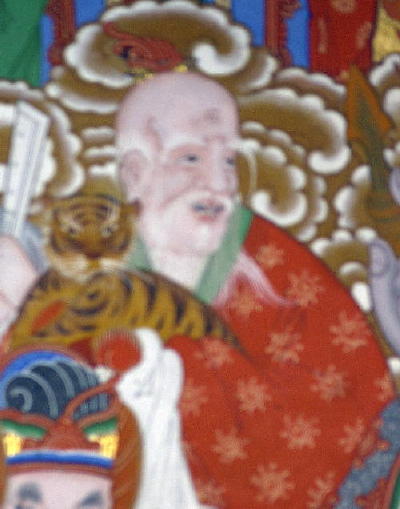
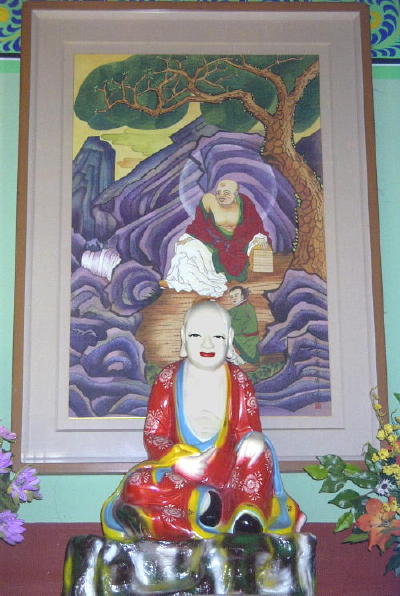
| The good modern Shin-jung-taeng-hwa (see pages 113-117 in my book) in the Main Hall of Won-gak-sa, very stong on the Hindu motifs. Striking and extremely unusual is that the San-shin (lower-left of the main figure) is holding a tiger cub! This echoes the iconography of the Na-han, the disciples of Sakyamuni Buddha! Another crossover-link between Korea's Buddhist and Mountain-worship traditions... Sorry that my center-photo, a close-up of this, is so fuzzy -- I'm still trying to learn how to use my new digital camera properly. |
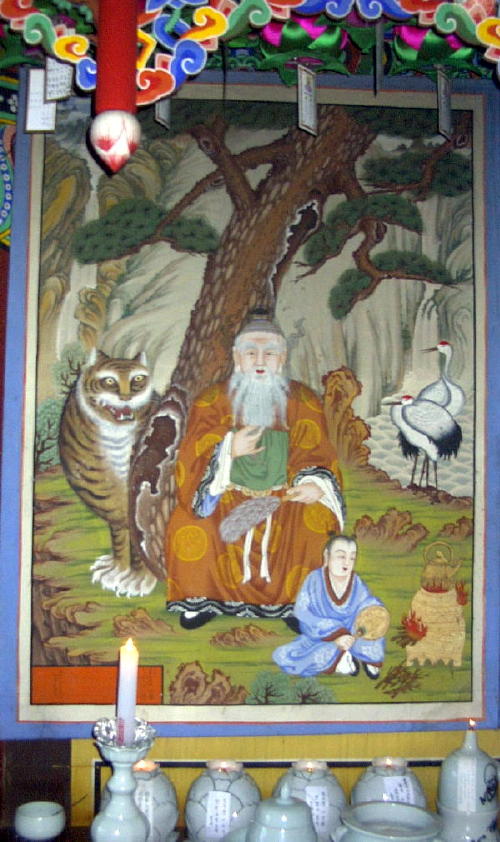
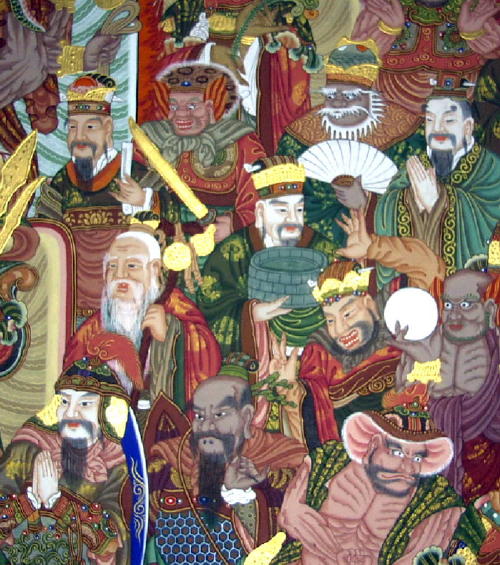
| LEFT: the quite typical San-shin of Seong-bul-sa [Enlightened Buddha Temple], a small but historic Jogye-sect place, popular for mountain-prayers. White cranes stand behind, keeping an eye on the tiger. ABOVE: San-shin shares part of Seong-bul-sa's modern Shin-jung-taeng-hwa with a variety of interesting archetypal characters. |
 |
 |
 |
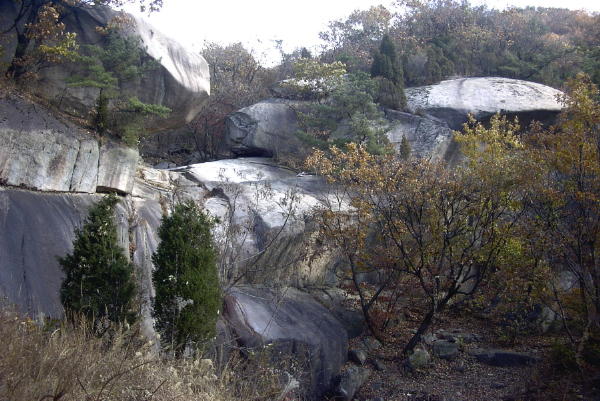
| Do-bong-san [Tao-Peak Mountain, or maybe "Mt. Peak-of-the Dao"] is a stunning sacred series of peaks and craggy ridges in the north of Seoul -- part of a long "twisting dragon" of mountains that runs from An-san and Inwang-san to the west of downtown, through the Sam-gak-san complex, up to the far north-east, then looping around to the east, forming the north-eastern border of Seoul, only ending at Ah-cha-san on the Han River. Many other pictures from this important rang are on this site. Sapae-san is the last peak at the northern U-turn curve of this range which defines Seoul. This page features the two most significant temples at Sapae-san, farther north than Hoe-ryong-sa and actually within Uijongbu City. |
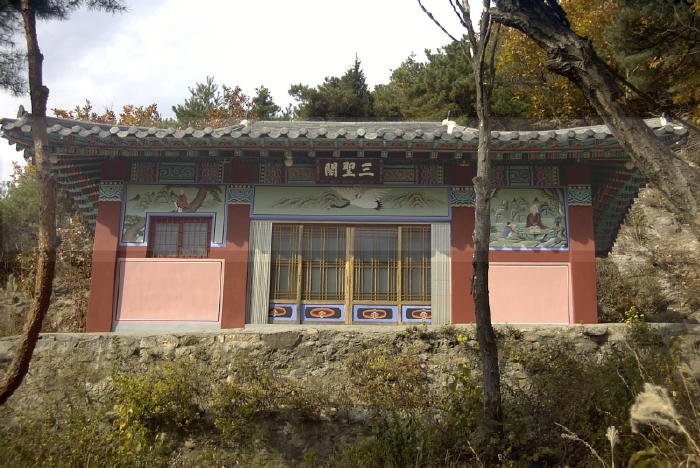 |
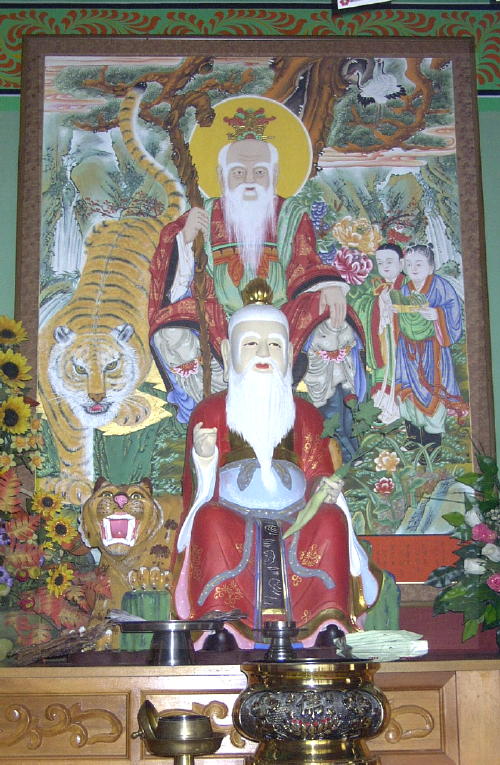
| ABOVE: the Sam-seong-gak [Three Sages Shrine] of Wongak-sa, western slope of Sapae-san. LEFT: the San-shin painting in it -- newly-made, quite elaborate, featuring flowers and a realistic tiger. A large San-shin statue sits in front, holding a greenish ginseng root. |
 |
 |
 |
 |
 |
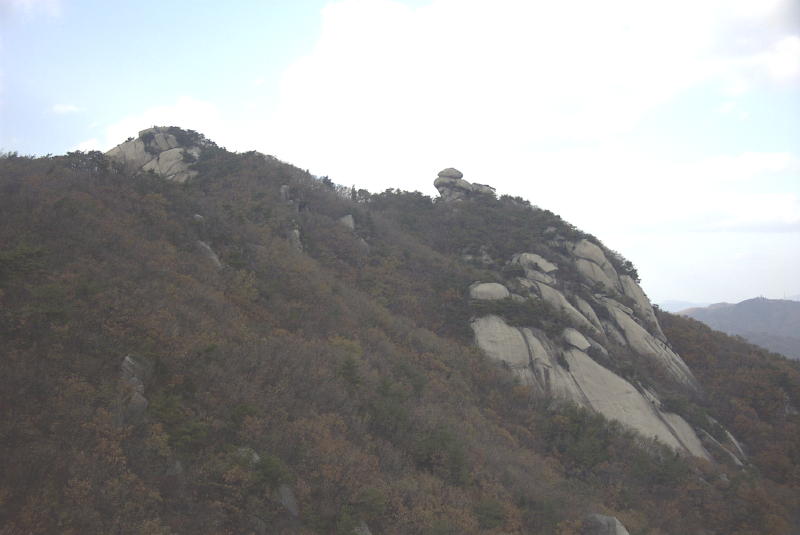 |
| The view of the 552-meter peak of Sa-pae-san, the northern-most peak of the entire "Buk-han-san" complex, from the southern ridge. |
| the fairly ordinary Deok-seong altar of Won-gak-sa. |
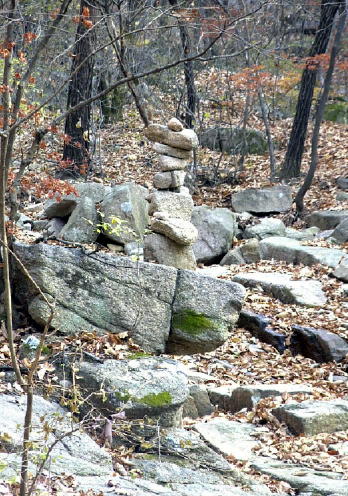
| Dobong-san and Sapae-san (and their eastern sisters Surak-san and Bulam-san) are Daoist fantasy-lands of gigantic boulders strewn over steep forested slopes, with plenty of water flowing from the sheer granite cliffs. LEFT: on the trail above Wongak-sa, some Korean built a traditional stone nature-worship-"pagoda" [dol-tap]. |