| Biseul-san Yongyeon-sa 龍淵寺 용연사 One of Korea's "Great 108" Sacred Ancient Monasteries, with a rare Gyedan Monument and some excellent old halls, Southwest of Daegu City |
| Biseul-san Index Page Yuga-sa Yongcheon-sa Nam-Jijang-sa Neo-Confucian Seowon and Hyanggyo San-shin Site CONTENTS PAGE |
Yongyeon 龍淵 means "Dragon" and then both "gulf, abyss, deep water" and "surge up,
bubble up, gush forth", and so Yongyeon-sa is the temple where a dragon manifested
upward towards Heaven from a deep pool of water, a common auspicious theme in East
Asian iconography. Folklore tells that Master Doseong witnessed such a sight at this place
while searching for a sacred temple-site, and so named the pond as "Yongyeon-ji" and
founded Yongyeon-sa in 829 CE, at the start of the reign of Unified Shilla's King Heungdeok.
This monastery became large and important in the early Goryeo Dynasty, and never burned-
down in those 500 years; people say that was due to the dragon's protection. Master Cheonil
extensively refurbished it 1419, but 173 years later it was wrecked by Japanese invaders during
the Imjin War (1592-98) because patriotic Korean monk-warriors were using it as a remote base.
It was rebuilt afterwards, with two highly sacred new additions. At the beginning of the Imjin War
in 1592, the saria [crystallized cremains and other relics] that were enshrined in the great famous
Geumgang Gyedan [Diamond Precepts-Altar] of Yeongchuk-san Tongdo-sa by Master Jajang
Yulsa in 645 CE were moved to safety on Mt. Myohyang-san (north of the war-zones). After the
war, most of the saria were returned to Tongdo-sa, but a portion (unknown size, but minor) of
them were brought to Yongyeon-sa Temple by master-monk Cheongjin (a disciple of the famed
anti-Japanese warrior-monk and ambassador, Samyeong-daesa). Cheongjin enshrined those
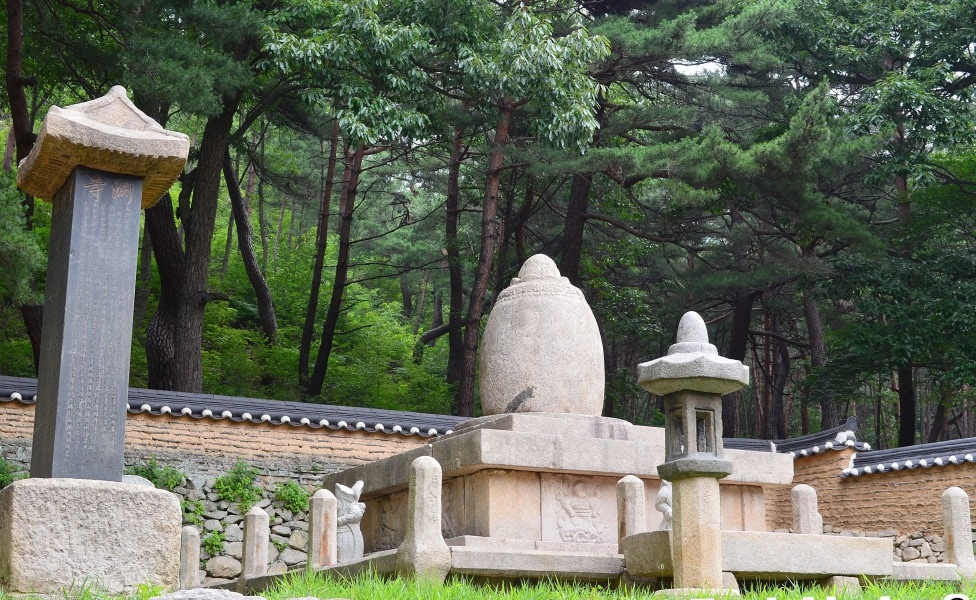
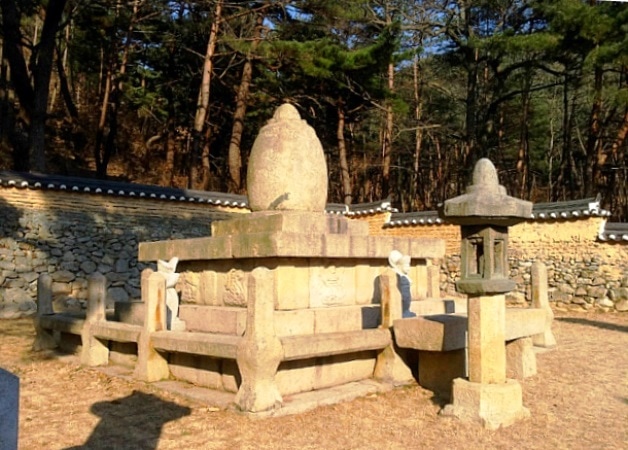
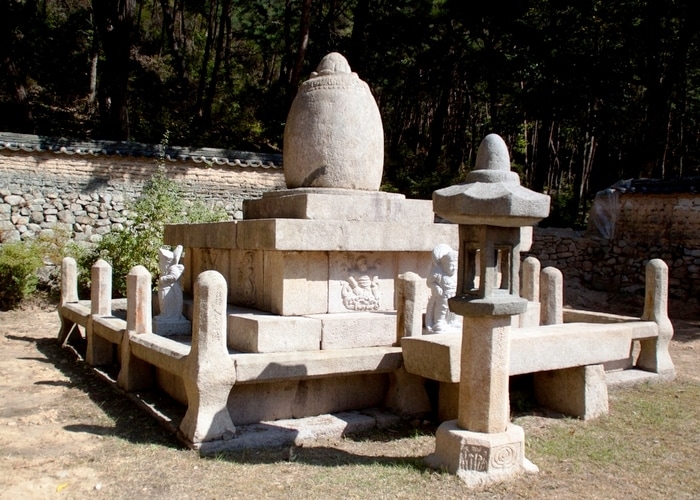
saria in a new Seokjo Gyedan [Stone Precepts-Altar] monument, used to ordain monks, and then
a Jeokmyeol Bogung Shrine-building for worship of the Buddha-relics was built by 1613. This
Precepts-Altar for ordination of monks is then one of only three in all of Korea, along with the
ones at Tongdo-sa and Moak-san Geumsan-sa; while the Jeokmyeol Bogung Shrine is one,
and the latest, of only seven that were established in traditional Korea (before 1900).
Yongyeong-sa flourished after that, becoming one of the important temples of the late Joseon
Dynasty, although it suffered occasional devastating fires, like most temples do. It was rebuilt
and completely refurbished in 1728, and still has one building dating from that time, named the
Geukrak-jeon [Paradise Hall devoted to Amita Buddha] which now serves as the Main Dharma
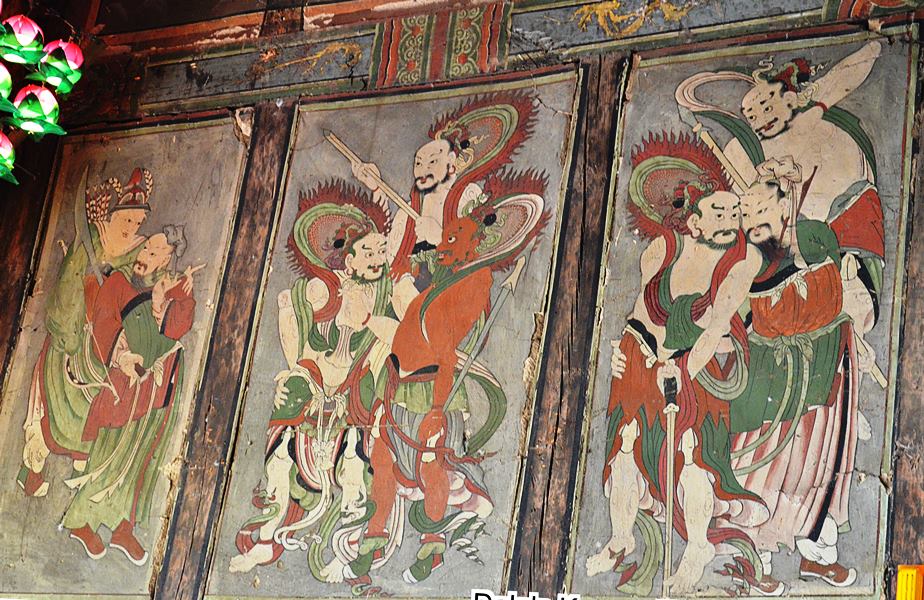
Hall. Its exterior walls feature charming old murals of Buddhist founders including Bodhidharma,
Wonhyo-daesa & Uisang-josa; the interior has a great old icon of Gwanse-eum Bosal. This
is then the third item treasure that makes this temple venerated for pilgrimage; and today it is
one of the Top-108 traditional temples of South Korea.
Many of the below photos on this page were provided to me by my friend Dale Quarrington.
bubble up, gush forth", and so Yongyeon-sa is the temple where a dragon manifested
upward towards Heaven from a deep pool of water, a common auspicious theme in East
Asian iconography. Folklore tells that Master Doseong witnessed such a sight at this place
while searching for a sacred temple-site, and so named the pond as "Yongyeon-ji" and
founded Yongyeon-sa in 829 CE, at the start of the reign of Unified Shilla's King Heungdeok.
This monastery became large and important in the early Goryeo Dynasty, and never burned-
down in those 500 years; people say that was due to the dragon's protection. Master Cheonil
extensively refurbished it 1419, but 173 years later it was wrecked by Japanese invaders during
the Imjin War (1592-98) because patriotic Korean monk-warriors were using it as a remote base.
It was rebuilt afterwards, with two highly sacred new additions. At the beginning of the Imjin War
in 1592, the saria [crystallized cremains and other relics] that were enshrined in the great famous
Geumgang Gyedan [Diamond Precepts-Altar] of Yeongchuk-san Tongdo-sa by Master Jajang
Yulsa in 645 CE were moved to safety on Mt. Myohyang-san (north of the war-zones). After the
war, most of the saria were returned to Tongdo-sa, but a portion (unknown size, but minor) of
them were brought to Yongyeon-sa Temple by master-monk Cheongjin (a disciple of the famed
anti-Japanese warrior-monk and ambassador, Samyeong-daesa). Cheongjin enshrined those
saria in a new Seokjo Gyedan [Stone Precepts-Altar] monument, used to ordain monks, and then
a Jeokmyeol Bogung Shrine-building for worship of the Buddha-relics was built by 1613. This
Precepts-Altar for ordination of monks is then one of only three in all of Korea, along with the
ones at Tongdo-sa and Moak-san Geumsan-sa; while the Jeokmyeol Bogung Shrine is one,
and the latest, of only seven that were established in traditional Korea (before 1900).
Yongyeong-sa flourished after that, becoming one of the important temples of the late Joseon
Dynasty, although it suffered occasional devastating fires, like most temples do. It was rebuilt
and completely refurbished in 1728, and still has one building dating from that time, named the
Geukrak-jeon [Paradise Hall devoted to Amita Buddha] which now serves as the Main Dharma
Hall. Its exterior walls feature charming old murals of Buddhist founders including Bodhidharma,
Wonhyo-daesa & Uisang-josa; the interior has a great old icon of Gwanse-eum Bosal. This
is then the third item treasure that makes this temple venerated for pilgrimage; and today it is
one of the Top-108 traditional temples of South Korea.
Many of the below photos on this page were provided to me by my friend Dale Quarrington.
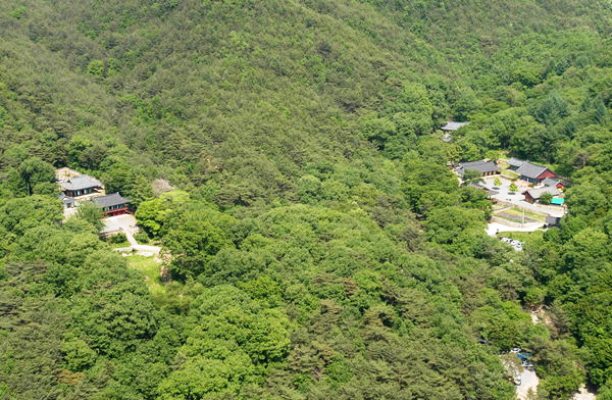
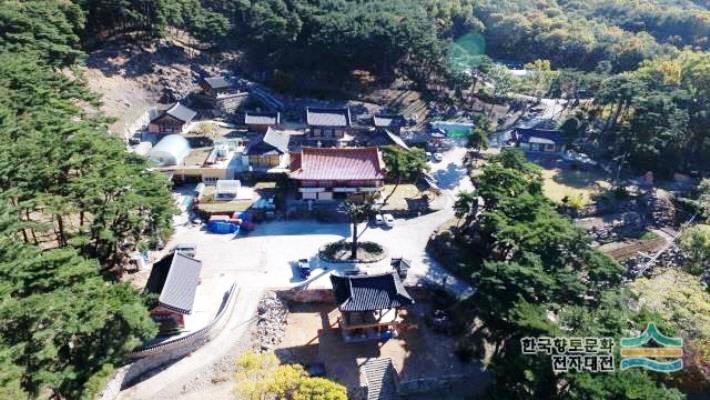
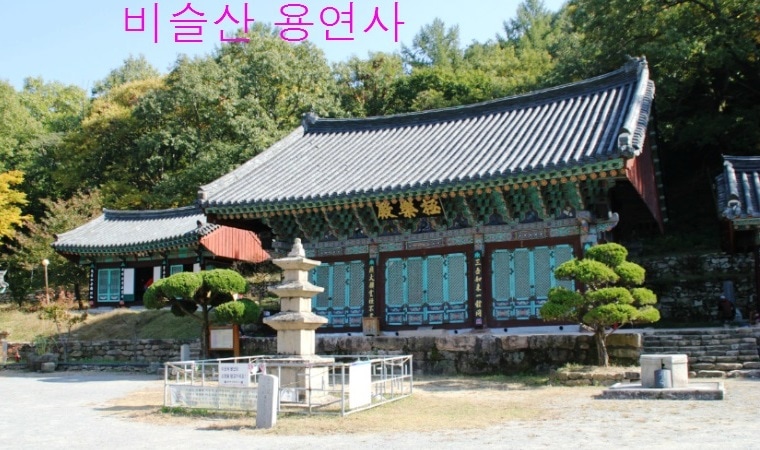
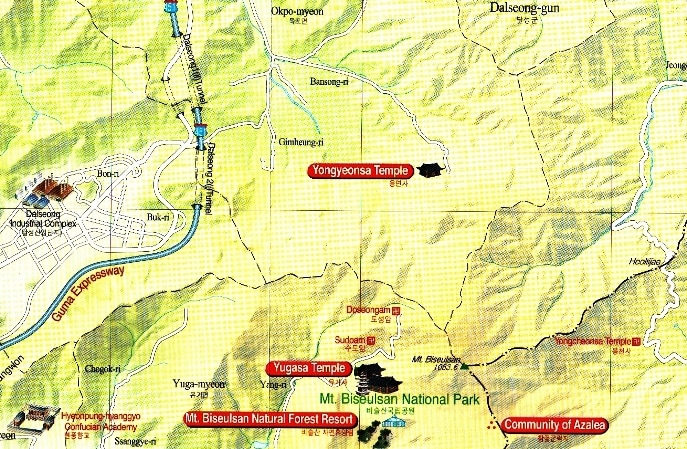
| On a far-NW ridge of Biseul-san, the main temple fits in a deep gorge-head on the right, facing approximately south; while the Jeokmyeol-bogung Shrine, Gyedan Altar and Budo-won are 500 meters to the west on the other side of the ridge. |
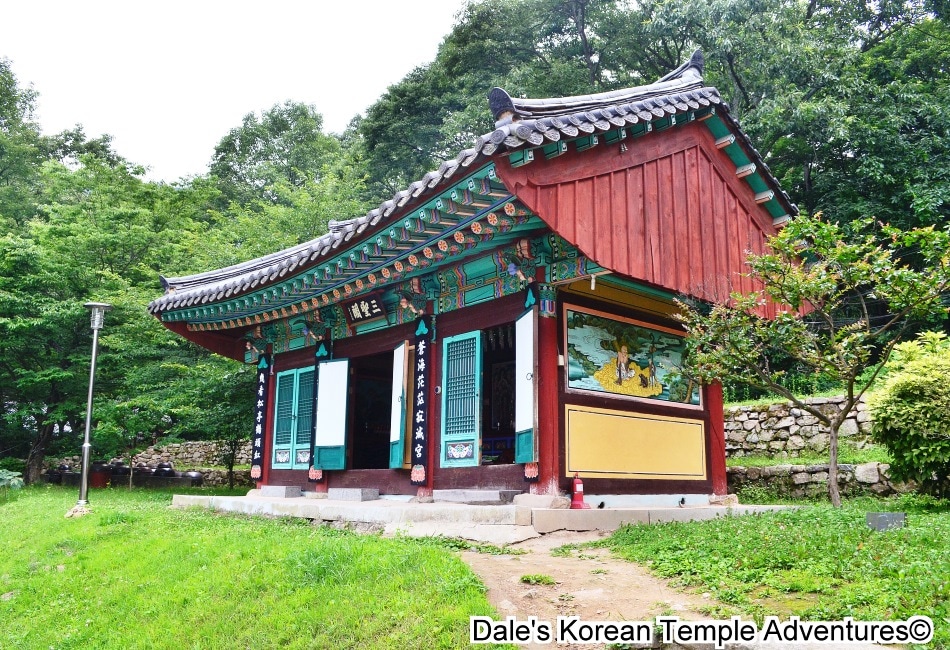
| The Samseong-gak [Three Saints Shrine] of modern Yongyeon-sa |
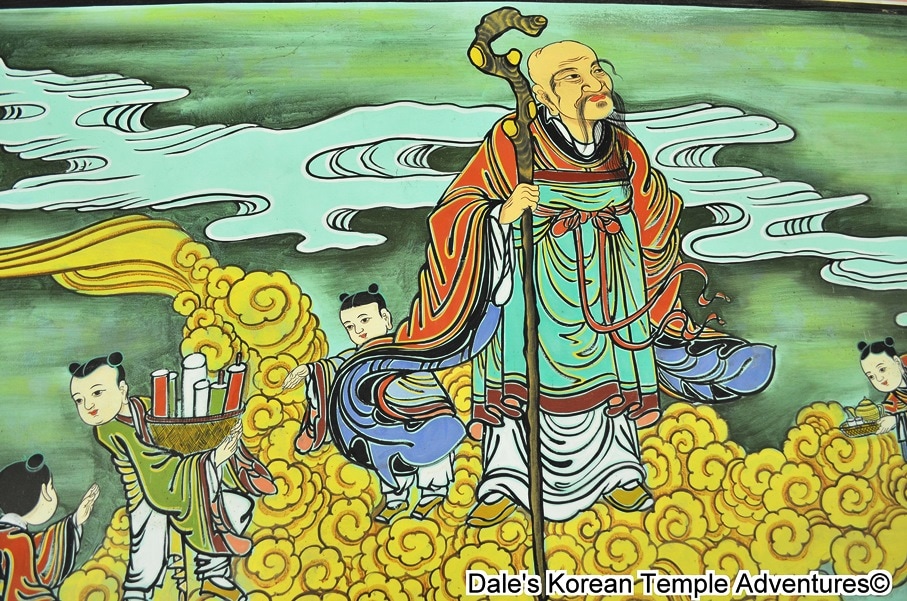
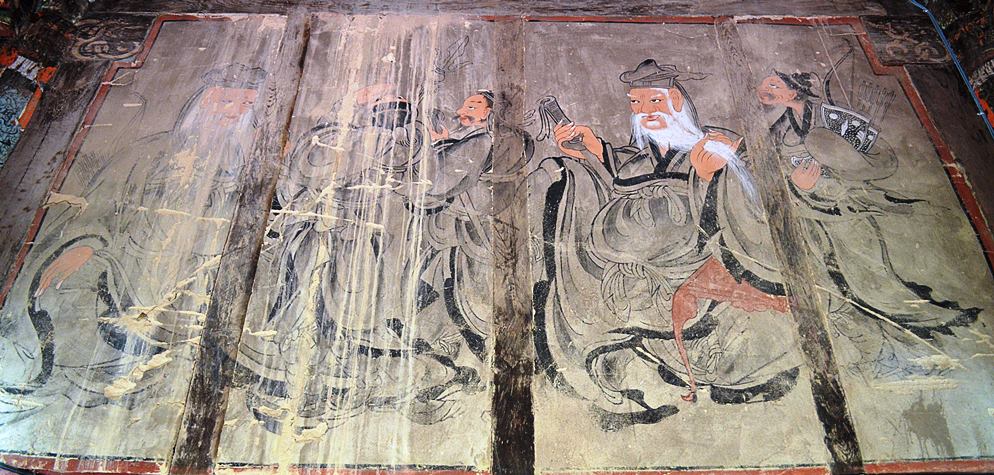
| Daoist Immortal icon-mural on the outer wall |
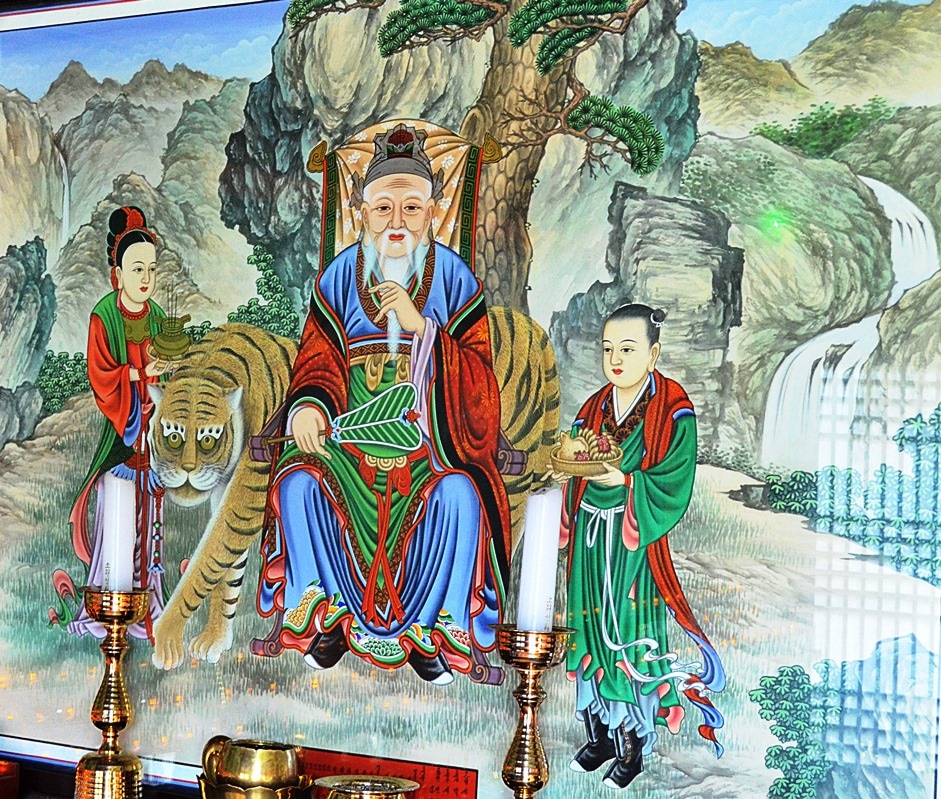
| The excellent modern Sanshin-do icon-painting |
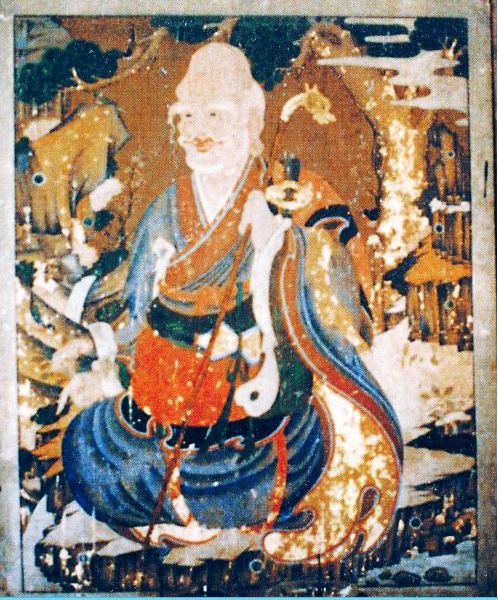
| Is this photo of the antique Dokseong icon out-of-focus, or is the painting so badly damaged....? |
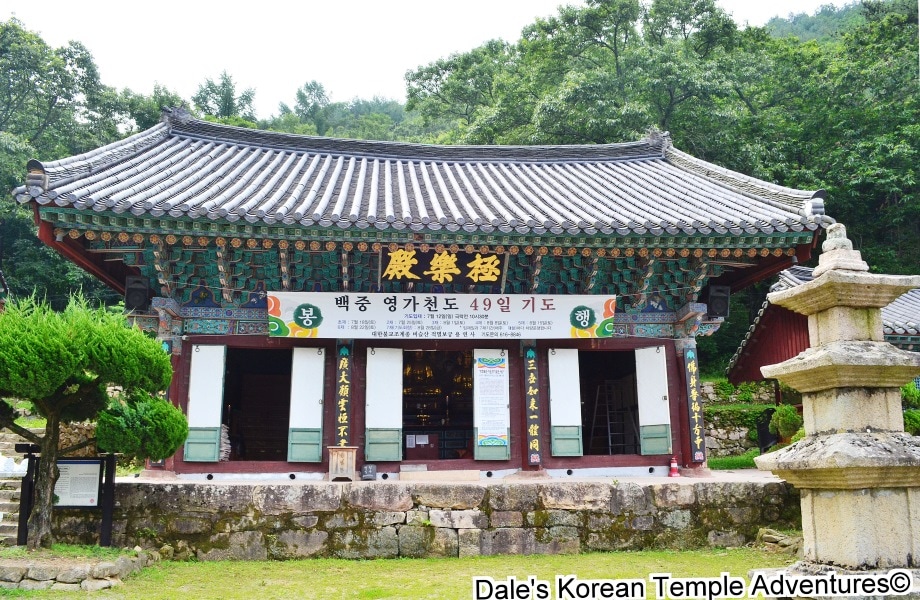
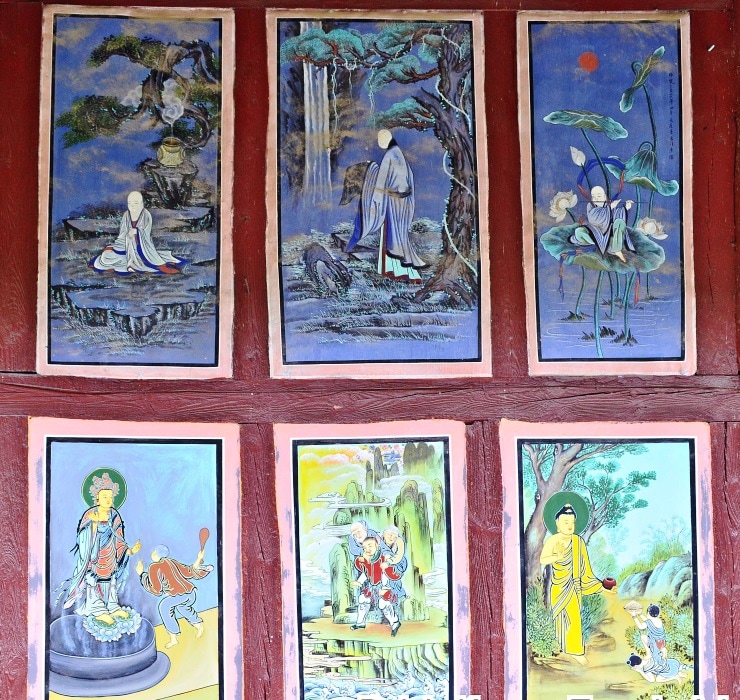
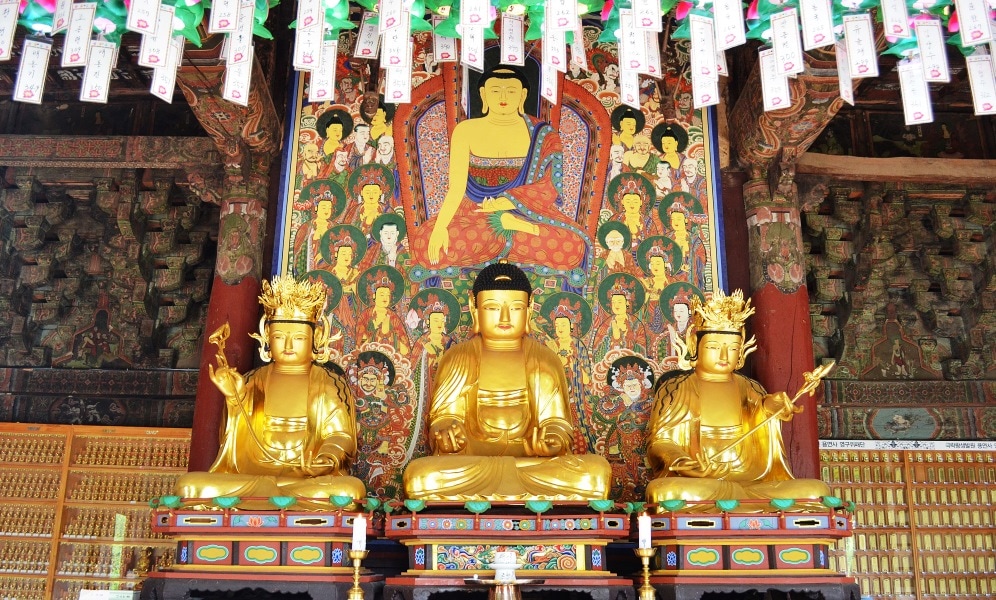
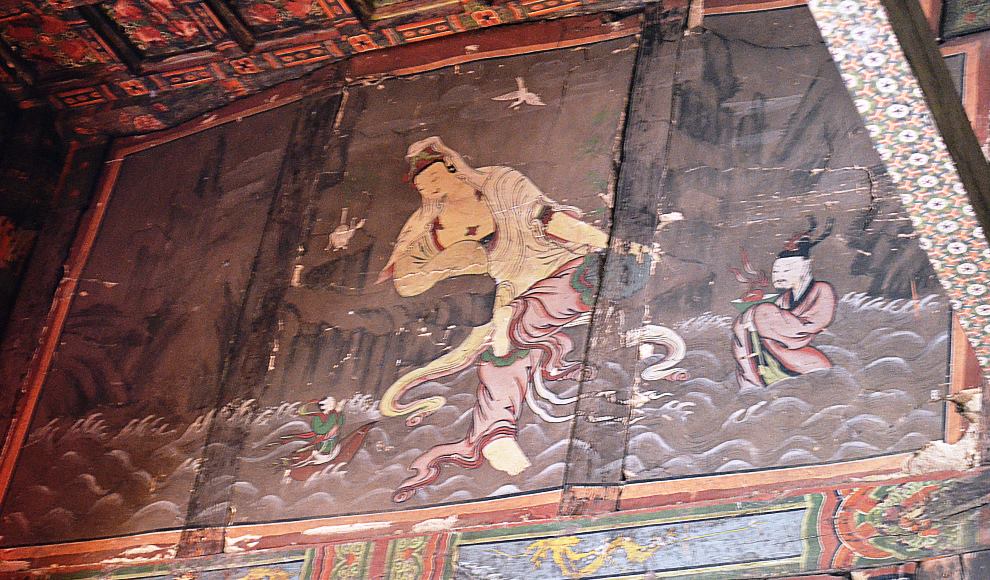
| The Geukrak-jeon [Paradise Hall devoted to Amita Buddha] which now serves as the Main Dharma Hall of Yongyeon-sa, built when this temple was completely refurbished in 1728. Its exterior walls feature charming old murals of Buddhist & Daoist masters and deities, while the interior has a great old icon of Gwanse-eum Bosal the Bodhisattva of Compassion, being attended by Yong-wang the Dragon-King. |
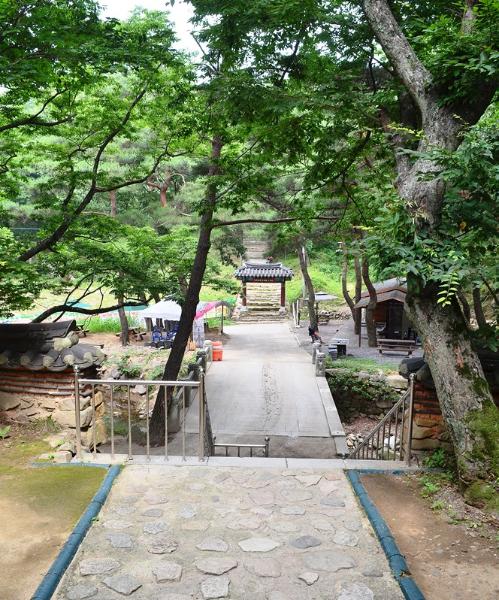
| Entranceway to the Jeokmyeol Bogung Shrine and the Geumgang Gyedan Altar, across a small stream |
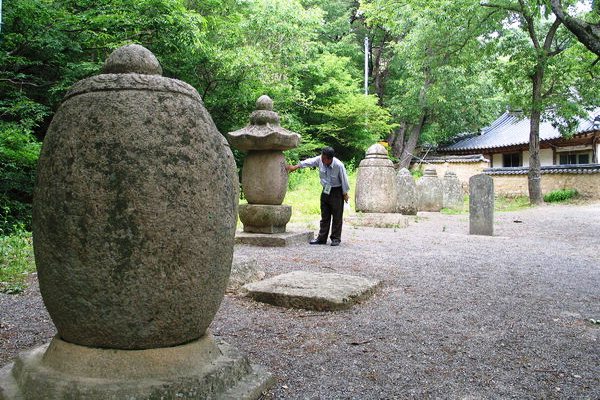
| The Budo-won cremains-enshrining monuments of great masters |
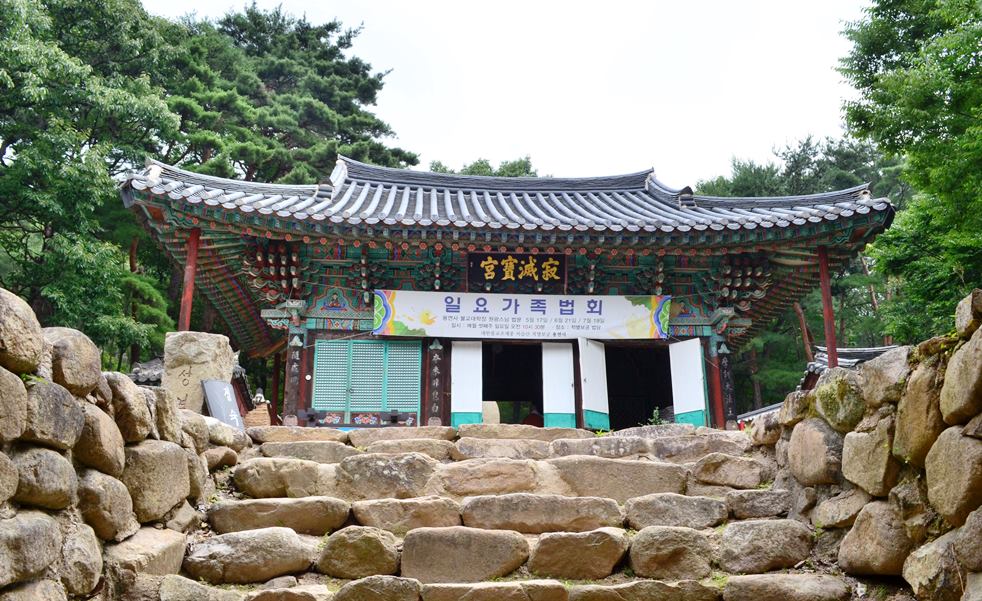
| The Geumgang Gyedan or Diamond Ordination Altar, one of only three in Korea |
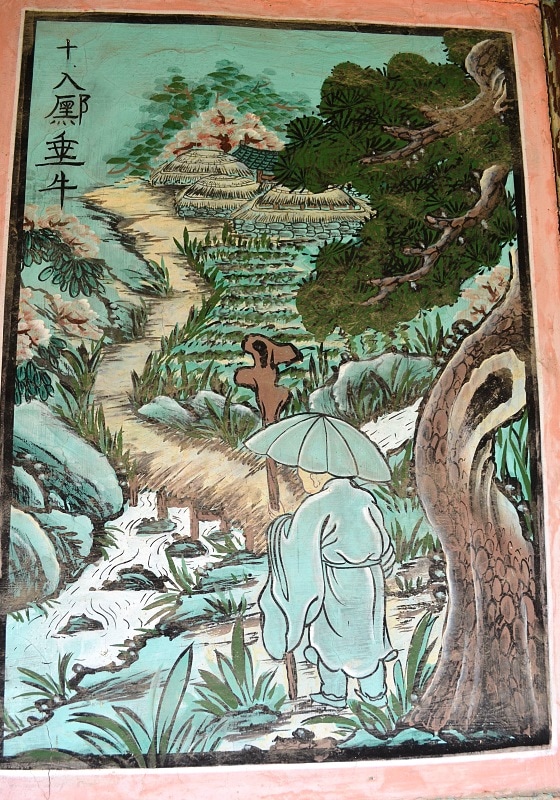
| Last of the Ten Ox Paintings |