| Gunwi-gun Hwa-san Ingak-sa |
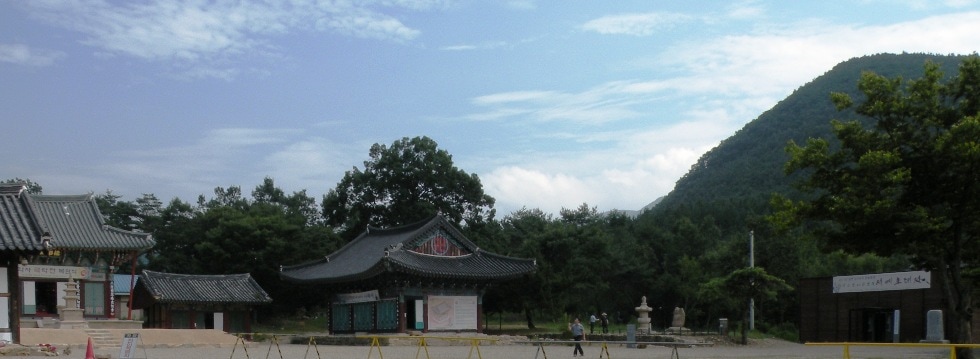
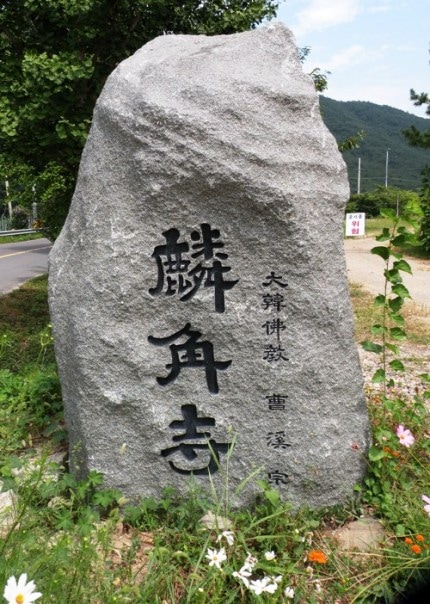
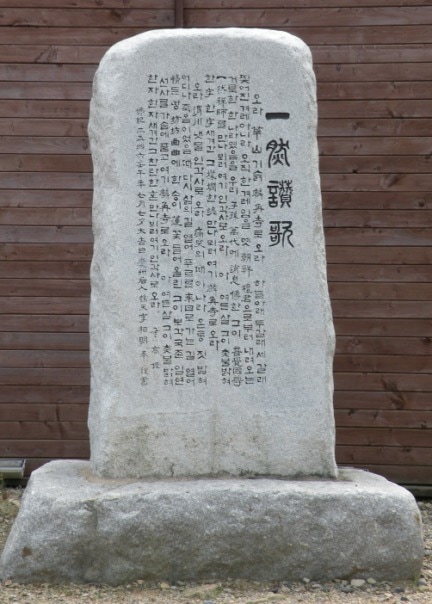
In-gak-sa [인각사 麟角寺, Qilin Horn Temple] is a small ancient temple located
at the northern foot of Mt. Hwa-san (華山), in Goro-myeon District of Gunwi County
of southern North Gyeongsang Province. It was founded in 643 by Great Master
Wonhyo, and remained a humble countryside temple for hundreds of years. It still features
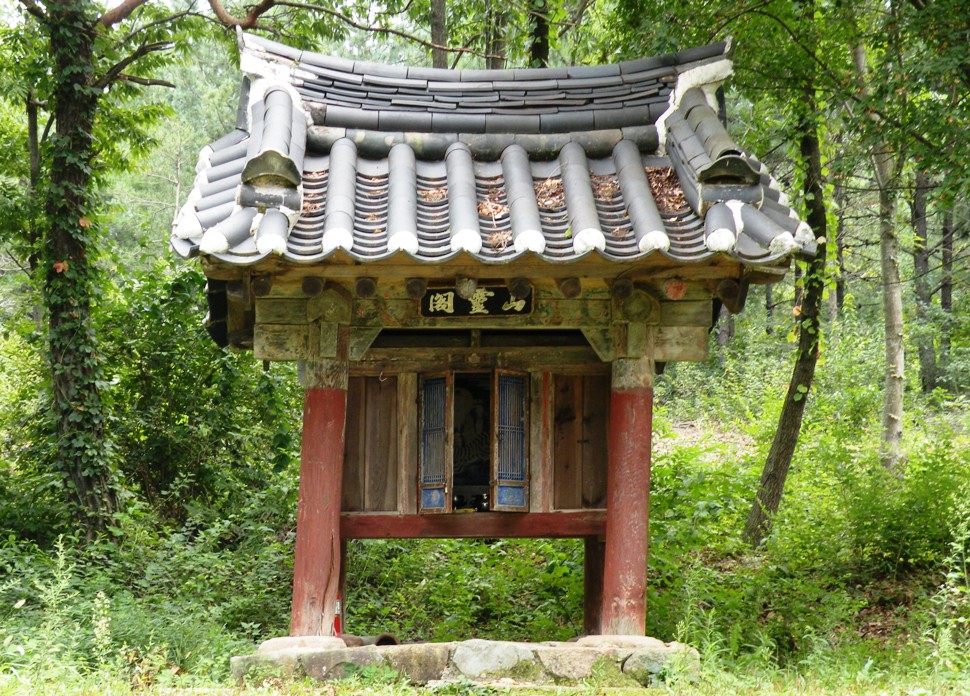
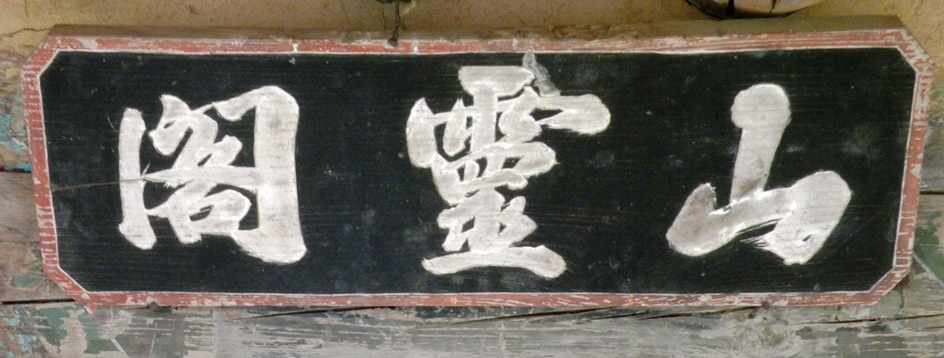
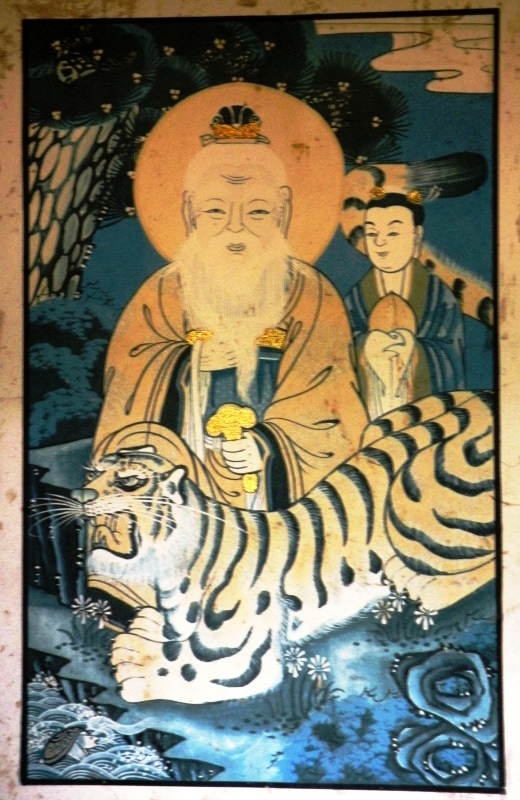
a charming old-style raised-small Sanshin-gak with a very simple faded Sanshin painting:
at the northern foot of Mt. Hwa-san (華山), in Goro-myeon District of Gunwi County
of southern North Gyeongsang Province. It was founded in 643 by Great Master
Wonhyo, and remained a humble countryside temple for hundreds of years. It still features
a charming old-style raised-small Sanshin-gak with a very simple faded Sanshin painting:
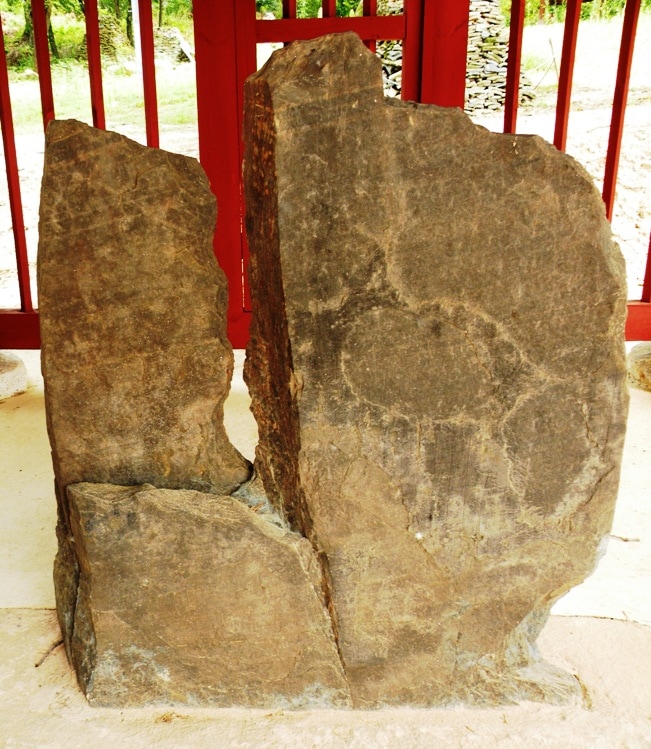
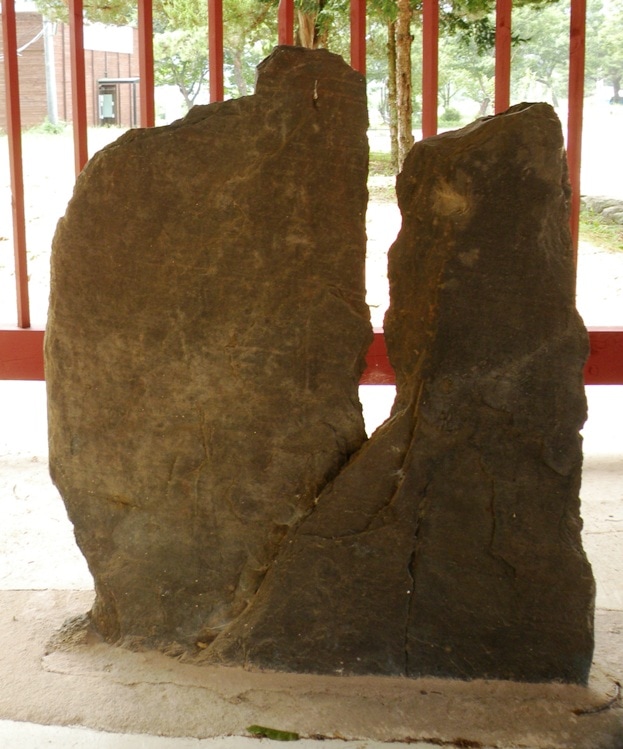
The “Bogak-guksa-bi” biseok was built in 1295, six years after Iryeon’s passing into nirvana, by decree of
King Chungnyeol (충렬왕, 忠烈王, r. 1274–1308) he asked renowned scholar Min Ji to compose the epitaph
of Iryeon’s like and accomplishments, and Iryeon’s disciple Jukheo to have that carved into the stone in the
style of legendary Chinese calligrapher Wang Xizhi. The completed monument was erected in a grand
ceremony held by Guksa Cheongjin, senior among the disciples of Iryeon; miraculous auspicious signs
were recorded as occurring during the ceremony.
The stele suffered damage over the next three centuries as many fans of calligraphy took rubbings from it.
Then in the Imjin Waeran (壬辰倭亂, 1592-98 Japanese Invasion), the enemy forces burned down Ingak-sa
and deliberated shattered the biseok. They lay in ruins until the 1990s, until being excavated and rebuilt by
the Jogye Order with assistance from the national Cultural Heritage Administration. The two surviving pieces
of this monument are standing in a pavilion behind the Guksa-jeon, sharing the designation as Treasure #428.
King Chungnyeol (충렬왕, 忠烈王, r. 1274–1308) he asked renowned scholar Min Ji to compose the epitaph
of Iryeon’s like and accomplishments, and Iryeon’s disciple Jukheo to have that carved into the stone in the
style of legendary Chinese calligrapher Wang Xizhi. The completed monument was erected in a grand
ceremony held by Guksa Cheongjin, senior among the disciples of Iryeon; miraculous auspicious signs
were recorded as occurring during the ceremony.
The stele suffered damage over the next three centuries as many fans of calligraphy took rubbings from it.
Then in the Imjin Waeran (壬辰倭亂, 1592-98 Japanese Invasion), the enemy forces burned down Ingak-sa
and deliberated shattered the biseok. They lay in ruins until the 1990s, until being excavated and rebuilt by
the Jogye Order with assistance from the national Cultural Heritage Administration. The two surviving pieces
of this monument are standing in a pavilion behind the Guksa-jeon, sharing the designation as Treasure #428.
However, this temple did not remain humble -- National Master Iryeon (一然, 1206-1289) lived
here at the end of his life as its Juji (住持, Abbot) after having been appointed Guksa (國師,
National Master/Preceptor), and he probably wrote parts of the famous Samguk Yusa (三國遺事,
Overlooked Legends of the Three Kingdoms) while residing here, and Ingak-sa became a larger,
more important temple in those days. His budo (浮屠, memorial stupa; funerary reliquary) and
official royal-ordered memorial biseok (碑石, standing stone stele) are located in its grounds.
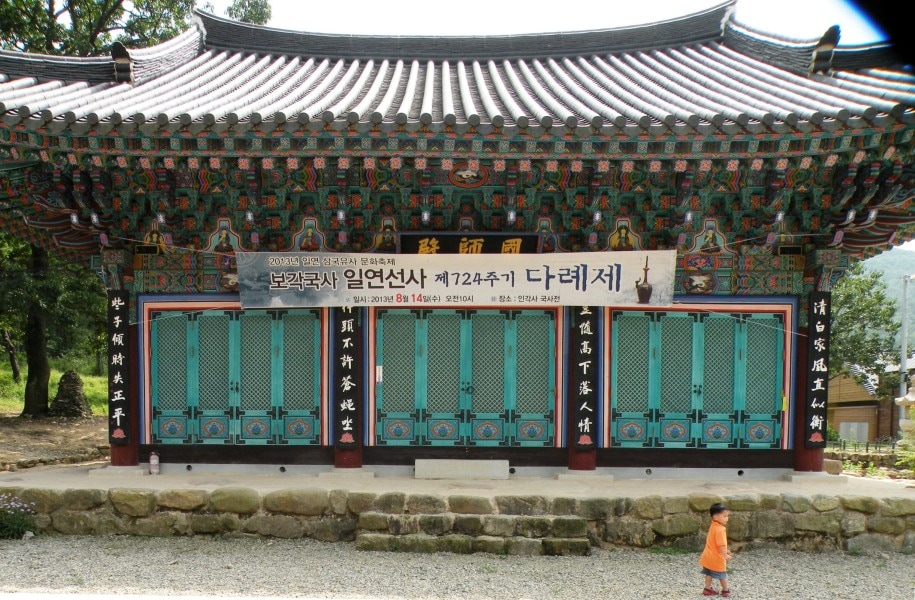
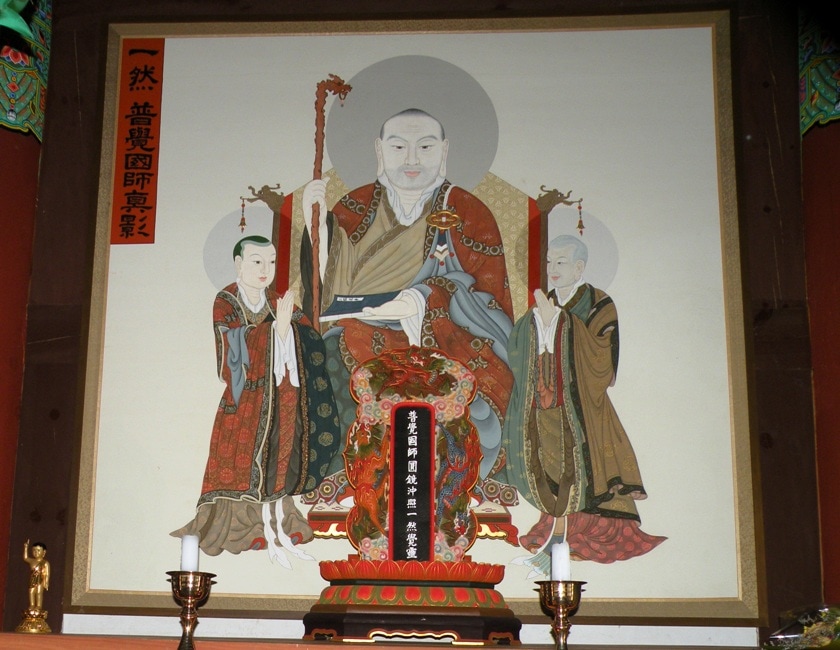
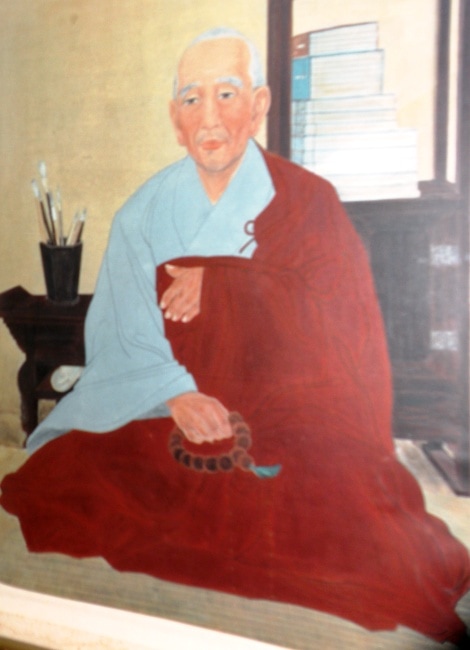
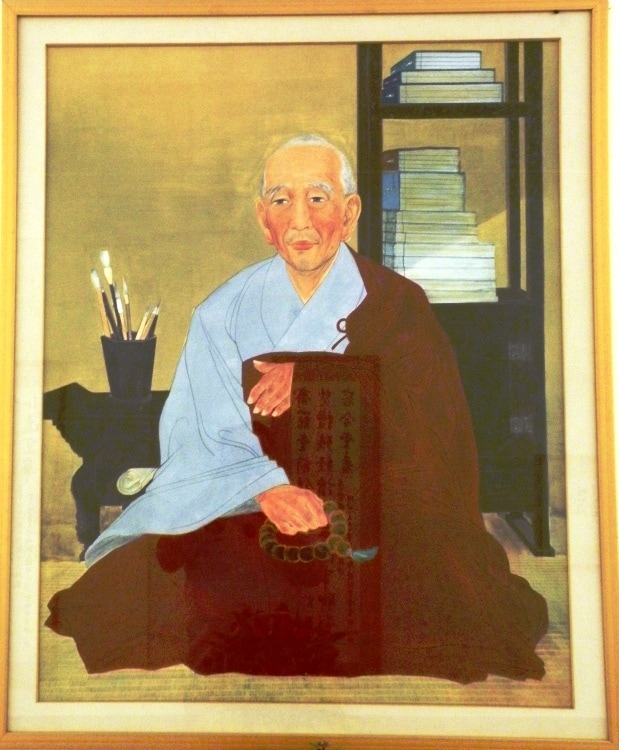
There is now a large Guksa-jeon Hall honoring Master Iryeon, with a formal portrait of him
enshrined for veneration:
here at the end of his life as its Juji (住持, Abbot) after having been appointed Guksa (國師,
National Master/Preceptor), and he probably wrote parts of the famous Samguk Yusa (三國遺事,
Overlooked Legends of the Three Kingdoms) while residing here, and Ingak-sa became a larger,
more important temple in those days. His budo (浮屠, memorial stupa; funerary reliquary) and
official royal-ordered memorial biseok (碑石, standing stone stele) are located in its grounds.
There is now a large Guksa-jeon Hall honoring Master Iryeon, with a formal portrait of him
enshrined for veneration:
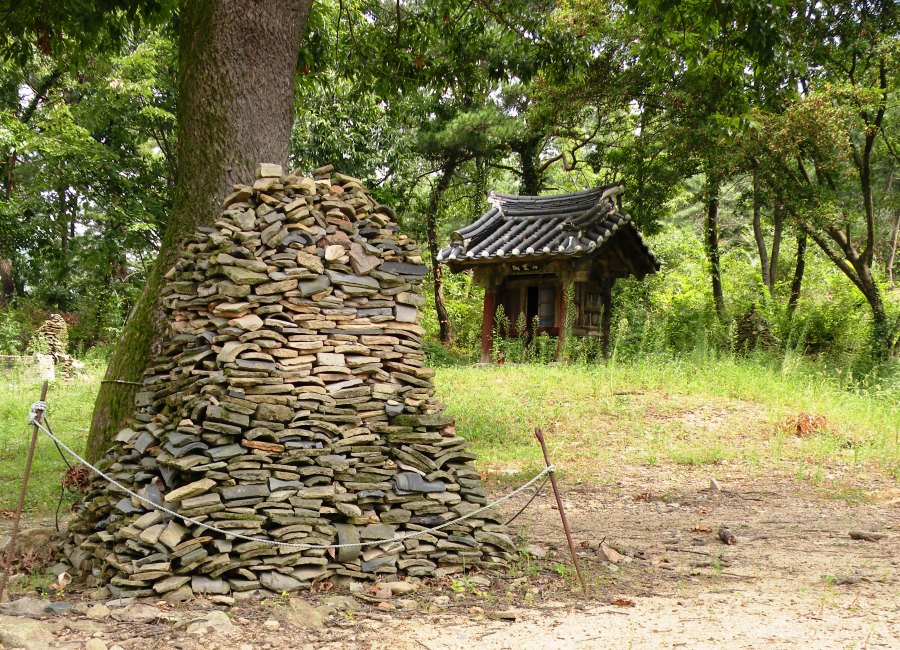
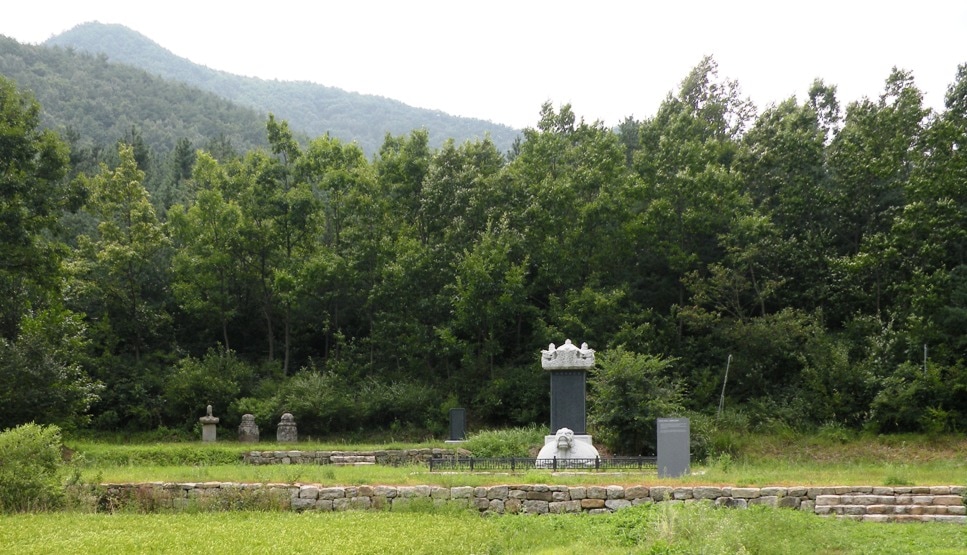
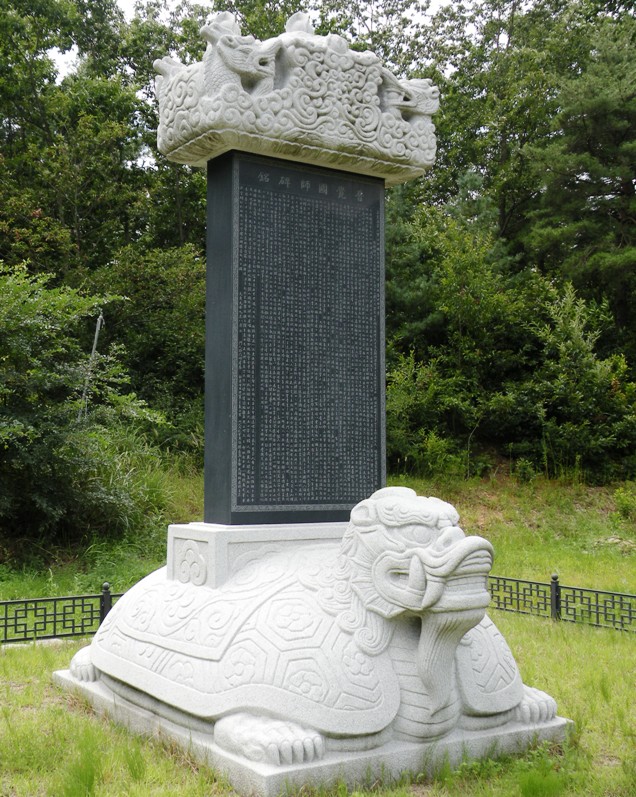
A reproduction of the original biseok was created on the basis of surviving rubbings collected from
around the nation, based on scholarship by Dr. Park Yeong-don of the Jungang Sangha University,
and erected in 2006 to commemorate the 800th anniversary of Master Iryeon’s birth. It stands next
to the budos of three of Iryeon’s disciples, east of the temple:
around the nation, based on scholarship by Dr. Park Yeong-don of the Jungang Sangha University,
and erected in 2006 to commemorate the 800th anniversary of Master Iryeon’s birth. It stands next
to the budos of three of Iryeon’s disciples, east of the temple:
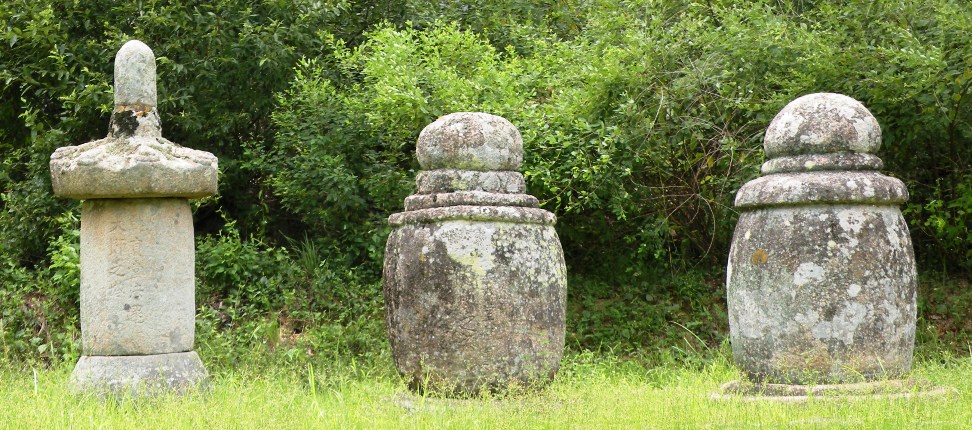
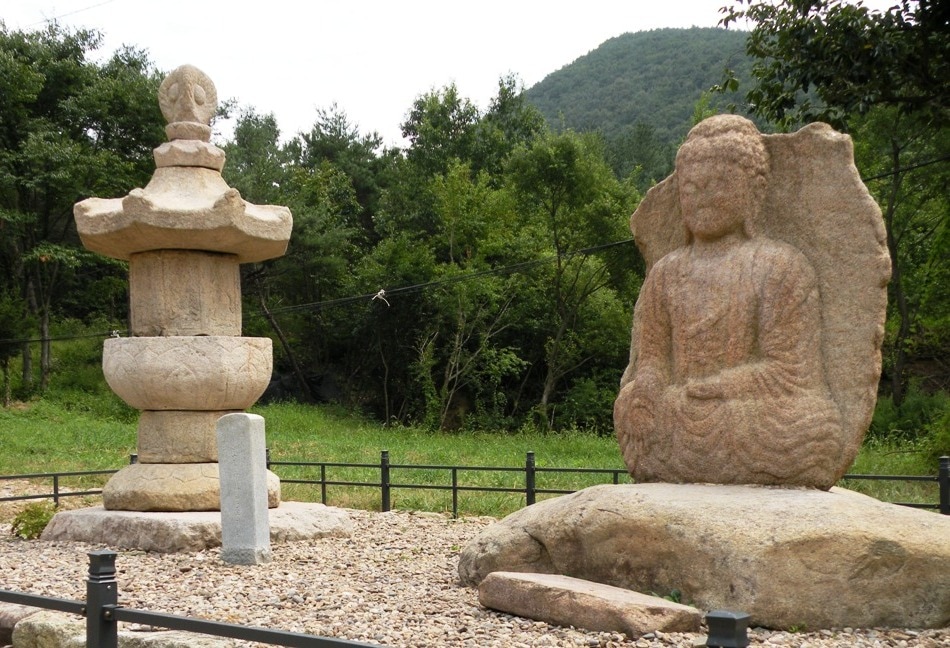
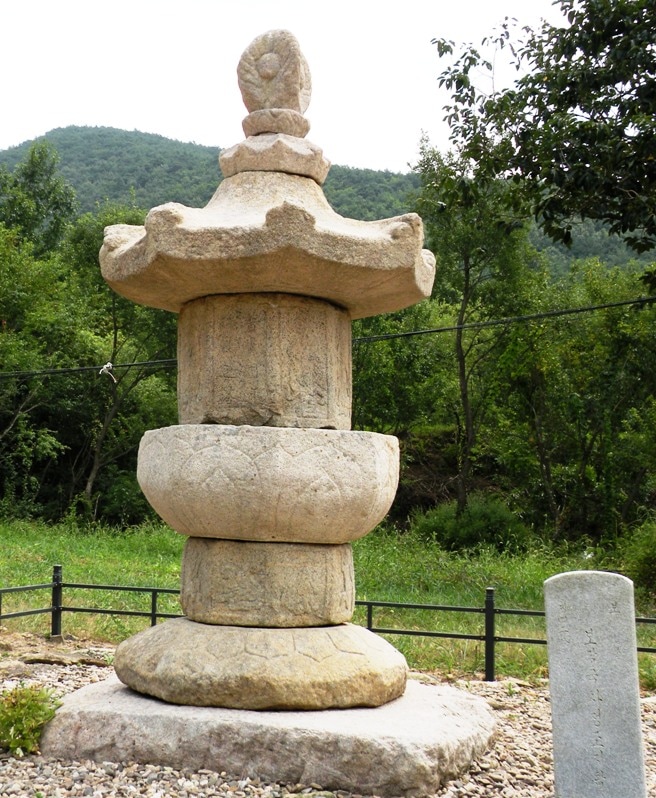
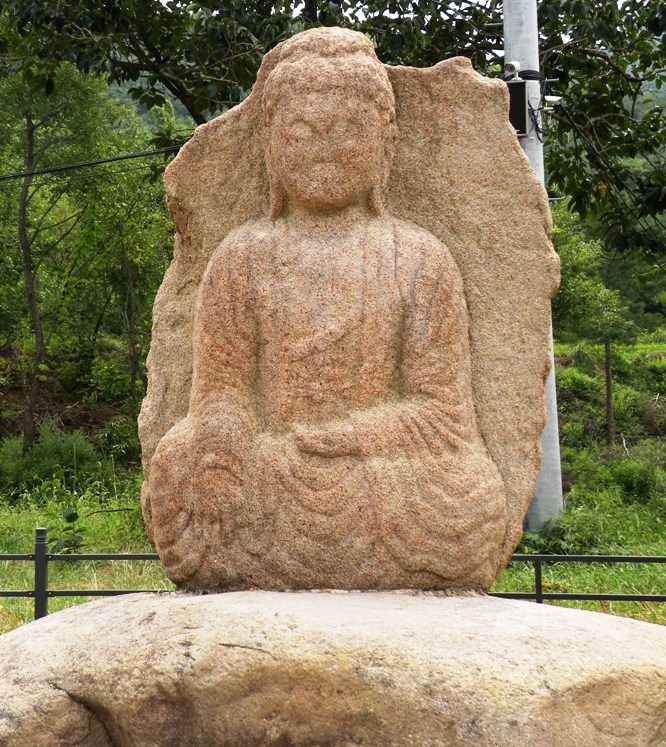
| Master Iryeon's elaborate and ornate “Bogak-guksa Jeongjo-jitap” budo has been restored and shares the designation as Treasure #428. Ingak-sa also contains a Goryeo-era stone statue, seated on a yeonhwa (lotus flower) pedestal, of Seokgamoni-bul (釋迦牟尼佛, Sakyamuni Buddha, 563-483 BCE), designated as Provincial Treasure #339, with its aureole also badly damaged by the Japanese invaders; it is enshrined in the main courtyard next to Iryeon’s budo, near a new museum-exhibition building that commemorates Iryeon. |
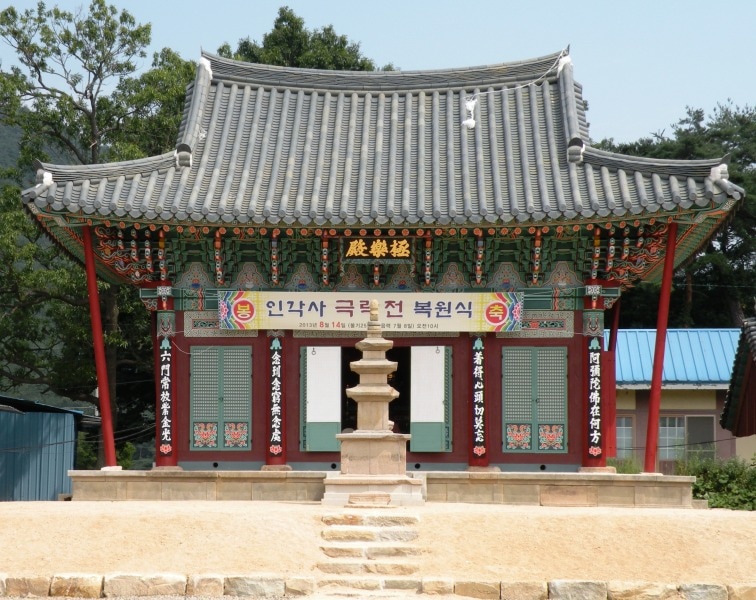
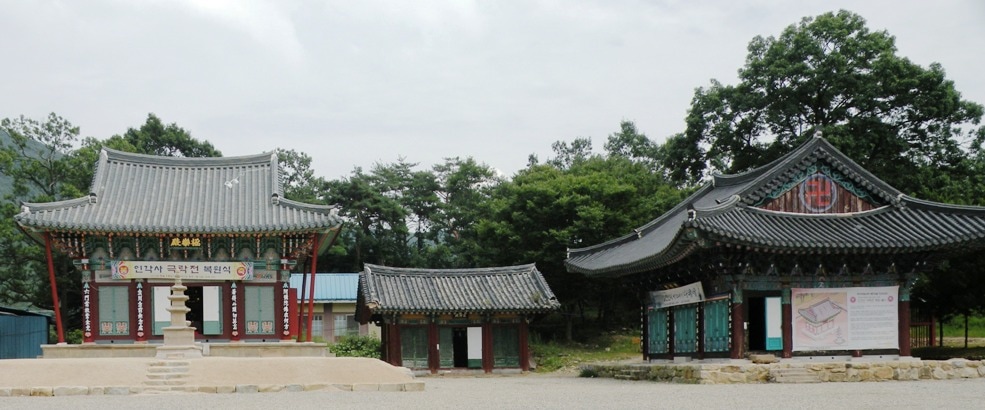
| the recently-rebuilt Geungnak-jeon [Paradise Hall of Amita Buddha] now serves as the Beopdang [Main Hall] |
| Portrait of Master Iryeon, behind reflective glass, in the Geungnak-jeon Main Hall |
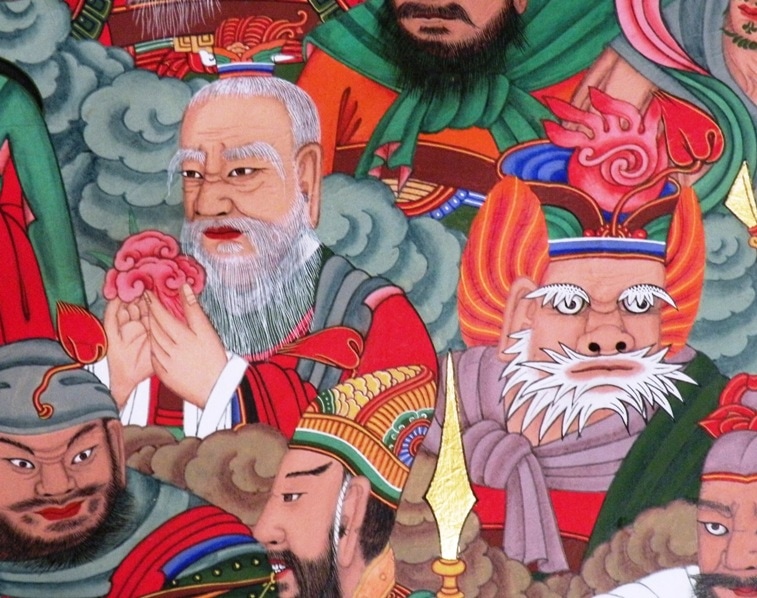
| Sanshin and Yong-wang appear together in the Shinjung-taenghwa [Assembly of Guardian-Spirits Painting |
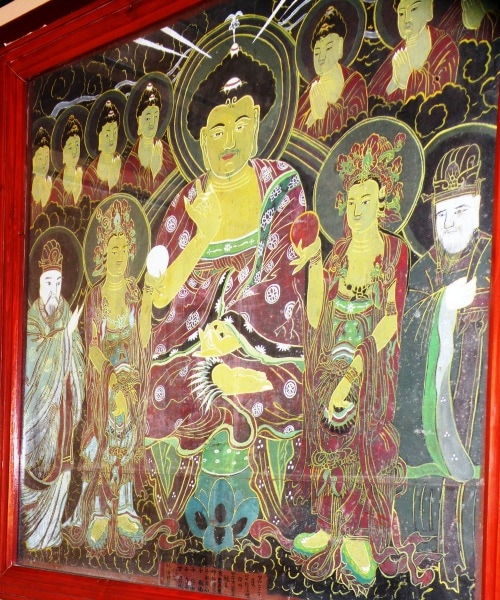
| old Chilseong [Seven Stars of the Big Dipper painting, behind reflective glass, in the Main Hall the North and South Pole-Stars are depicted as mere officials, while the Il-wol-gwang Bosal [Sun-Moon Bodhisattvas] pair flanking Jeseok Buddha is especially prominent. |
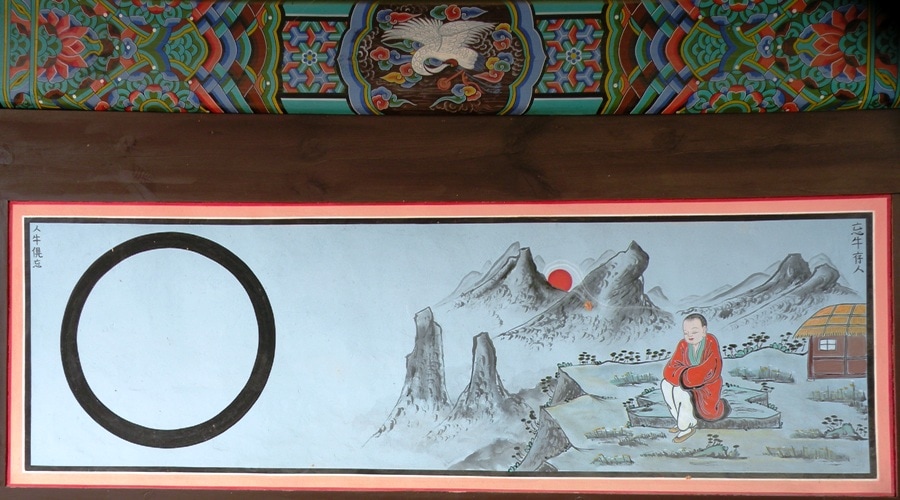
| unusual ending-panels of the 10-ox Series, on the outside of the Geungnak-jeon |
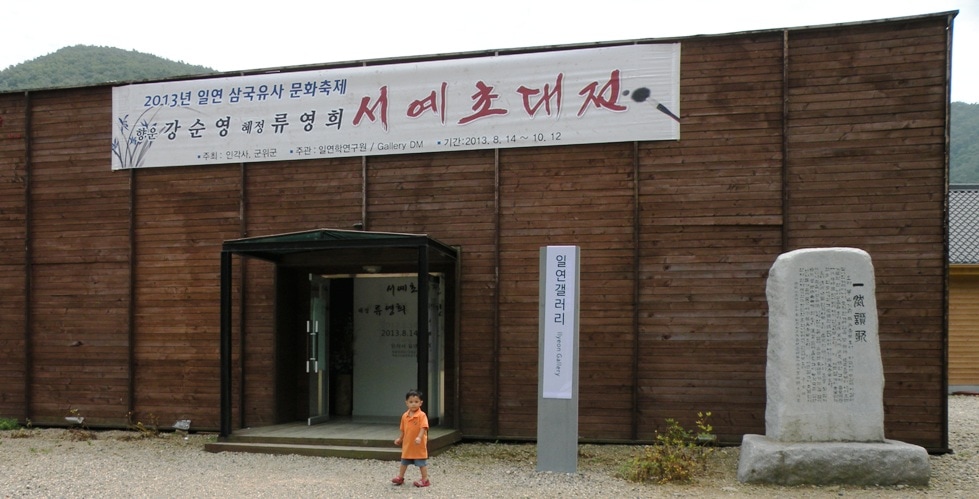
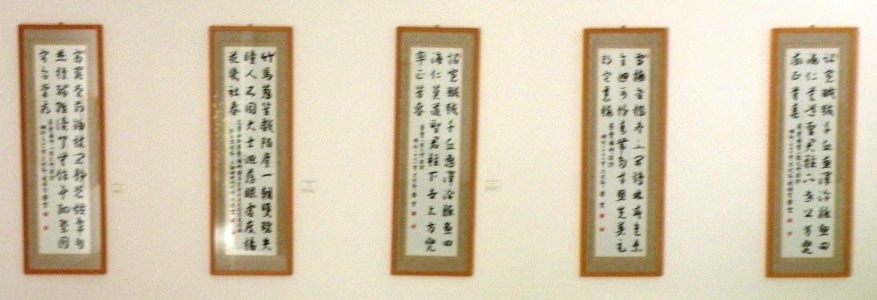
| Master Iryeon Museum |
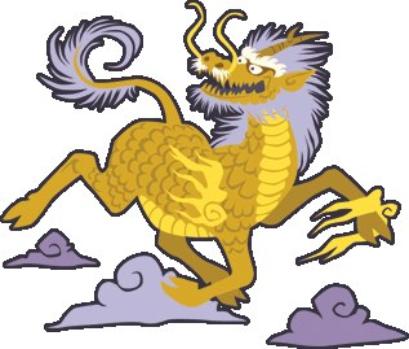
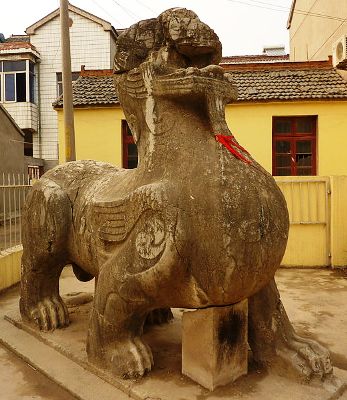
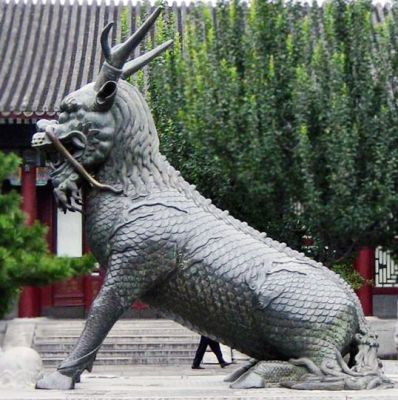
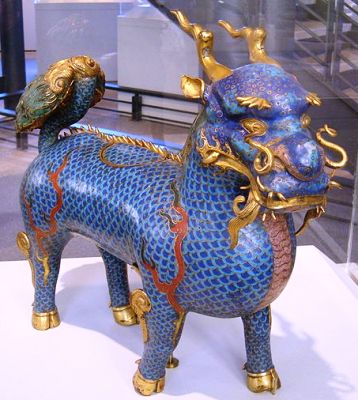
| This ancient temple is named "In-gak" which means the horn of a Qilin, Quirin or Girin, an auspicious mythical animal of Chinese origin, said to appear in this world to announce the imminent arrival or passing of a wise sage or an illustrious ruler. They are gentle with good people but can fiercely punish the wicked. They are said to have heralded the Yellow Emperor, Emperor Yao and Confucius. It is described in ancient texts as a lion-maned creature with the torso of a deer, the tail of an ox, the hooves of a horse, the nature of a tiger and face of a dragon. Gilin is the Korean pronunciation, and is also the Korean word for a giraffe; the association between these two exotic animals stems from Chinese Admiral Zheng He's voyage to East Africa in the early Ming Dynasty. In early Korean art they were initially depicted as more deer-like, however over time they have transformed into more horse-like images. They were named one of the "four divine creatures" (사영수,四靈獸) along with the dragon, phoenix and turtle. Gilin were extensively used in Korean royal and Buddhist arts. |