| My Visit to India in Dec. 2006 |
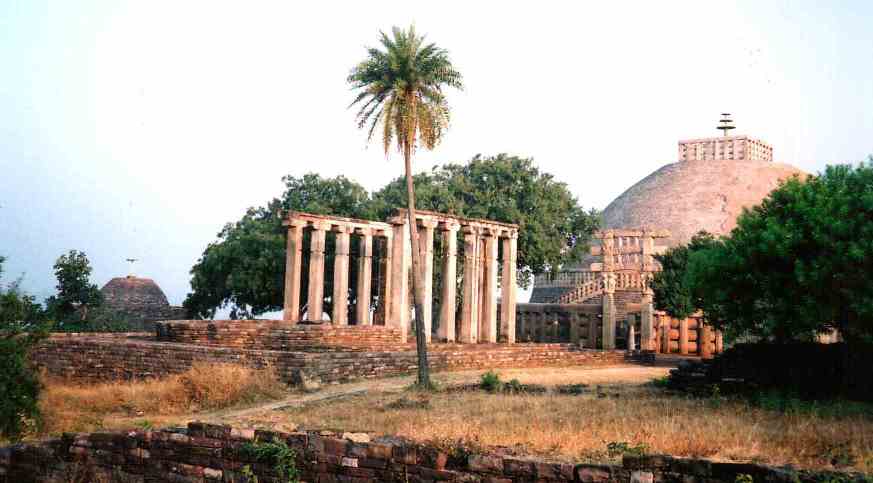
Sanchi, another UNESCO-designated World Heritage Site: Sakyamuni Buddha is not thought to have ever been
here himself, but a gigantic stone Stupa with four decorated stone gates was erected here by Emperor Ashoka the Great
(first king to rule all of northern India, and all the way up to Afghanistan, around 250 BCE), to contain sacred Buddhist relics.
Over the next millennium it became a major Buddhist teaching and worship center, and many other stupas and buildings
were put up, most of which are now in ruins. I was truly delighted to visit here, just after dawn with few other visitors around,
finding it to be a lovely, quiet, spiritually-evocative place to explore -- my best single experience in India.
here himself, but a gigantic stone Stupa with four decorated stone gates was erected here by Emperor Ashoka the Great
(first king to rule all of northern India, and all the way up to Afghanistan, around 250 BCE), to contain sacred Buddhist relics.
Over the next millennium it became a major Buddhist teaching and worship center, and many other stupas and buildings
were put up, most of which are now in ruins. I was truly delighted to visit here, just after dawn with few other visitors around,
finding it to be a lovely, quiet, spiritually-evocative place to explore -- my best single experience in India.
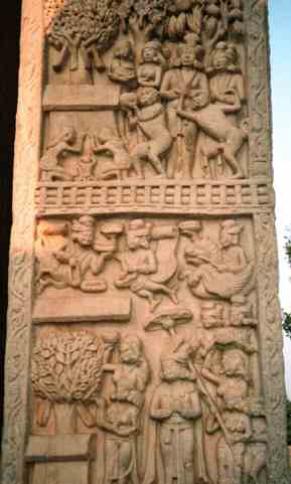
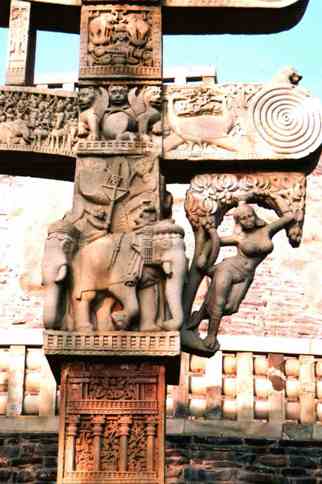
Left: Ashoka himself (lower center, with sun-shade over his head) offering respect to the Buddha -- who could not be
directly depicted, according to the standards of early Theravada Buddhism (much like as in Islam), and so is symbolically
represented by a Bodhi Tree (underneath which Sakyamuni sat while attaining enlightenment). The above panel shows
monkeys making offerings of fruit to the Buddha. Right: this East-Gate-pillar displays strong Hindu -art influences.
directly depicted, according to the standards of early Theravada Buddhism (much like as in Islam), and so is symbolically
represented by a Bodhi Tree (underneath which Sakyamuni sat while attaining enlightenment). The above panel shows
monkeys making offerings of fruit to the Buddha. Right: this East-Gate-pillar displays strong Hindu -art influences.
| Page Four -- Sanchi Buddhist Stupa & Disciple-Temple (and Bhimbhetka primitive-cave-drawings) |
| the back of the North Gate |
| the amazingly well-preserved thousand-year-old Hindu temples of Khajuraho, another of India's famous UNESCO-designated World Heritage Sites |
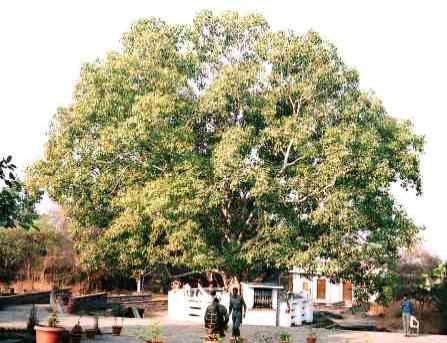
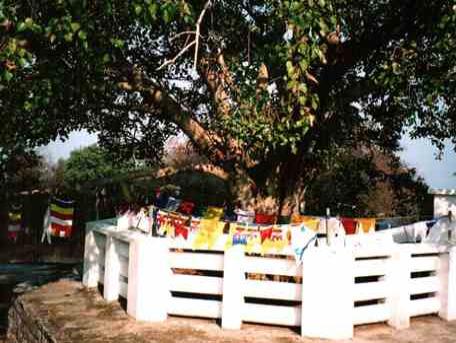
At the entrance is this magnificent "dual" Bodhi Tree, created by planting together cuttings from the Bodhi Tree
of Sri Lanka (said to have been grown from a branch of the original Tree of Buddha's Enlightenment, carried there by
a son of Ashoka) and the Bodhi Tree of Bodhgaya (itself descended from the Sri Lankan one, after the original died).
Its base is surrounded by Buddhist flags from many nations.
of Sri Lanka (said to have been grown from a branch of the original Tree of Buddha's Enlightenment, carried there by
a son of Ashoka) and the Bodhi Tree of Bodhgaya (itself descended from the Sri Lankan one, after the original died).
Its base is surrounded by Buddhist flags from many nations.
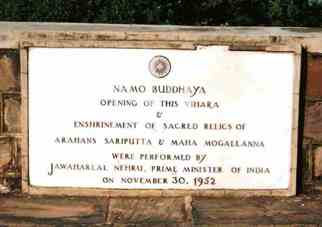
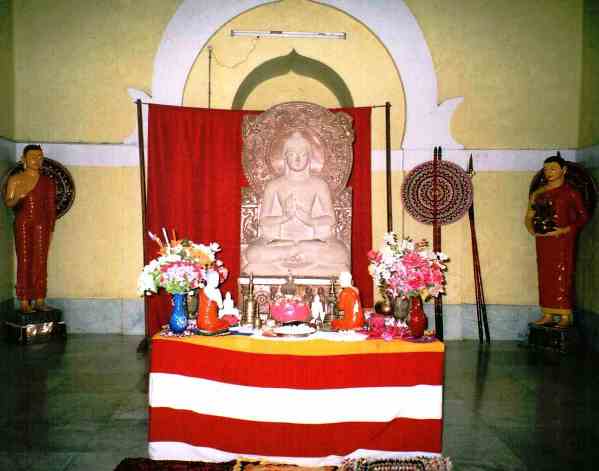
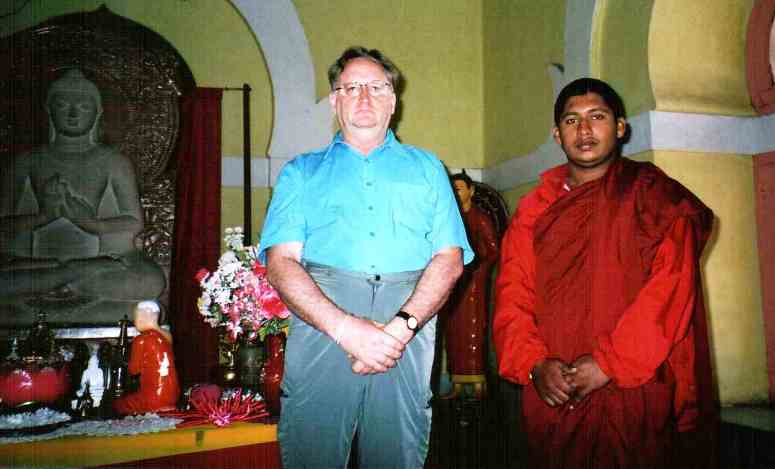
Also at Sanchi's entranceway is what they
call the Sri Lankan Vihara [temple], built in
1952 two enshrined the relics of the
famous Arhats (disciples of Buddha)
Sariputra and Maha-moggallana, whose
remains were discovered during nearby
excavations. Many of our group bowed
and offered respect at this Shrine, and
a Theravada monk attending to it tied
strings around our wrists for remembrance.
Two weeks later, I'm still wearing mine...
call the Sri Lankan Vihara [temple], built in
1952 two enshrined the relics of the
famous Arhats (disciples of Buddha)
Sariputra and Maha-moggallana, whose
remains were discovered during nearby
excavations. Many of our group bowed
and offered respect at this Shrine, and
a Theravada monk attending to it tied
strings around our wrists for remembrance.
Two weeks later, I'm still wearing mine...
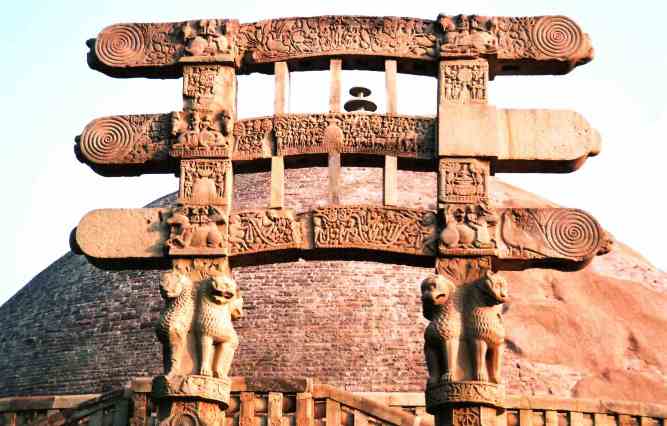
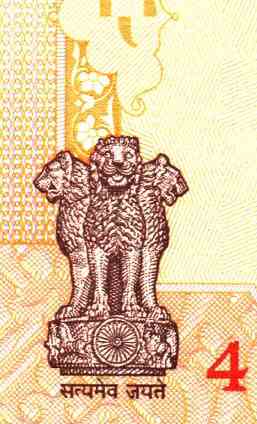
The gates are considered to be some of India's best ancient Buddhist artworks. The four-lions-on-pillar motif was a symbol
of Ashoka's rule and empire -- it is still used today as an emblem of the Indian government, on its currency. It became widely
used in early Buddhism, which Ashoka was responsible for spreading out along the Silk Road over to China -- note how it
became echoed in the four-lion pagodas of Korean Buddhism around 600 CE, although no Korea had ever seen a lion!
of Ashoka's rule and empire -- it is still used today as an emblem of the Indian government, on its currency. It became widely
used in early Buddhism, which Ashoka was responsible for spreading out along the Silk Road over to China -- note how it
became echoed in the four-lion pagodas of Korean Buddhism around 600 CE, although no Korea had ever seen a lion!
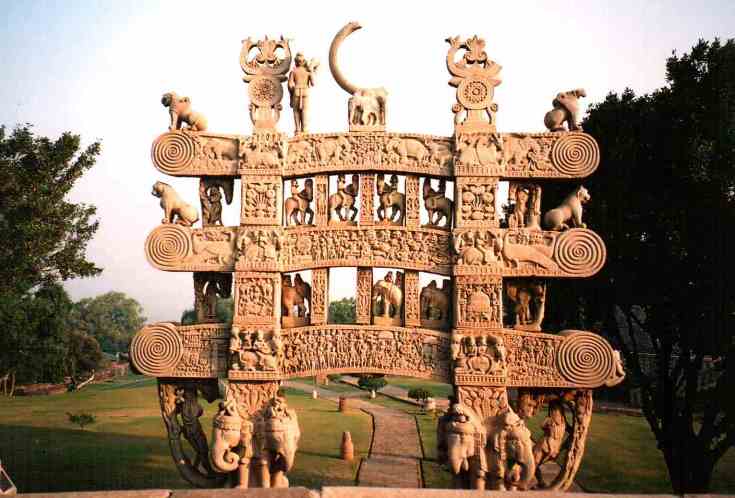
front of the
South Gate
South Gate
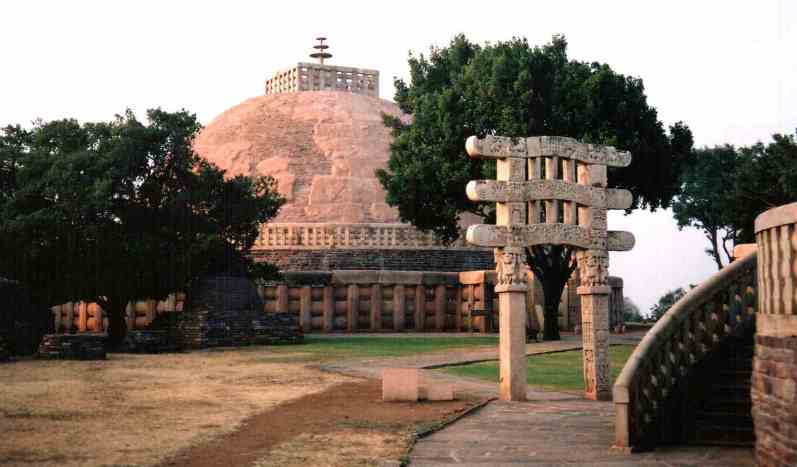
| SE side of the Main Stupa, and West Gate of the Second Stupa |
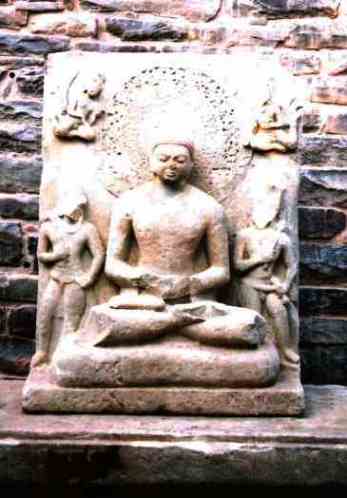
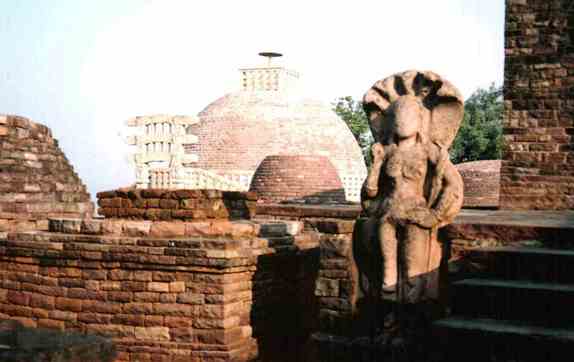
Statues like this sitting Buddha inside the East Gate and one that looks like
a Hindu goddess protected by Naga-snakes were added centuries later.
a Hindu goddess protected by Naga-snakes were added centuries later.
| Later that day we also visited the Bhimbhetka primitive-cave-drawings Site (outside Bhopal City). |
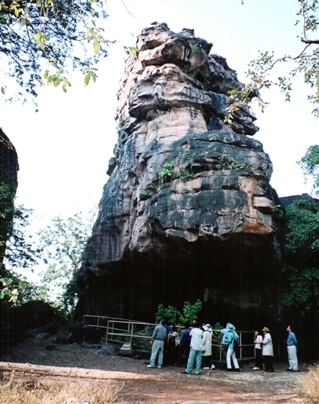
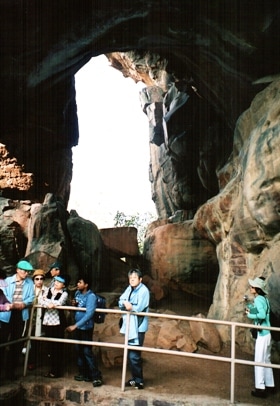
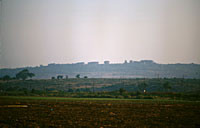
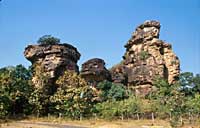
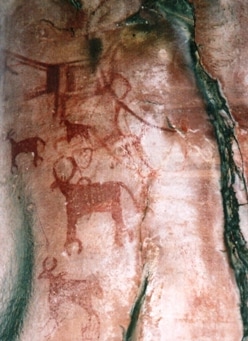
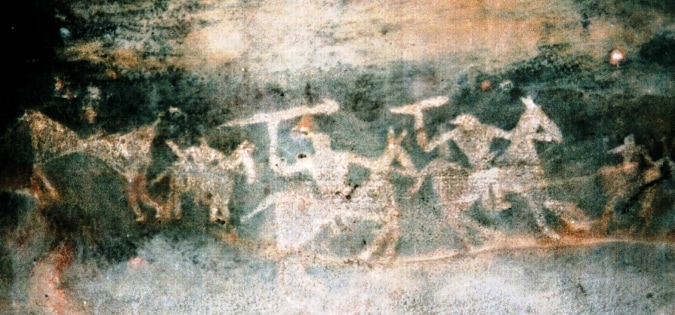
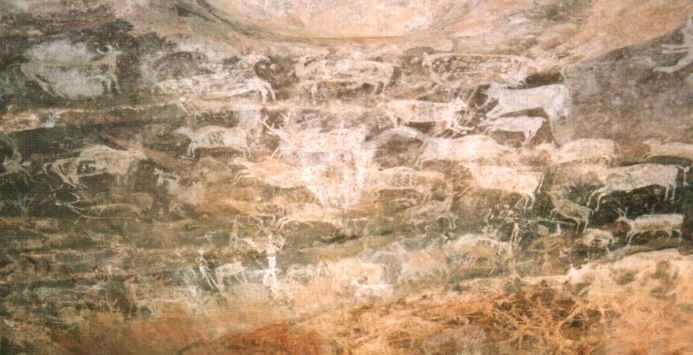
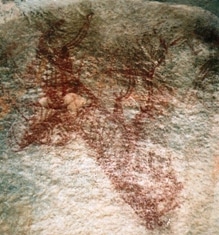
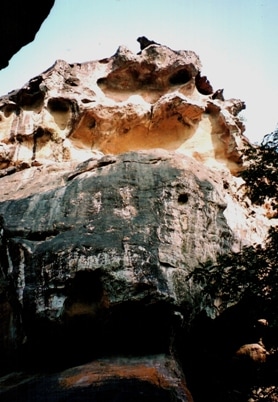
The drawings in these striking, towering marble and limestone crags
are thought to be around nine thousand years old. Perhaps the most
fascinating point about Stone-Age drawings like these is exactly the
same reason why they don't interest me much, compared to the arts of
the world's religions -- all over the globe, they are pretty much the same!
are thought to be around nine thousand years old. Perhaps the most
fascinating point about Stone-Age drawings like these is exactly the
same reason why they don't interest me much, compared to the arts of
the world's religions -- all over the globe, they are pretty much the same!