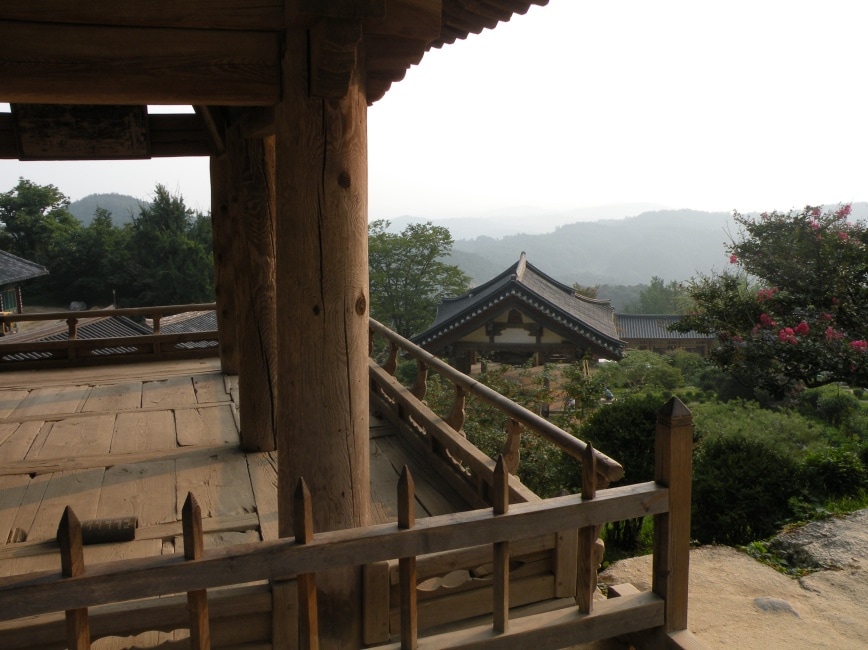
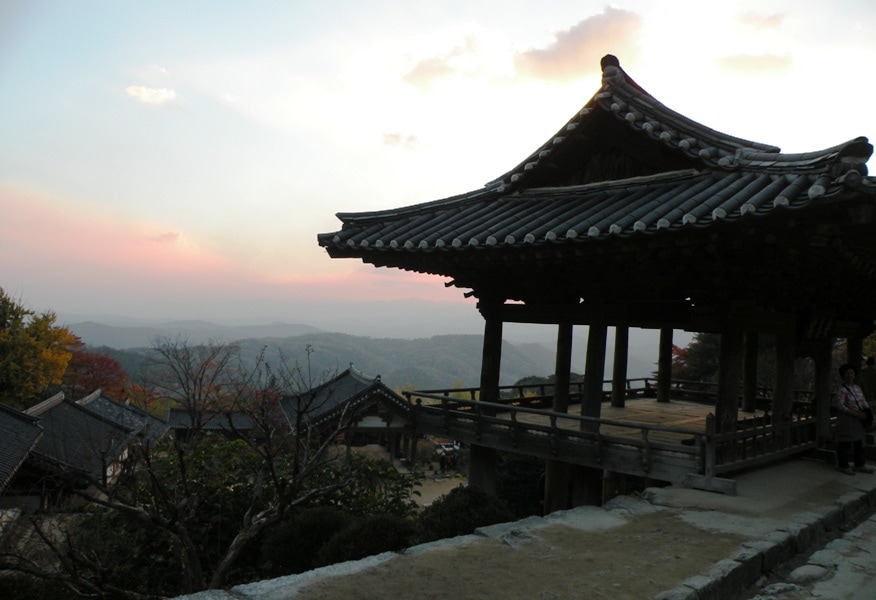
| Taebaek-san Buseok-sa's celebated Anyang-ru Pavilion and Stone Lantern one of Korea's best views from an architectural masterpiece, and an elegant granite monument |
| NEXT: Seonmyo-gak Shrine and Buseok Buseok-sa Intro Page Taebaek-san Index Page Sobaek-san Index Page San-shin Site Contents |
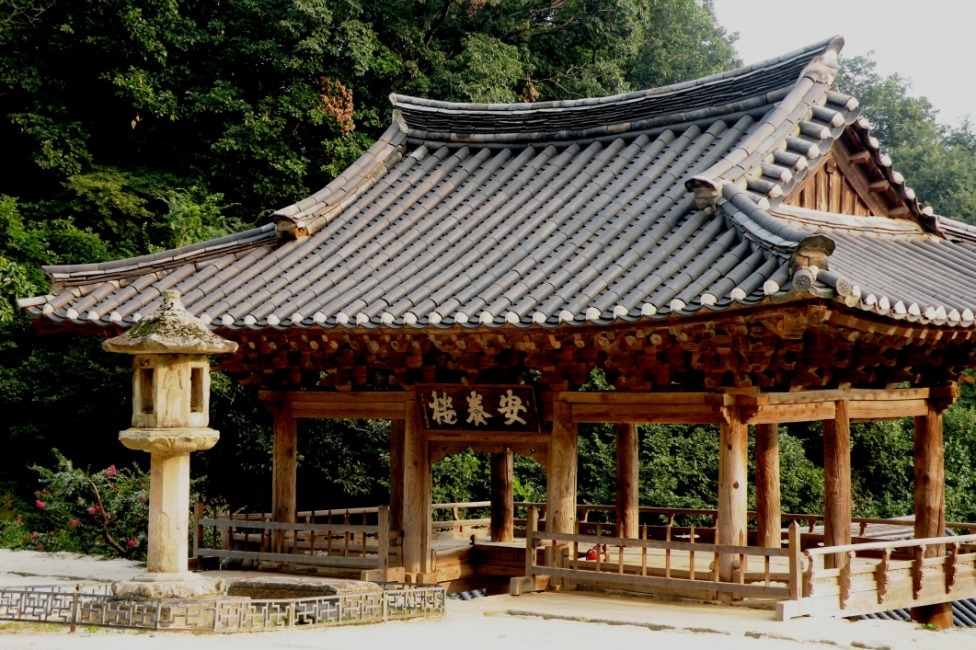
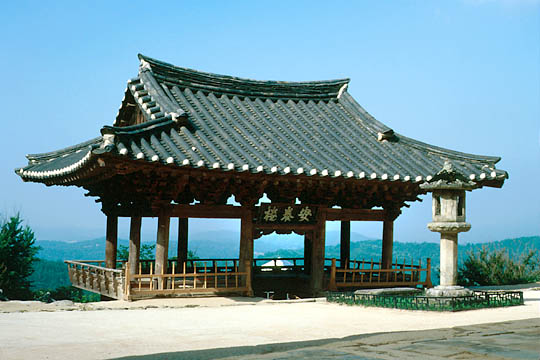
The excellent Seokdeung [石燈, Stone Lantern] standing in front of the Muryangsu-jeon Main Hall
is designated as National Treasure #17. The very famous Anyang Pavilion and Gate before it is,
strangely, not yet designated as any sort of Treasure.
is designated as National Treasure #17. The very famous Anyang Pavilion and Gate before it is,
strangely, not yet designated as any sort of Treasure.
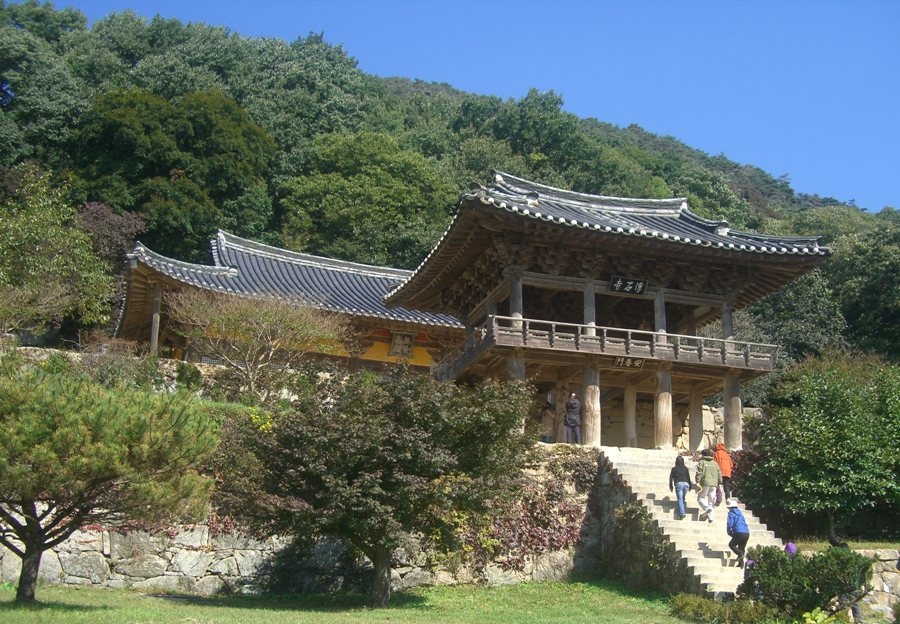
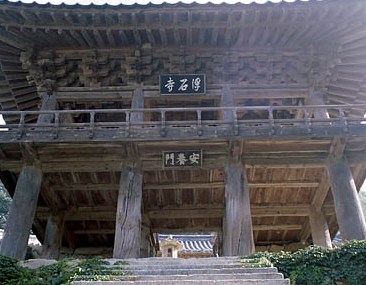
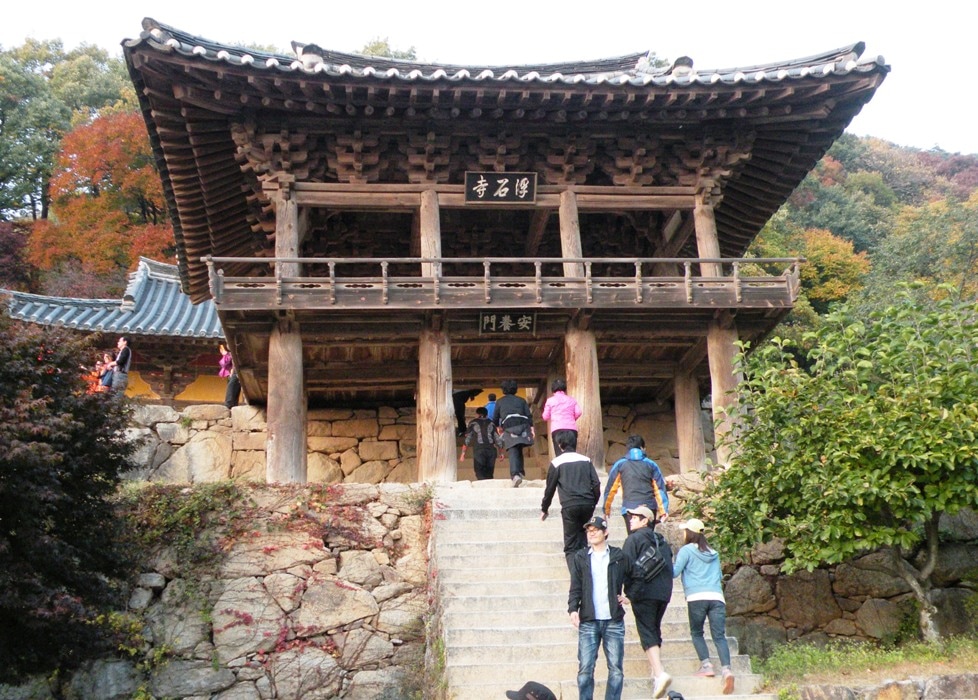
On its front side the upper a pyeon-aek [扁額, formal signboard] proclaims "Buseok-sa" while
the lower one names this structure "Anyang-mun" [Peace-Bright Gate], because it forms the
final gateway leading up to the Main Courtyard and Main Hall. On its rear side (seen from
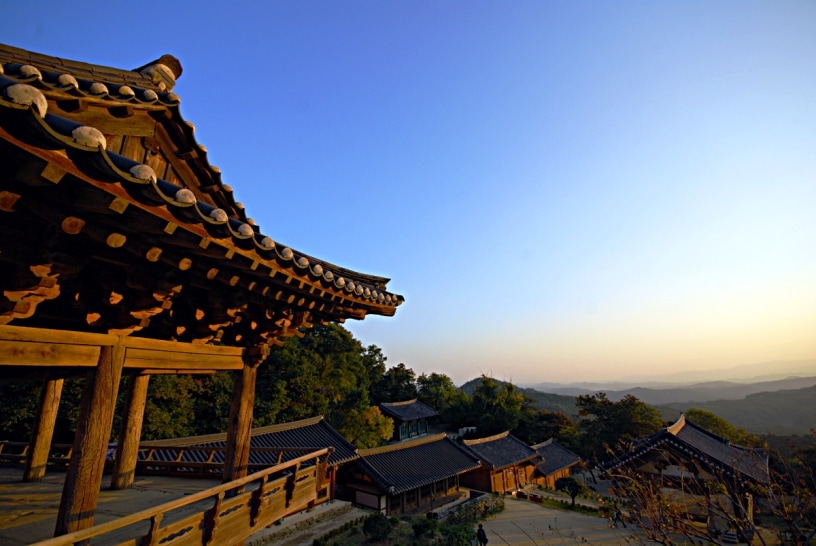
the Main Hall, as in the first photo above) the pyeon-aek names it's upper story as "Anyang-ru"
[Peace-Bright Pavilion], as it serves as a viewing-platform and lecture-space. Therefore
it is an excellent example of a Boje-ru [普濟樓, Universal Salvation Pavilion], the final in the
classical series of five gates in complete mountain temples, only unusual in that its upper
story-pavilion is not enclosed against bad weather. Most often, the lower half of a Boje-ru
is built as a gateway, causing the pilgrims to pass though a restricted and difficult space
before finally "attaining" the open main courtyard and main halls -- a metaphor of spiritual
practice leading "up" to the "Buddha-realm".
the lower one names this structure "Anyang-mun" [Peace-Bright Gate], because it forms the
final gateway leading up to the Main Courtyard and Main Hall. On its rear side (seen from
the Main Hall, as in the first photo above) the pyeon-aek names it's upper story as "Anyang-ru"
[Peace-Bright Pavilion], as it serves as a viewing-platform and lecture-space. Therefore
it is an excellent example of a Boje-ru [普濟樓, Universal Salvation Pavilion], the final in the
classical series of five gates in complete mountain temples, only unusual in that its upper
story-pavilion is not enclosed against bad weather. Most often, the lower half of a Boje-ru
is built as a gateway, causing the pilgrims to pass though a restricted and difficult space
before finally "attaining" the open main courtyard and main halls -- a metaphor of spiritual
practice leading "up" to the "Buddha-realm".
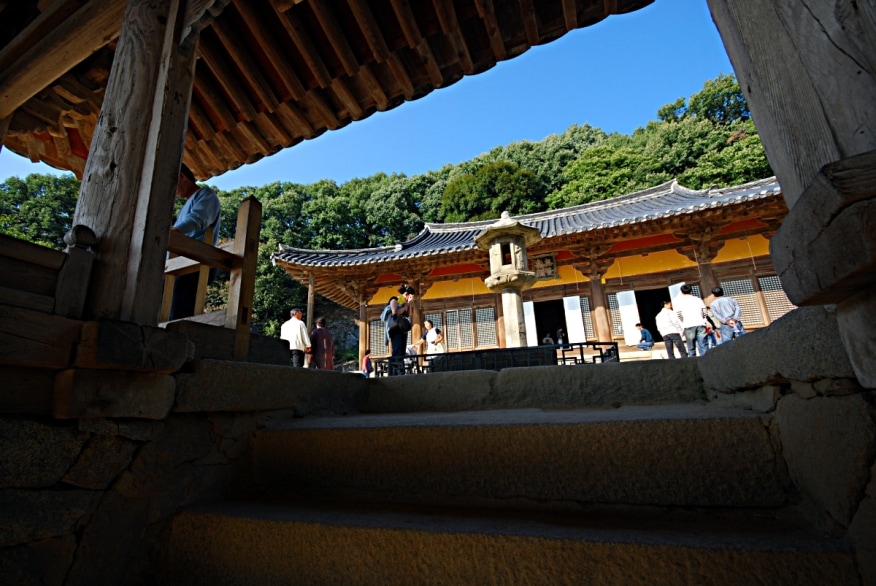
| the Muryangsu-jeon Hall only appears as one climbs the steep stone steps of the Anyang-mun Gate -- photo by Robert Koehler |
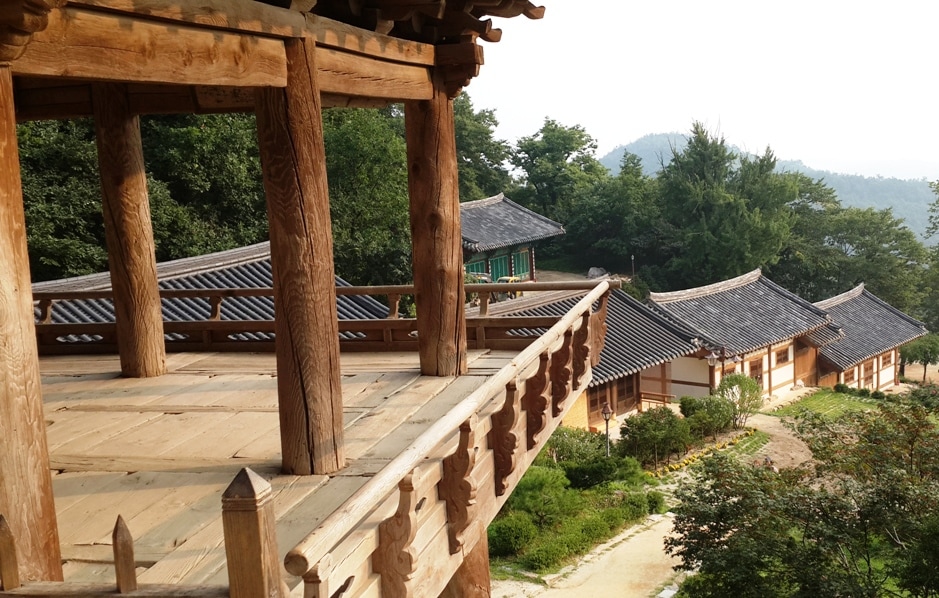
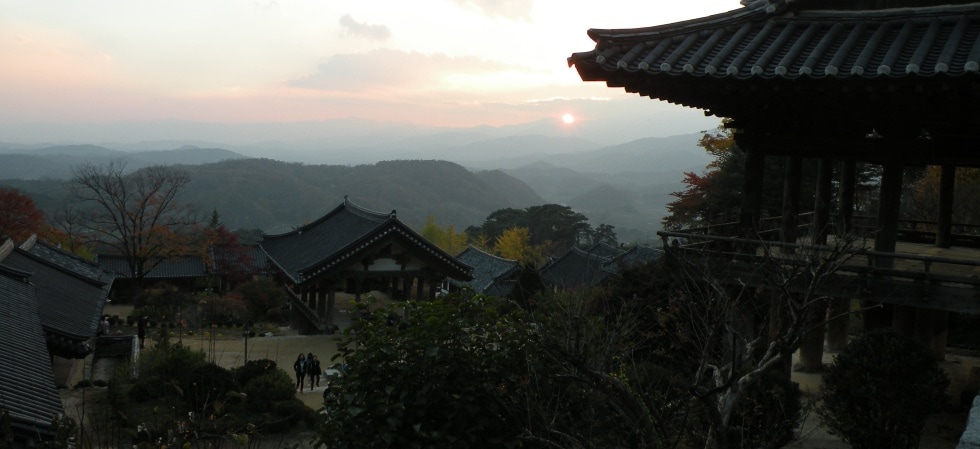
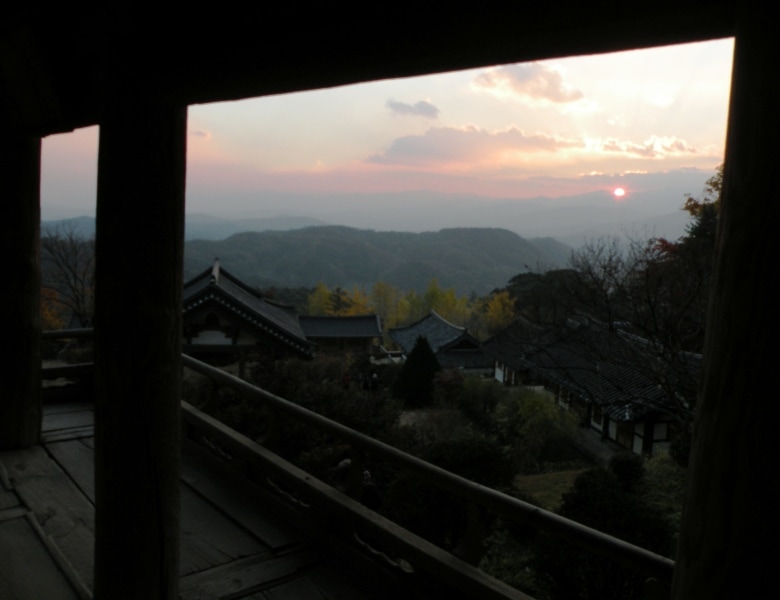
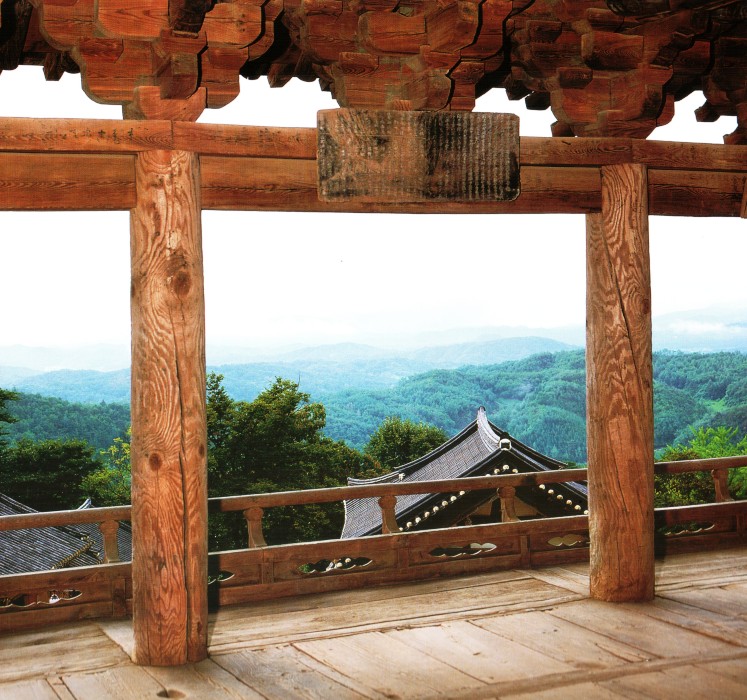
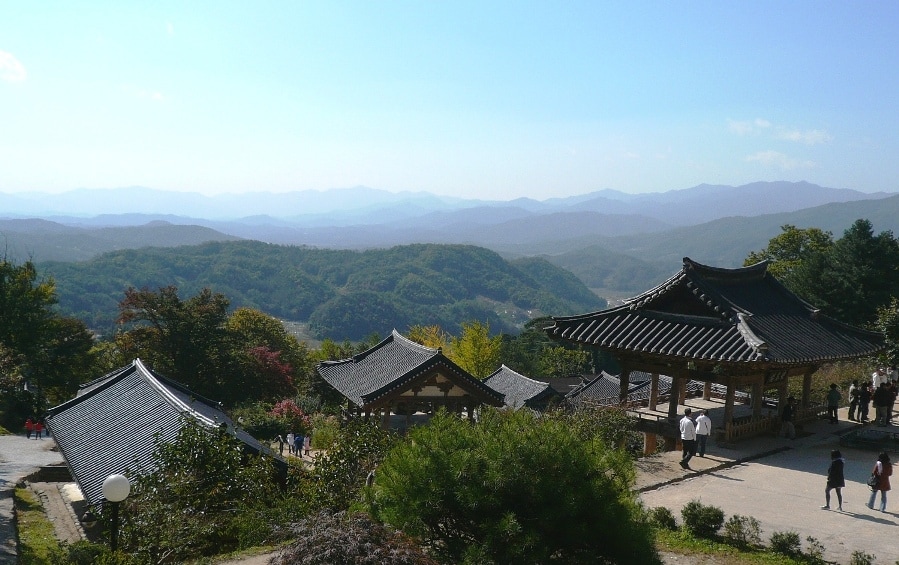
| the grand view from Anyang-ru Pavilion is one of Korea's most legendary |
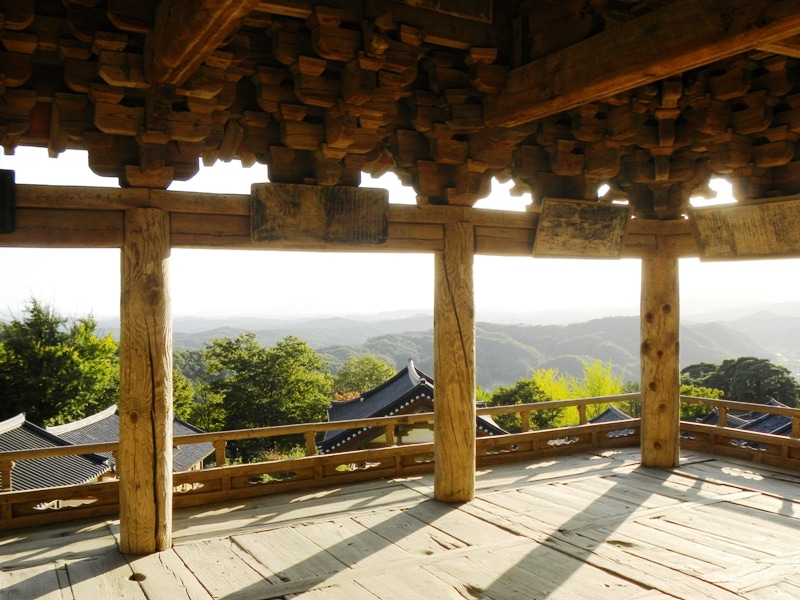
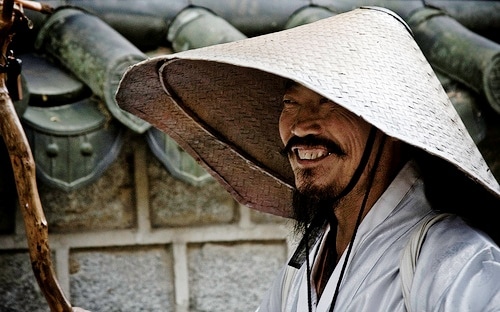
| It is well-known that the famous "wandering rainhat poet" Kim Sat-gat sat on this platform around 1800, and composed a famous poem about the view. A record of that event and the visits of other notables are written on the wooden boards that line the interior rafters. |
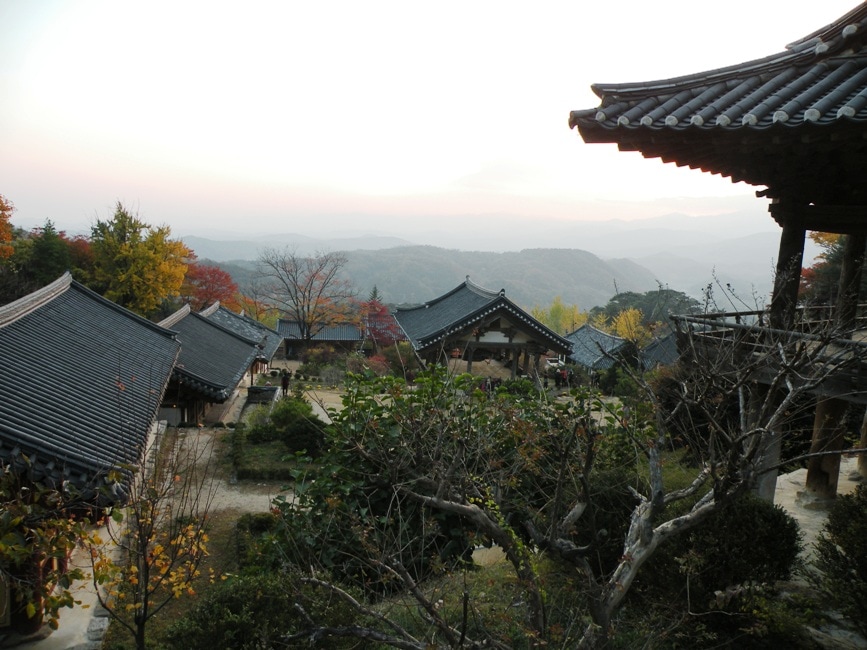
| and most especially famous are the sunsets seen from here... |
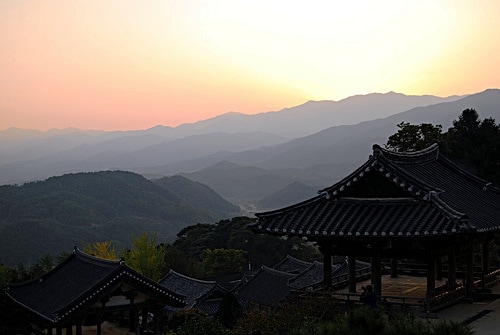
| these two photos by Robert Koehler |
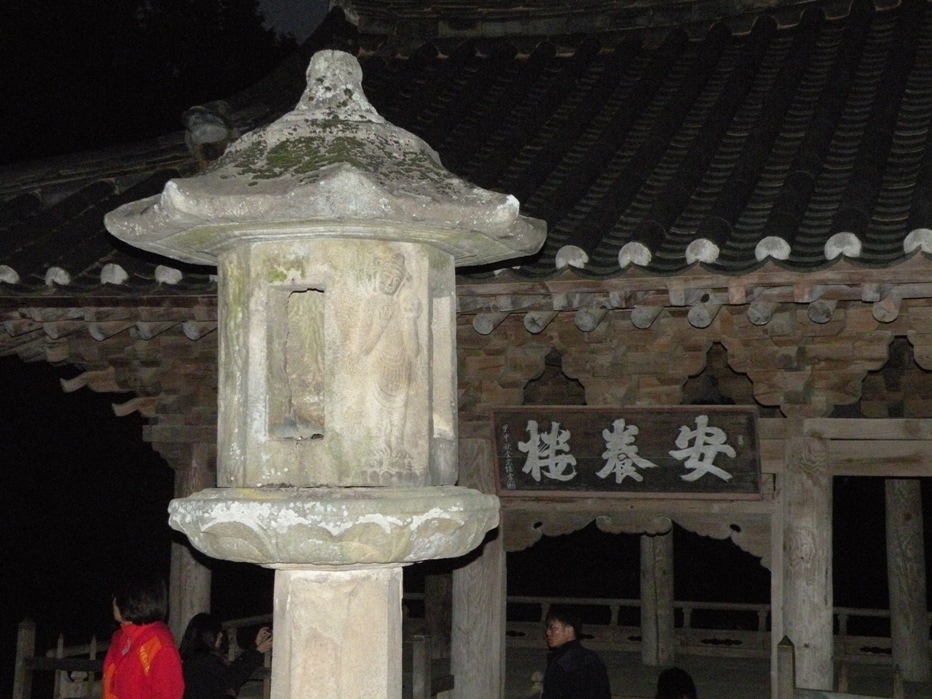
| Stone Lantern and rear pyeon-aek after sunset |
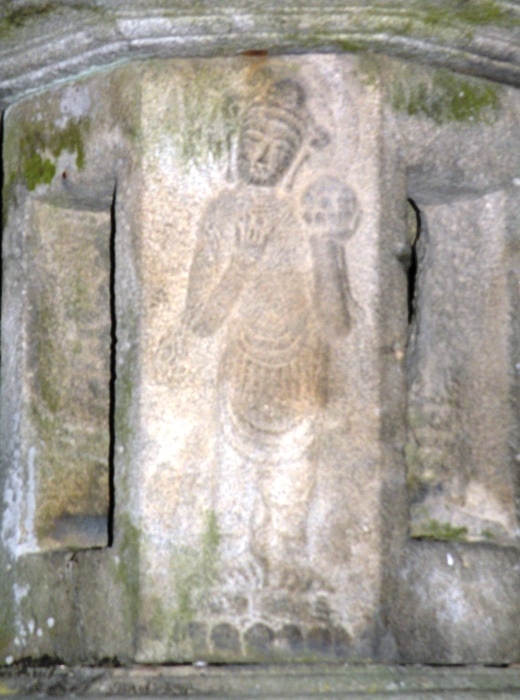
| Bodhisattva holding a lotus flower |