The tomb is a rectangular mound with white-granite side-walls. Horae's name is carved into the front wall in English, with the spelling "DR. CHO JA YONG", which I found curious. There is a square-block granite altar in front of it, carved with Chinese characters in the traditional way. Off to the right stand three 6-feet-tall oval-shaped stone monuments, carved in relief by Horae himself with his favorite dieties, his own version of the Sam-shin: the Chil-seong [seven stars of the big dipper] (left), San-shin (right), and Sam-shin-halmoni (center). In Horae's originally-interpreted cosmology, they represent a trinity of Heaven, Earth and Humanity. By his own design, his tomb-site is also a permanent shrine for his folk-religion ideas.
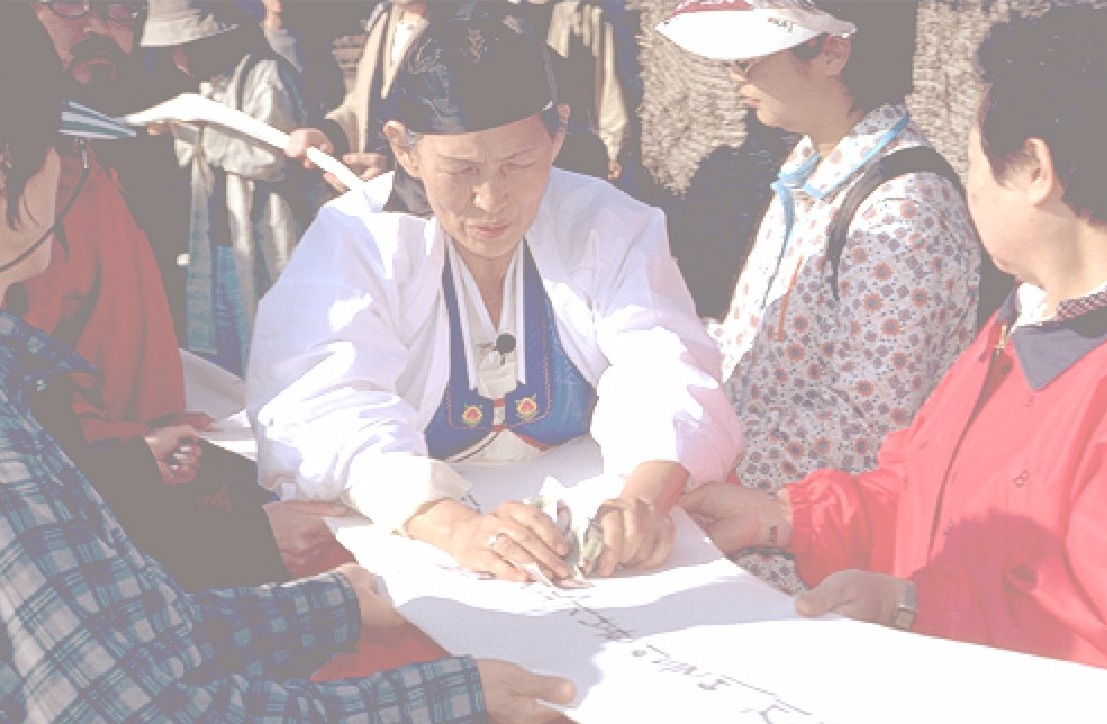
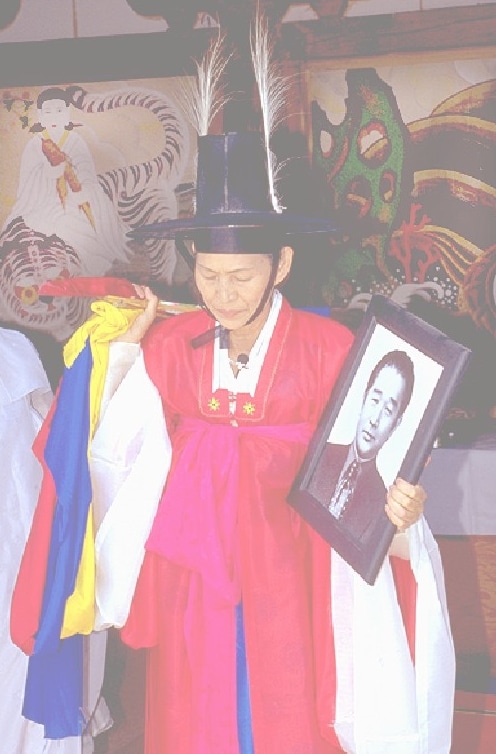
At 5pm we joined Zo's family members (widow, nieces and nephews, some neighbor-friends) for his memorial service. They seemed surprised and pleased to have us there. We told them of the international scholarly community's high respect for Dr. Zo, and converyed the regards and condolences of all those who would have liked to have been there but couldn't.
The ritual was traditional and solem. I had prepared a eulogy-speech, but dropped the idea when his nephew expressed that he wanted the ritual to remain purely old-Korean-style. Afterwards we ate the offered-foods and talked, then said our farewells.
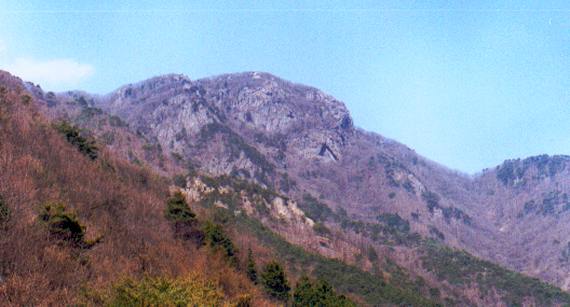
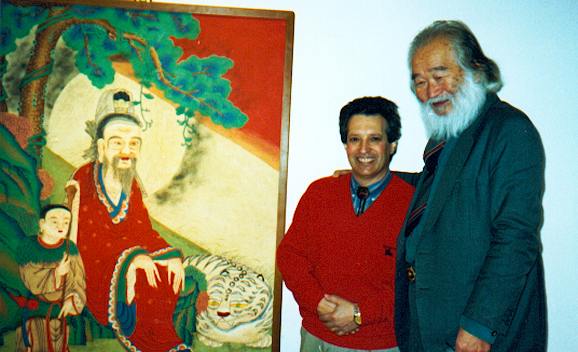
I spent the next day just exploring temples amid the truly magnificent scenery of Sogni-san, enjoying a perfect springtime blue sky day. At one point I found a small "San-shin-je-dang" [Mountain-spirit-ritual-shrine] belonging to a village near Beop-ju-sa, just the sort of place that Horae loved and strove to preserve. I conducted yet another little ceremony for him there, assuring his spirit that he will not be forgotten. Then I went on with my searching for Mountain-spirit paintings, photographing them and analyzing their variations --- in a small humble way, one among many, carrying his lifeswork just a little bit further onwards. |