| Gyeryong-san Gap-sa's Shinheung-am 新興庵 신흥암 Emergent Arising Hermitage with Bojin-tap Natural Pagoda one of Korea's most important ancient Sanshin sites |
| NEXT: Magnificent Sanshin-gak Shrine of this Temple Main Gap-sa Page Gyeryong-san Index Page Site Contents Page |
According to the Samguk Yusa (三國遺事, Legends and History of the Three Kingdoms) and local
legends, Gap-sa was originally founded by a Buddhist missionary monk from the Goguryeo Kingdom
named Ado Hwasang [阿道和尙, Ah-do 아도 was his monastic name "Mountain-Dao"; Hwasang 화상
means a prominent monk] in 420CE during the reign of Baekje King Guishin [久爾辛王, r.420-427].
He was received with honor by the ancient Baekje Kingdom in the late 4th century, in its capital of
Wirye-seong (probably along the south banks of the Han River in what is now Hanam City, or across
the border into Seoul). and became determined to found temples within it at holy mountains. His first
is thought to be Jinjong-sa, what is now Jeondeung-sa on Ganghwa Island at the Han's mouth. By
420 CE he was visiting Ungjin Town (Gongju City today; a stronghold of Baekje and its capital after
475), in search of another great site for the new religion. One night he had a dream of the Gyeryong-
san Sanshin [山神, Mountain-spirit], who invited him to visit that mountain and start a great temple,
assuring him that Buddhism was already welcomed and enshrined there.
Ado then traveled Ungjin down to Gyeryong-san as-bidden, and camped for the night near its NW
corner, in what is now the Gap-sa Entranceway. Suddenly waking-up past midnight, he suddenly
witnessed an auspicious beam of light stretching to the heavens, like a modern search-light, from
the gorge halfway up to Yeoncheon-bong Peak, and when he climbed up to that site past Yongmun
Pokpo [Dragon-gate Waterfalls] he found that the light was emanating from a gigantic “natural rock
pagoda” which he named the Cheonjin-botap [天眞寶塔, Heavenly-Truth Treasure-Pagoda].
He performed worship-rituals in front of it until dawn, and when the sunlight shone on it he had a
mystical vision that it had been built by the Gyeryong-san Sanshin around 600 years before as a
gesture of welcoming Buddhism to his slopes. And then his vision further showed him that Great
Indian Emperor Ashoka / Aśōka (founding monarch of global Buddhism, r. 268-32 BCE) had given one of
Buddha’s precious sari [舍利, sarira, crystal cremains as holy relics] to the Eastern King of the Sa-cheon-
wang [四天王, Four Heavenly Kings] and dispatched him to enshrine it properly at the most auspicious
mountain in the far-eastern corner of the human world, so that the Orient would be sacralized for
Buddhism. That giant King determined that Gyeryong-san was the holiest mountain with best
pungsu-jiri factors, perfect as a future center of Buddhist faith and practice. When he approached,
the Gyeryong-san Sanshin manifested and invited him to this auspicious site. Sanshin instantly
built this “natural rock pagoda” as the perfect place to enshrine the sari, and the King did-so,
thereby sacralizing the 'central' mountain and all the peninsula for the new religion to-come,
Understanding this auspicious holy event from long ago, Master Ado established a shrine at the
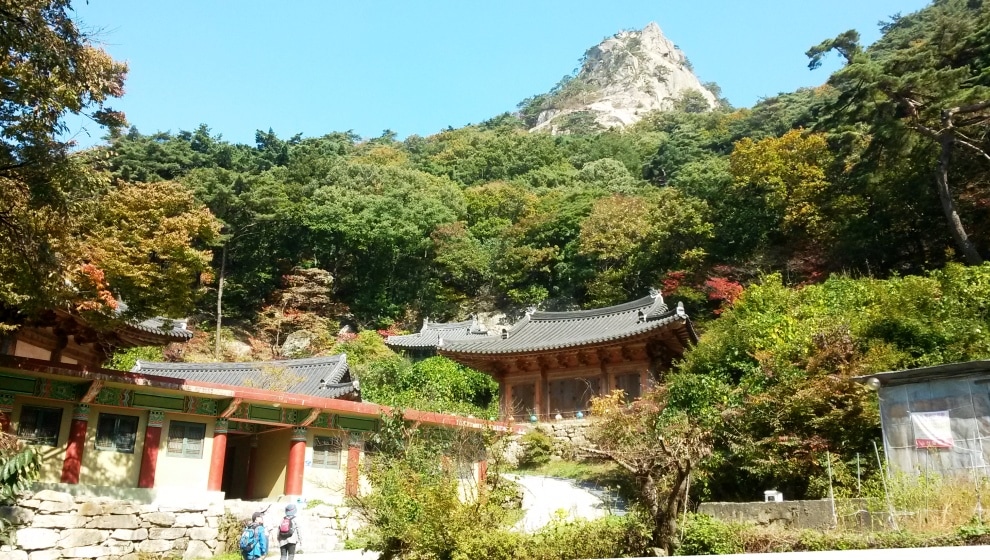
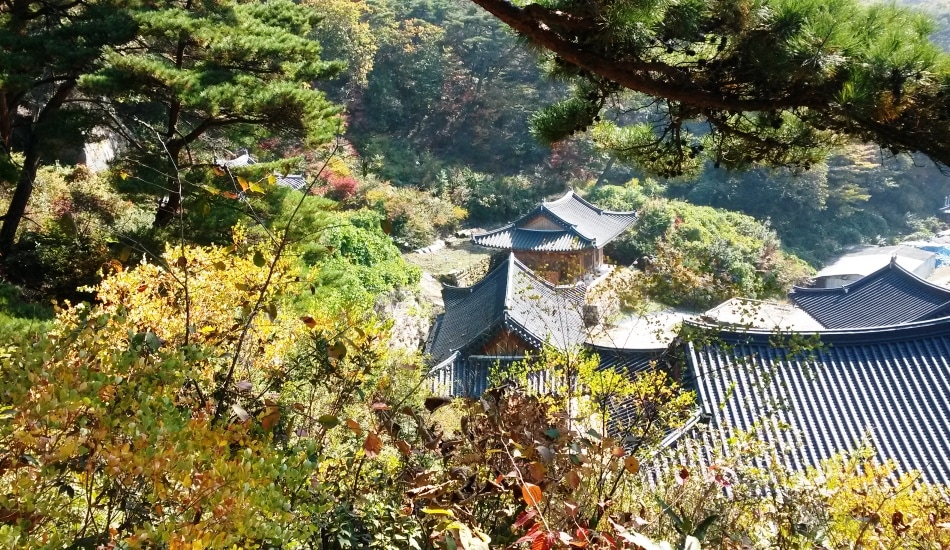
Cheonjin-botap that later developed into the Shinheung-am [新興庵, Emerging/Rising/Burgeoning
Hermitage] that we see here today. He then founded and directed his disciples and the workmen
provided by the Baekje king to build Gyeryong Gap-sa down at the mouth of the gorge where it
opens up to wide fields, a more suitable place for a large monastery with many monks.
This myth/legend is highly significant in the history of the blending of original-native-proto-Korean
Shamanic Sanshin traditions with the "new" imported Buddhist and Daoist ideas, at the very root
of what evolved into traditional Korean spiritual culture!
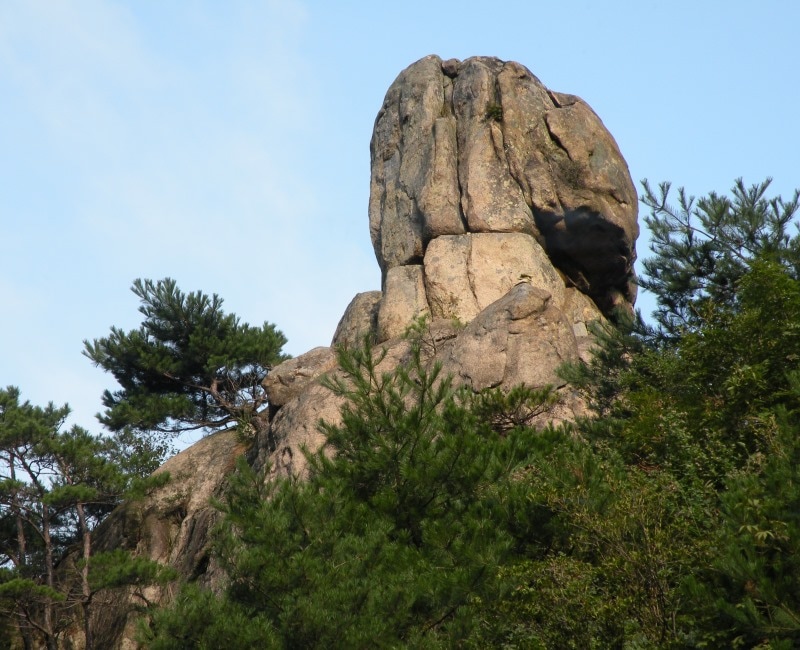
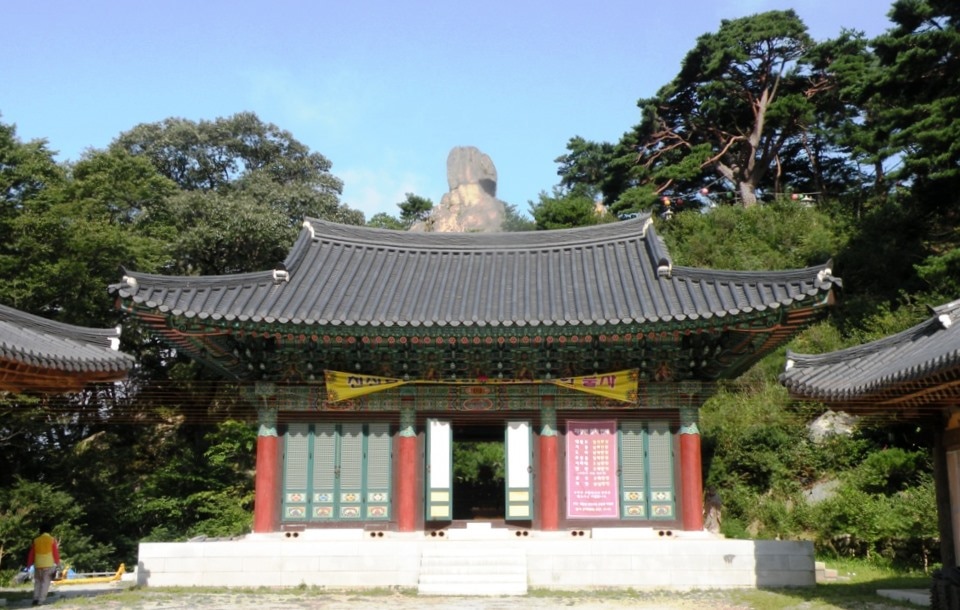
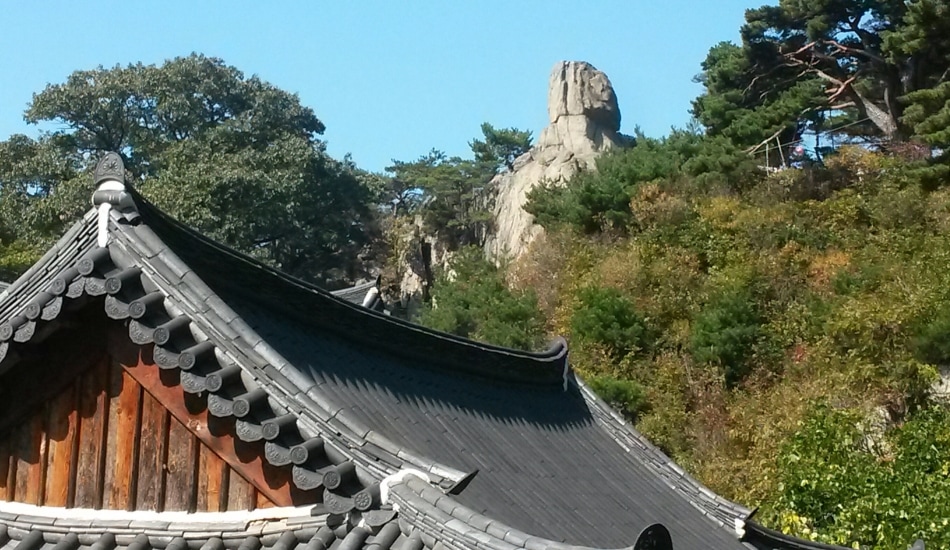
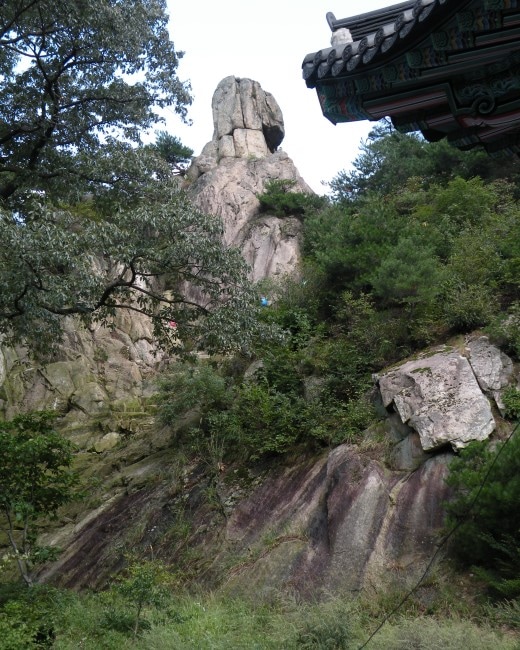
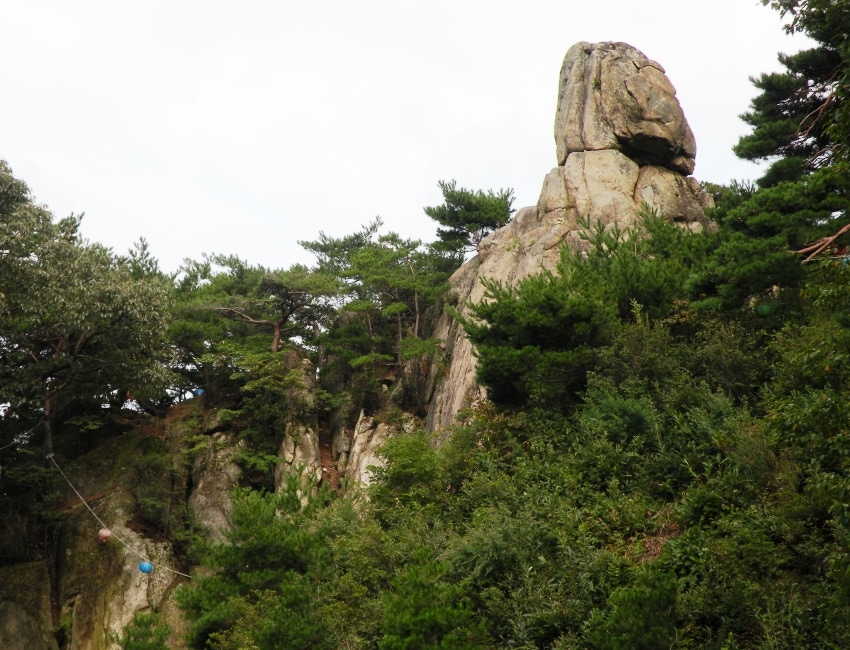
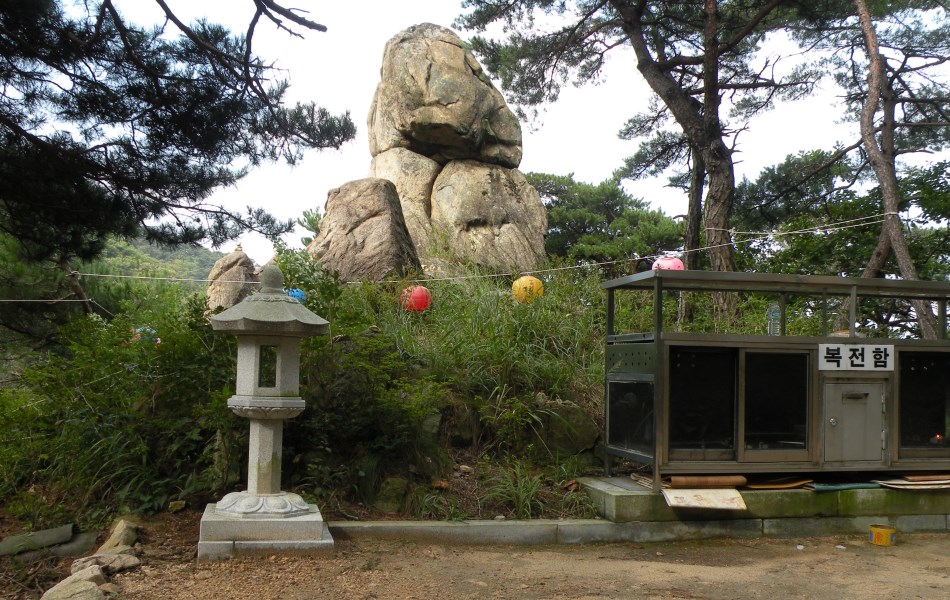
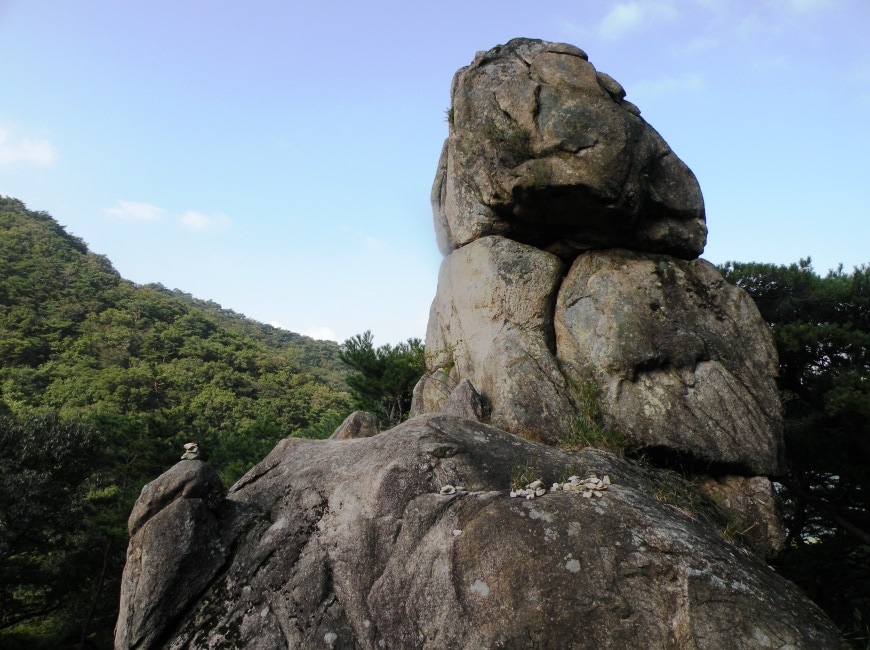
The natural-pagoda tower is blatantly phallic, far from a disadvantage in such a patriarchal culture.
It has also always served as the kind of folk-shamanic namja-bawi [male/phallic rock-outcropping]
that Koreans have prayed in front of for the blessing of bearing a son, or more sons. From the right-
side angles it looks like a human figure, head above shoulders -- so can be interpreted as a natural
Buddha statue or Sanshin statue.
legends, Gap-sa was originally founded by a Buddhist missionary monk from the Goguryeo Kingdom
named Ado Hwasang [阿道和尙, Ah-do 아도 was his monastic name "Mountain-Dao"; Hwasang 화상
means a prominent monk] in 420CE during the reign of Baekje King Guishin [久爾辛王, r.420-427].
He was received with honor by the ancient Baekje Kingdom in the late 4th century, in its capital of
Wirye-seong (probably along the south banks of the Han River in what is now Hanam City, or across
the border into Seoul). and became determined to found temples within it at holy mountains. His first
is thought to be Jinjong-sa, what is now Jeondeung-sa on Ganghwa Island at the Han's mouth. By
420 CE he was visiting Ungjin Town (Gongju City today; a stronghold of Baekje and its capital after
475), in search of another great site for the new religion. One night he had a dream of the Gyeryong-
san Sanshin [山神, Mountain-spirit], who invited him to visit that mountain and start a great temple,
assuring him that Buddhism was already welcomed and enshrined there.
Ado then traveled Ungjin down to Gyeryong-san as-bidden, and camped for the night near its NW
corner, in what is now the Gap-sa Entranceway. Suddenly waking-up past midnight, he suddenly
witnessed an auspicious beam of light stretching to the heavens, like a modern search-light, from
the gorge halfway up to Yeoncheon-bong Peak, and when he climbed up to that site past Yongmun
Pokpo [Dragon-gate Waterfalls] he found that the light was emanating from a gigantic “natural rock
pagoda” which he named the Cheonjin-botap [天眞寶塔, Heavenly-Truth Treasure-Pagoda].
He performed worship-rituals in front of it until dawn, and when the sunlight shone on it he had a
mystical vision that it had been built by the Gyeryong-san Sanshin around 600 years before as a
gesture of welcoming Buddhism to his slopes. And then his vision further showed him that Great
Indian Emperor Ashoka / Aśōka (founding monarch of global Buddhism, r. 268-32 BCE) had given one of
Buddha’s precious sari [舍利, sarira, crystal cremains as holy relics] to the Eastern King of the Sa-cheon-
wang [四天王, Four Heavenly Kings] and dispatched him to enshrine it properly at the most auspicious
mountain in the far-eastern corner of the human world, so that the Orient would be sacralized for
Buddhism. That giant King determined that Gyeryong-san was the holiest mountain with best
pungsu-jiri factors, perfect as a future center of Buddhist faith and practice. When he approached,
the Gyeryong-san Sanshin manifested and invited him to this auspicious site. Sanshin instantly
built this “natural rock pagoda” as the perfect place to enshrine the sari, and the King did-so,
thereby sacralizing the 'central' mountain and all the peninsula for the new religion to-come,
Understanding this auspicious holy event from long ago, Master Ado established a shrine at the
Cheonjin-botap that later developed into the Shinheung-am [新興庵, Emerging/Rising/Burgeoning
Hermitage] that we see here today. He then founded and directed his disciples and the workmen
provided by the Baekje king to build Gyeryong Gap-sa down at the mouth of the gorge where it
opens up to wide fields, a more suitable place for a large monastery with many monks.
This myth/legend is highly significant in the history of the blending of original-native-proto-Korean
Shamanic Sanshin traditions with the "new" imported Buddhist and Daoist ideas, at the very root
of what evolved into traditional Korean spiritual culture!
The natural-pagoda tower is blatantly phallic, far from a disadvantage in such a patriarchal culture.
It has also always served as the kind of folk-shamanic namja-bawi [male/phallic rock-outcropping]
that Koreans have prayed in front of for the blessing of bearing a son, or more sons. From the right-
side angles it looks like a human figure, head above shoulders -- so can be interpreted as a natural
Buddha statue or Sanshin statue.
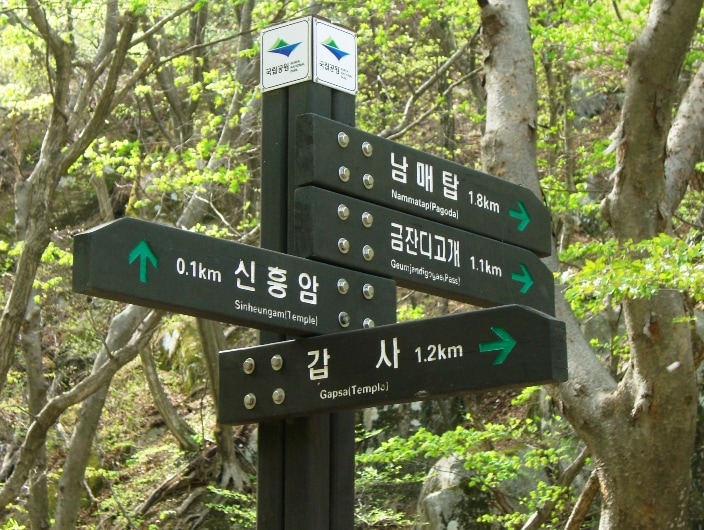
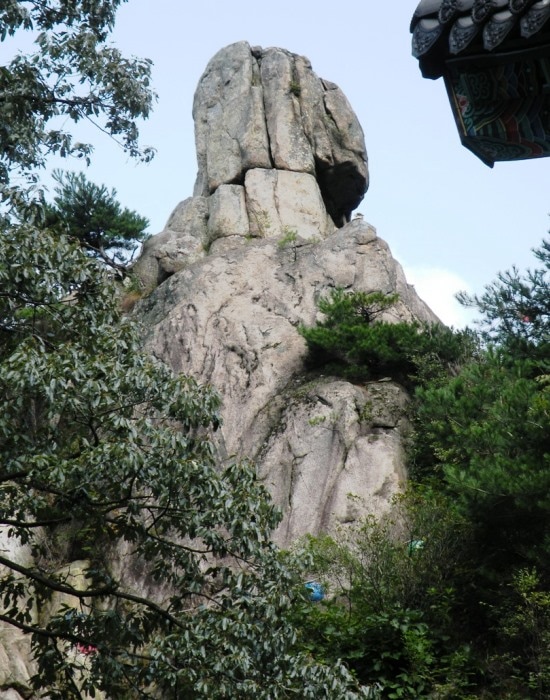
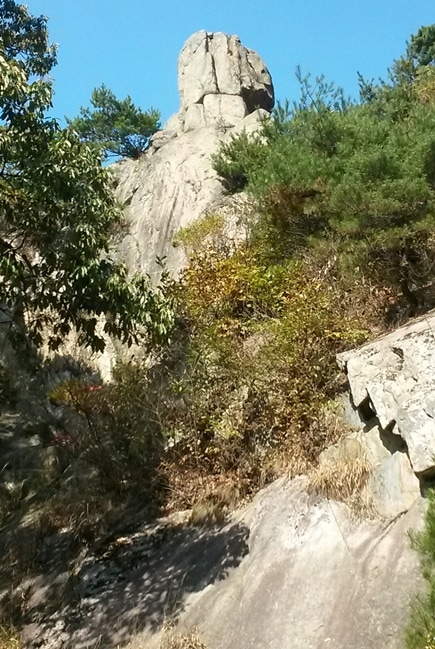
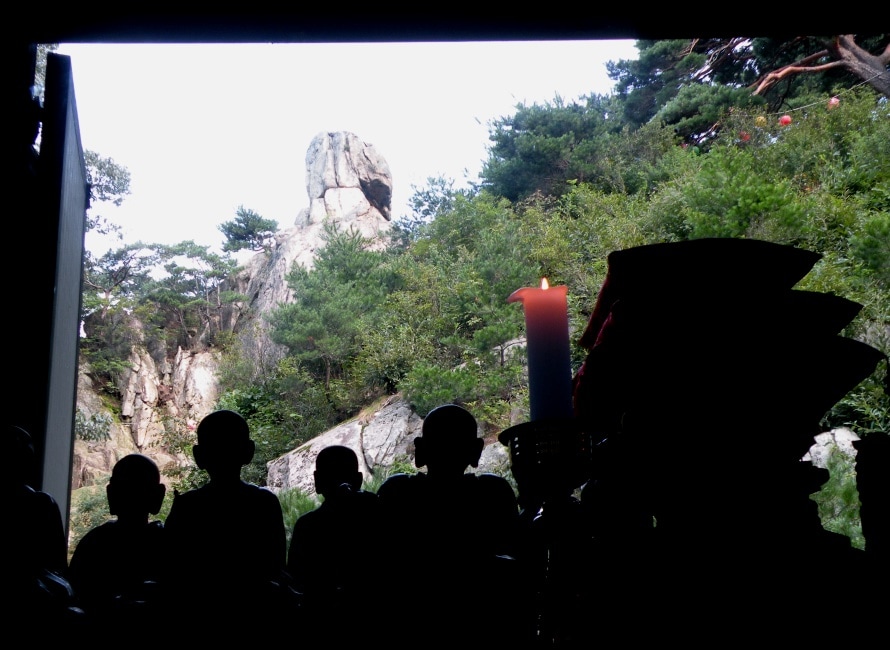
| The Cheonjin-botap |
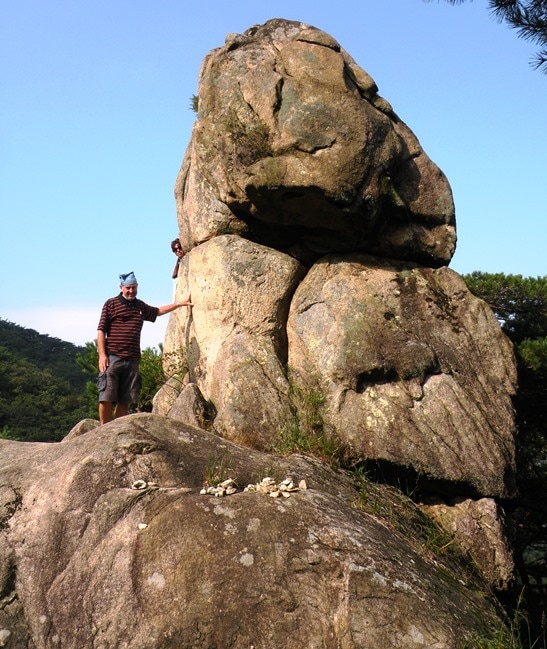
| My friend Tony MacGreggor on its high shoulder |
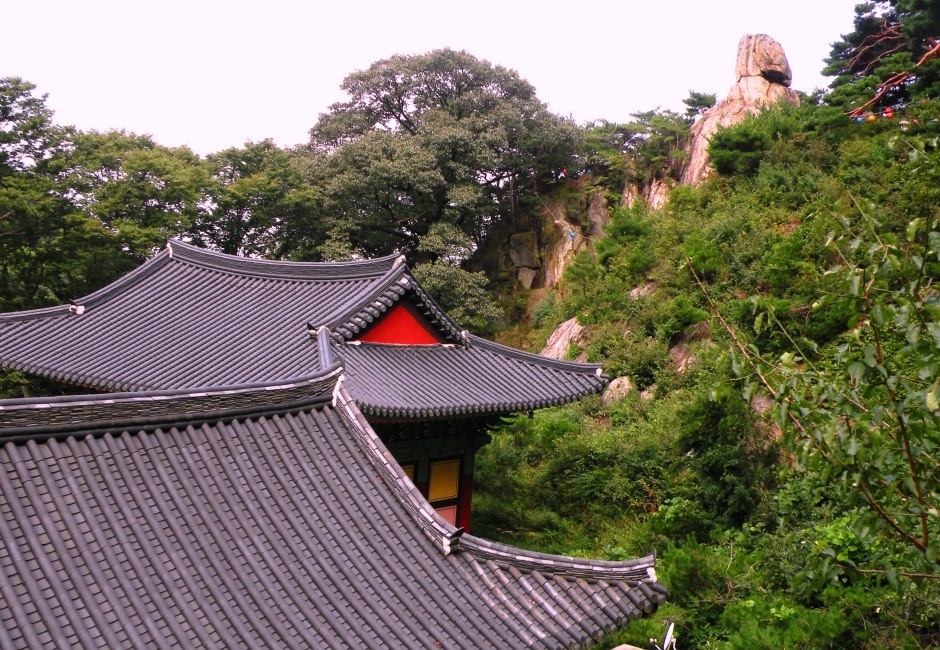
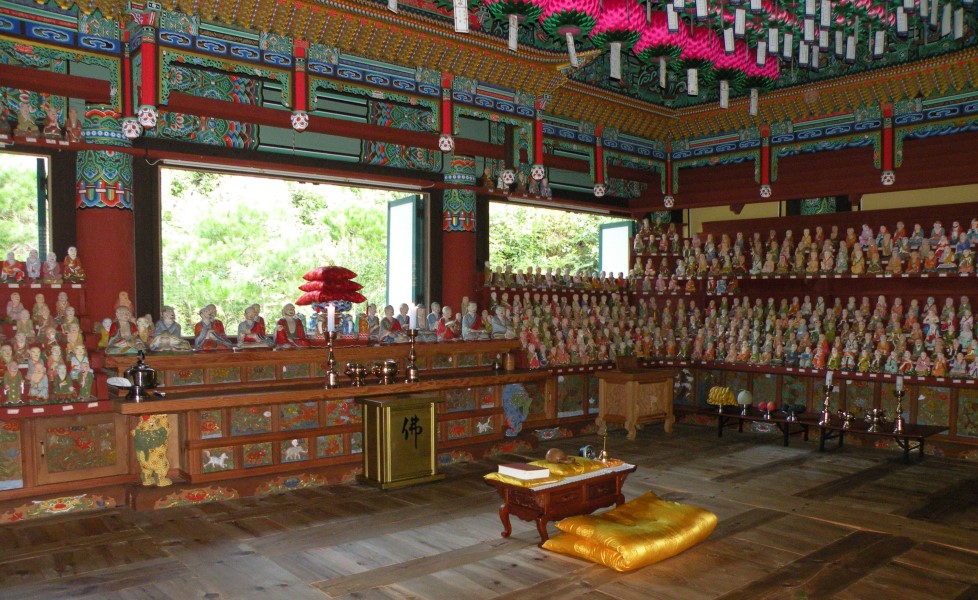
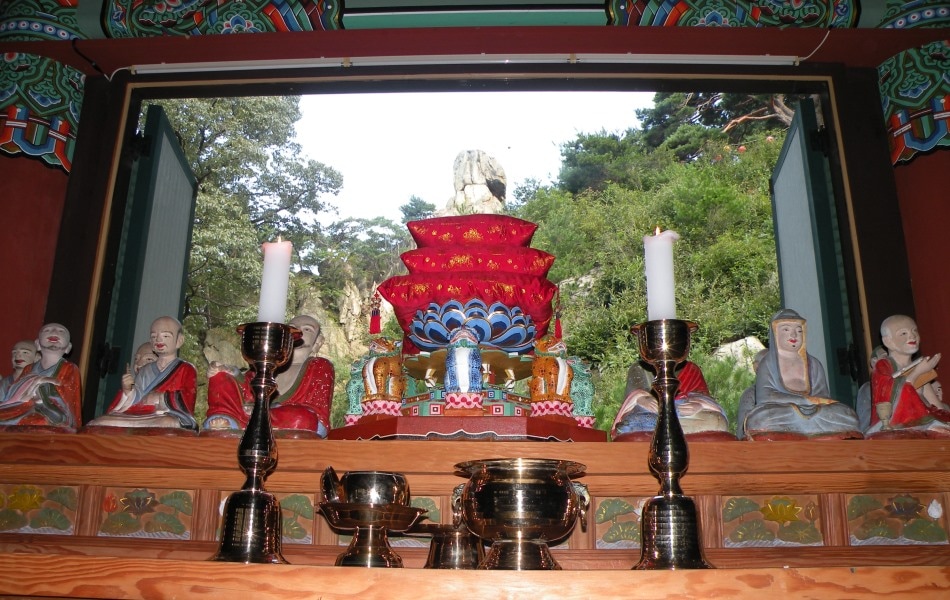
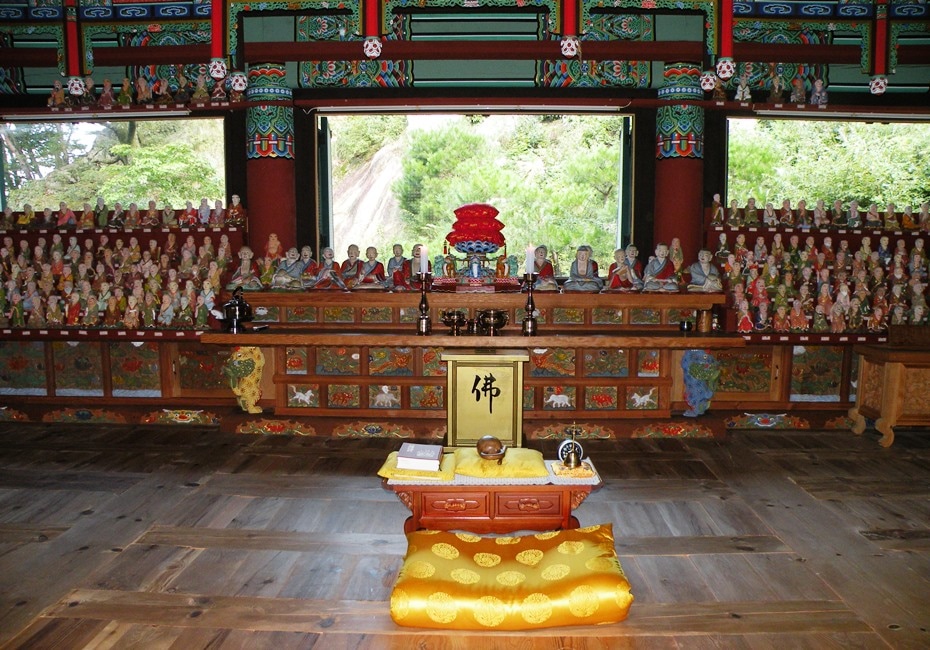
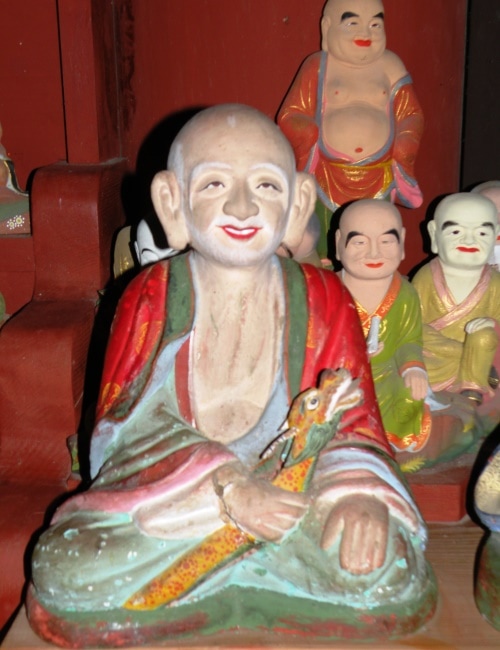
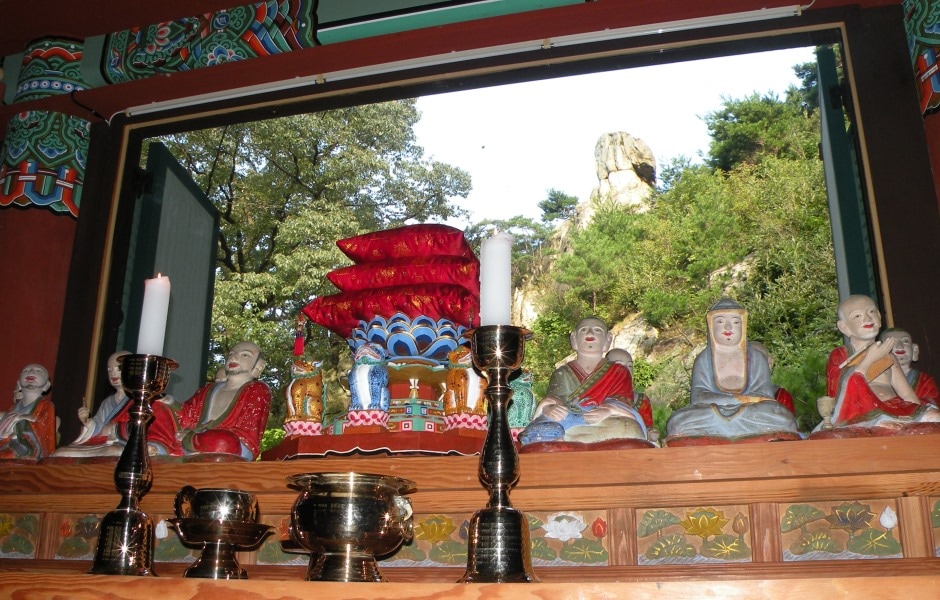
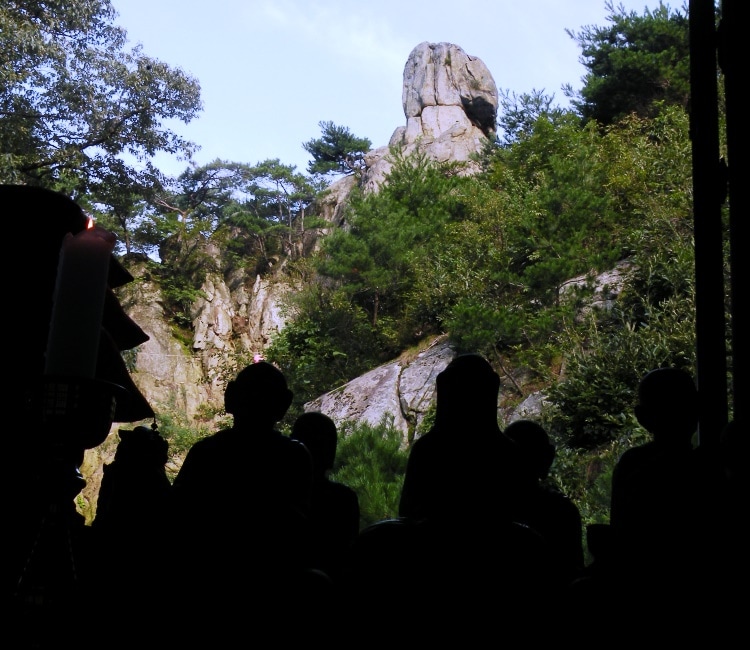
The Main Dharma Hall here is a unique combination of an Obaek-Nahan-jeon [Hall for 500 Disciples
of Sakyamuni Buddha] with 500 individual statues, which usually have a larger Sakyamuni Buddha
statue in the center of the rear altar, and a Jeokmyeol-bogung Hall that, following the original style of
the Tongdo-sa Buddha-worship Hall that has no statue there but only a window looking straight out at
the pagoda or stupa enshrining the Buddha’s sari [舍利, sarira, crystal cremains as holy relics] to, so that people
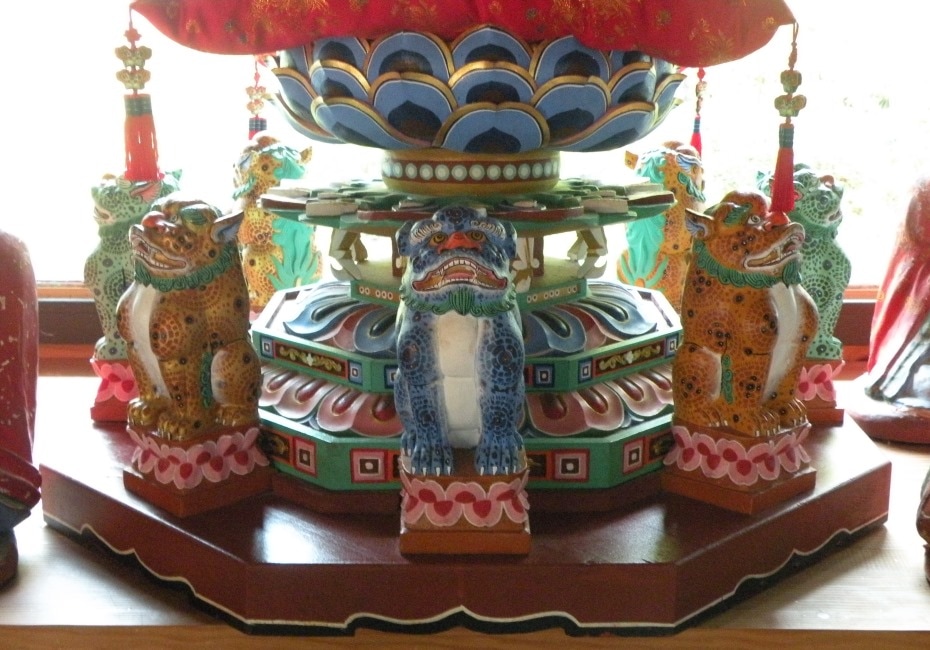
can venerate "the Buddha" directly to his relics, not via a statue. Therefore there are 3 red silk cushions
on the lion-supported statue-platform in the center of the rear altar here, but no Buddha statue, only the
view out the window to the Cheonjin-botap, which represents Sakyamuni leading his disciples in Korea.
of Sakyamuni Buddha] with 500 individual statues, which usually have a larger Sakyamuni Buddha
statue in the center of the rear altar, and a Jeokmyeol-bogung Hall that, following the original style of
the Tongdo-sa Buddha-worship Hall that has no statue there but only a window looking straight out at
the pagoda or stupa enshrining the Buddha’s sari [舍利, sarira, crystal cremains as holy relics] to, so that people
can venerate "the Buddha" directly to his relics, not via a statue. Therefore there are 3 red silk cushions
on the lion-supported statue-platform in the center of the rear altar here, but no Buddha statue, only the
view out the window to the Cheonjin-botap, which represents Sakyamuni leading his disciples in Korea.
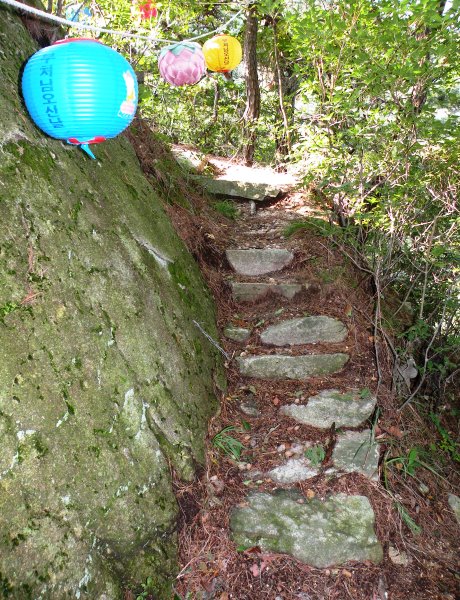
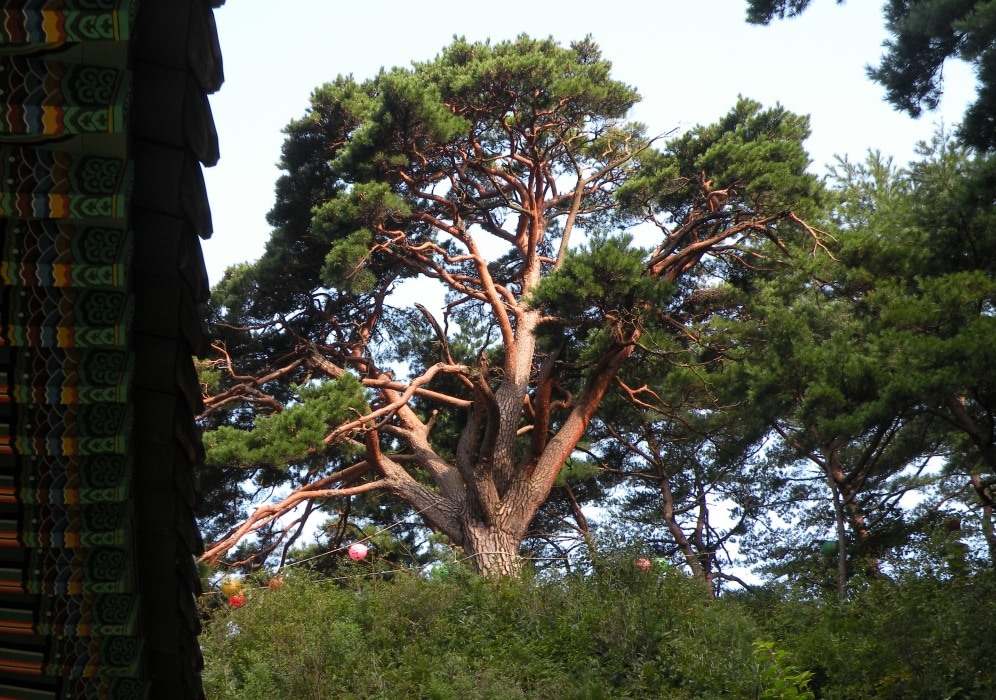
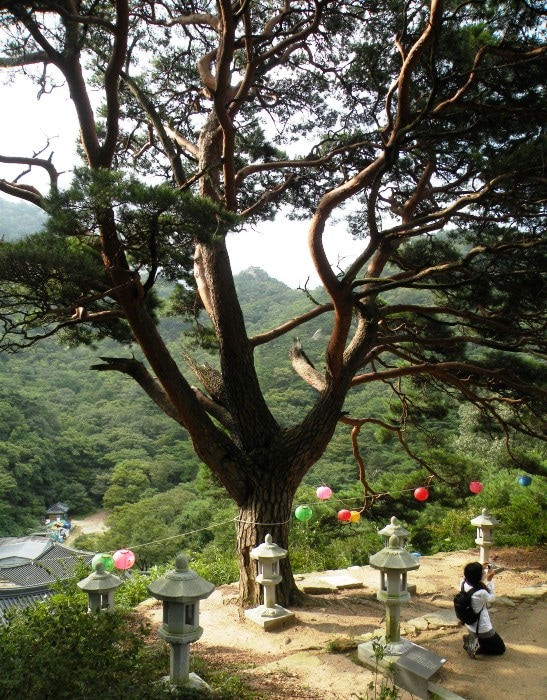
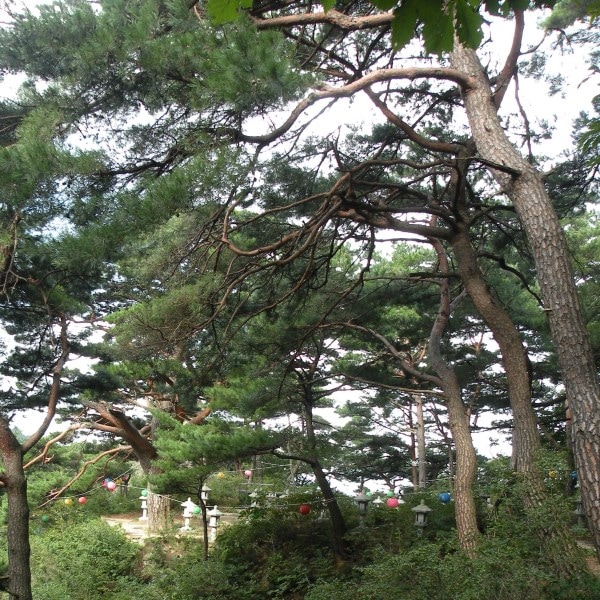
| The footpath leading up to the Sangdan [Upper Altar] and its magnificent Red Pine Tree |
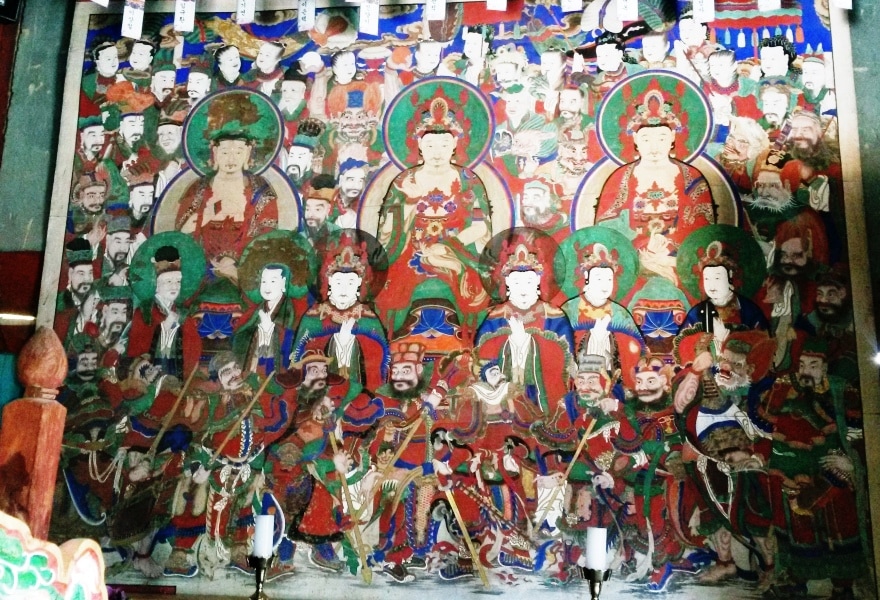
| Inside the Main Hall, a Bodhisattva Triad Painting serves as a Shinjung Taenghwa due to the presence of so many Guardian Spirits |
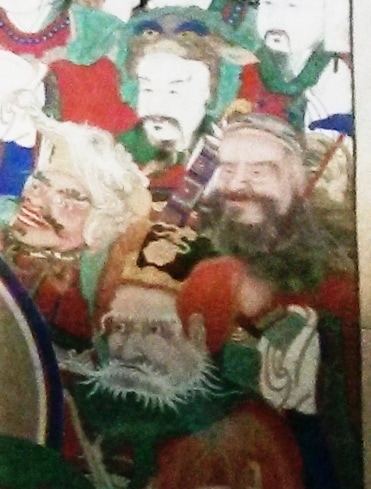
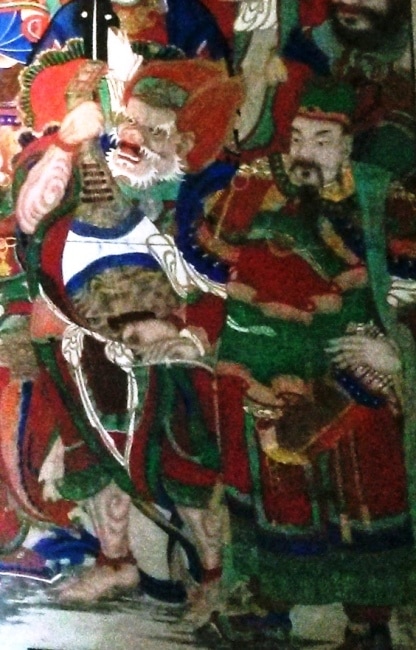
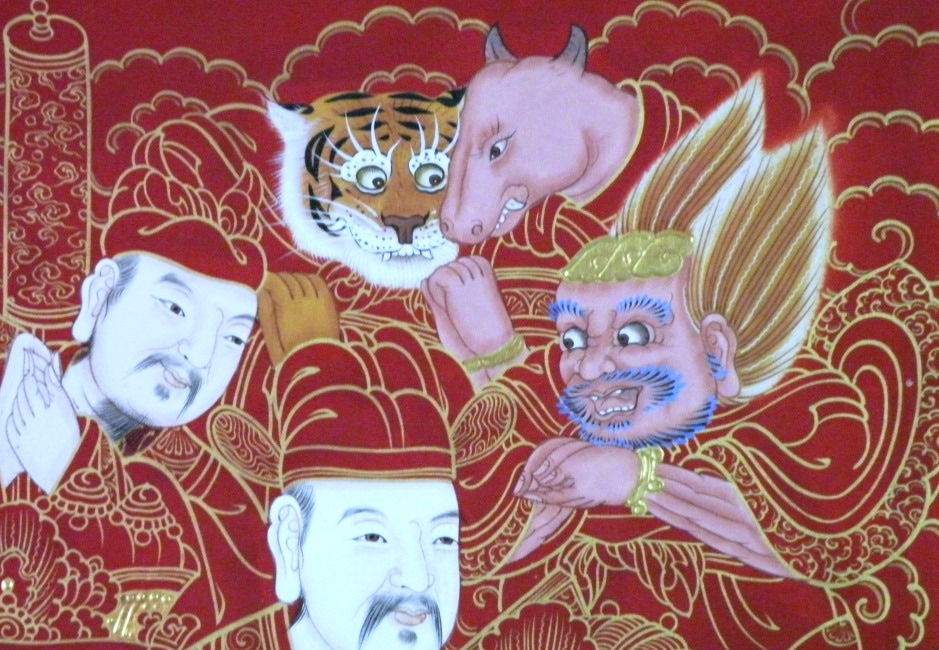
Right: a very Dragon-Kingish King of the East.
Left-below: Sanshin and Yong-wang below
monster-hat guy and elephant-hat guy.
Left-below: Sanshin and Yong-wang below
monster-hat guy and elephant-hat guy.