| Gyeryong-san Gap-sa Temple's Entranceway |
Sa-Cheonwang-mun Four Heavenly Kings Gate
Dae-ung-jeon Main Dharma Hall
Samseong-gak with Sanshin
Pyochung-won Shrine of Heroes
Daejeok-jeon Great Silence Hall
Gongu-tap Merit-Cow Pagoda
Guryong-am Nine-Dragons Hermitage
Yongmun Pokpo Dragon-Gate Waterfall
Shinheung-am with Boulder Pagoda
Gap-sa Temple Main Page
Mt. Gyeryong-san Index Page
Sanshin Site Contents Page
Dae-ung-jeon Main Dharma Hall
Samseong-gak with Sanshin
Pyochung-won Shrine of Heroes
Daejeok-jeon Great Silence Hall
Gongu-tap Merit-Cow Pagoda
Guryong-am Nine-Dragons Hermitage
Yongmun Pokpo Dragon-Gate Waterfall
Shinheung-am with Boulder Pagoda
Gap-sa Temple Main Page
Mt. Gyeryong-san Index Page
Sanshin Site Contents Page
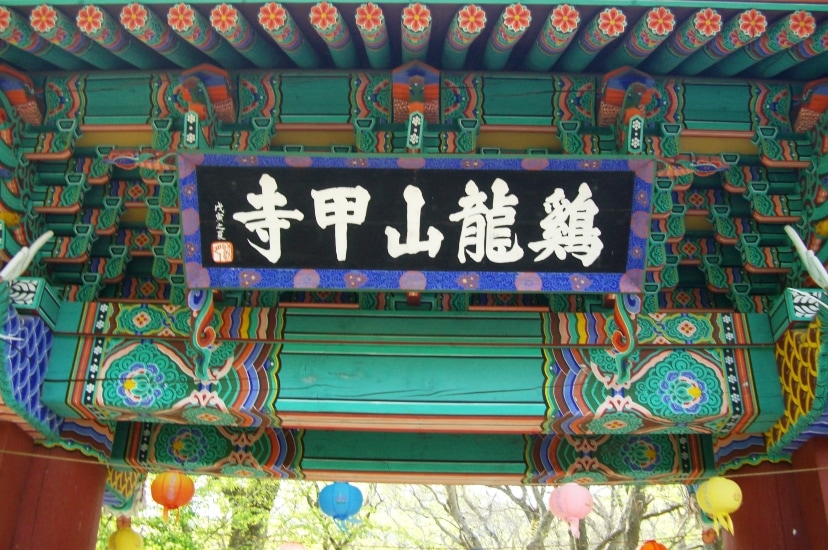
| The pyeon-aek Signboard on the Ilchul-mun or One-Pillar Gate marking the boundary of sacred land: "Rooster-Dragon Mountain's Foremost Temple" |
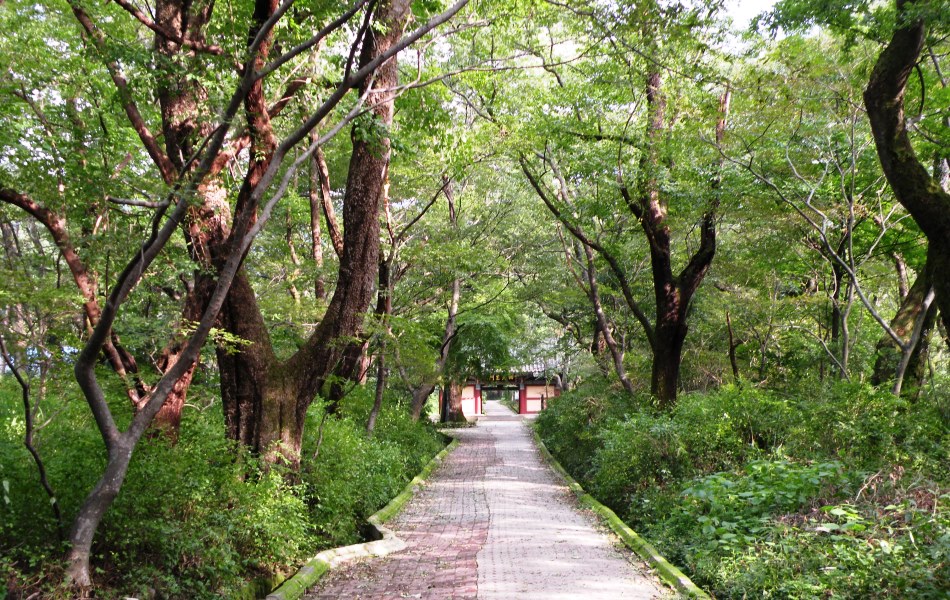
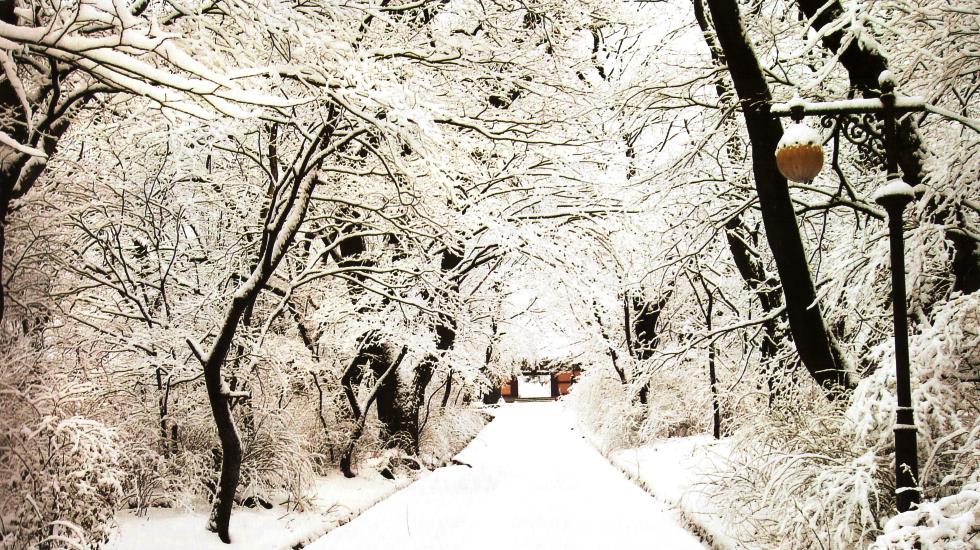
| Summer and Winter, the densely forested path to the Sa-cheonwang-mun Gate |
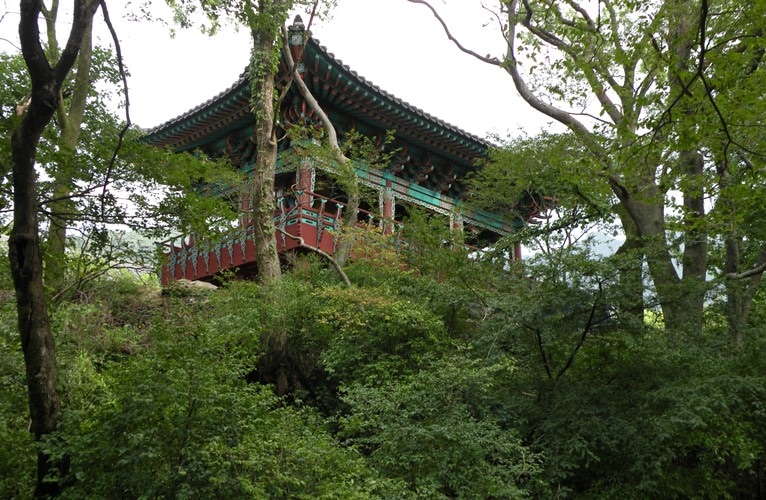
| The high pavilion, overlooking the stream |
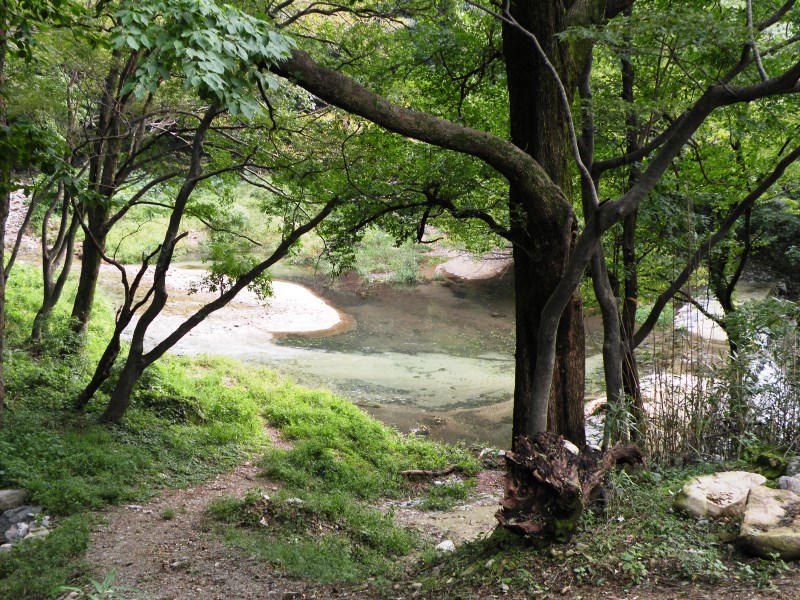
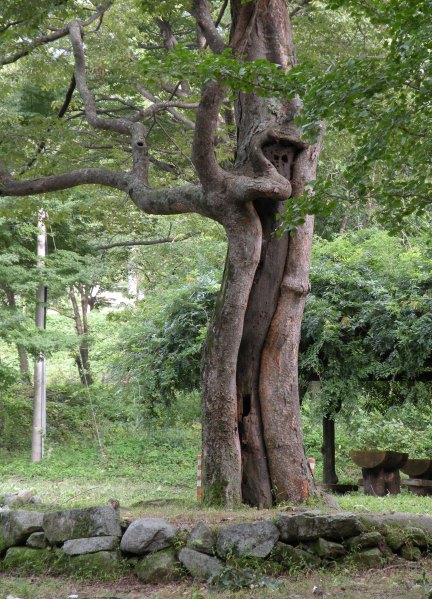
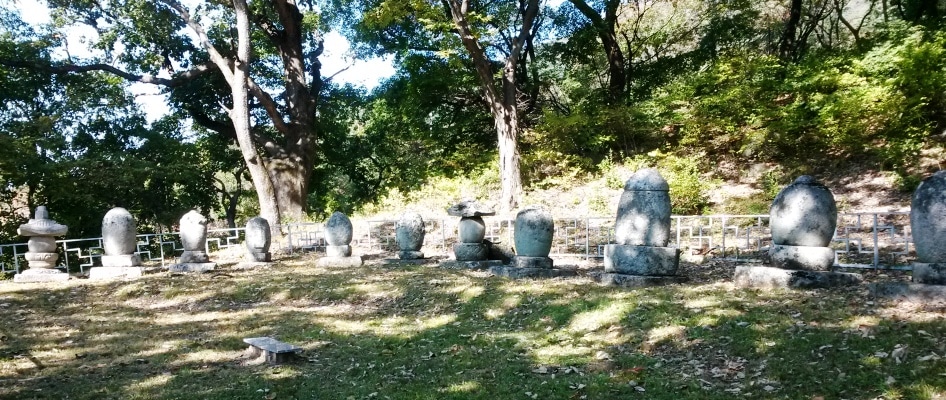
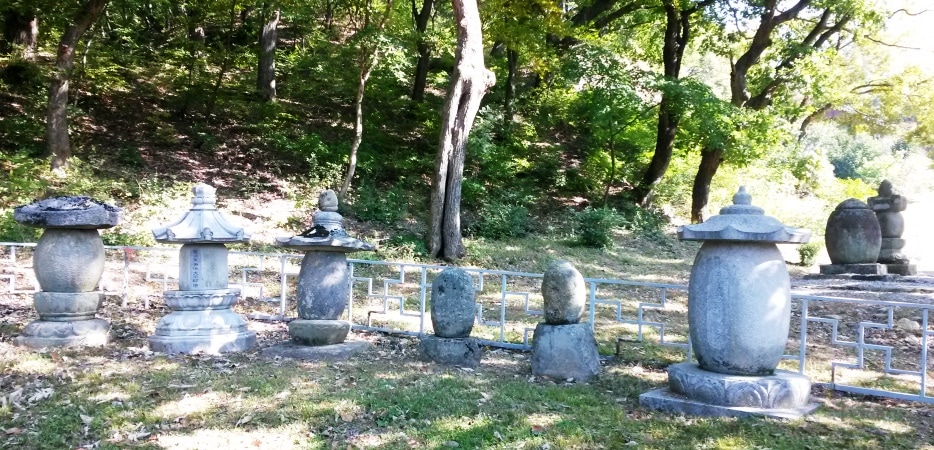
This is the classic Budo-won 浮屠園 stupa-garden of Gyeryong-san Gap-sa.
From my Encyclopedia of Korean Buddhism:
A budo 부도 浮屠 is a funerary stupa or reliquary of an enlightened Buddhist monk; a kind of pagoda
for containing the ashes and/or other relics of deceased master-monks, especially sari [舍利, sarira in
Sanscrit; jewel-like calcium crystals left after cremation], which are considered a verification of the deceased’s
attainment, venerated and respected by Buddhists everywhere. Budo is a transliteration of the
Chinese characters for the Sanskrit stupa (thupa in Pali), and is also called a sari-tap [舍利塔, sarira
pagoda] or sari-budo 舍利浮屠. They serve as objects of veneration for all temple community members
in gratitude for the efforts of previous masters, considered as holy as the masters themselves were.
These monuments abound at Korean temples, often showing their great age by the layer of thick
moss in which they are covered. They are usually in a budo-won [浮屠園, stupa garden] outside of the
temple’s walls, often in front of it along the entranceway path, inside the Ilju-mun One-pillar Gate;
but they can be found behind or to the side of a temple complex, even hundreds of meters away.
Temples are proud of having many of them, especially old ones, because that demonstrates their
venerable history; some of the greatest monasteries have more than 20 budos. The budo of a
particularly great master may be within the walls, beside or uphill from the main courtyard.
Budo generally consist of three stone parts (usually all granite): a base (usually octagonal), central
reliquary section (usually round) and roof (usually octagonal with a blunt finial). Some are large and
elegantly adorned, but most are simple and modest in various shapes and styles, with oval and bell
shapes for their central sections most common. There may be a biseok [碑石, standing stone stele] beside
the budo (possibly mounted on a stone turtle and wearing a dragon-cap) that is engraved with an
inscription of the monk’s name, titles, biography and accomplishments; these are very valuable
records for scholars as primary sources.
From my Encyclopedia of Korean Buddhism:
A budo 부도 浮屠 is a funerary stupa or reliquary of an enlightened Buddhist monk; a kind of pagoda
for containing the ashes and/or other relics of deceased master-monks, especially sari [舍利, sarira in
Sanscrit; jewel-like calcium crystals left after cremation], which are considered a verification of the deceased’s
attainment, venerated and respected by Buddhists everywhere. Budo is a transliteration of the
Chinese characters for the Sanskrit stupa (thupa in Pali), and is also called a sari-tap [舍利塔, sarira
pagoda] or sari-budo 舍利浮屠. They serve as objects of veneration for all temple community members
in gratitude for the efforts of previous masters, considered as holy as the masters themselves were.
These monuments abound at Korean temples, often showing their great age by the layer of thick
moss in which they are covered. They are usually in a budo-won [浮屠園, stupa garden] outside of the
temple’s walls, often in front of it along the entranceway path, inside the Ilju-mun One-pillar Gate;
but they can be found behind or to the side of a temple complex, even hundreds of meters away.
Temples are proud of having many of them, especially old ones, because that demonstrates their
venerable history; some of the greatest monasteries have more than 20 budos. The budo of a
particularly great master may be within the walls, beside or uphill from the main courtyard.
Budo generally consist of three stone parts (usually all granite): a base (usually octagonal), central
reliquary section (usually round) and roof (usually octagonal with a blunt finial). Some are large and
elegantly adorned, but most are simple and modest in various shapes and styles, with oval and bell
shapes for their central sections most common. There may be a biseok [碑石, standing stone stele] beside
the budo (possibly mounted on a stone turtle and wearing a dragon-cap) that is engraved with an
inscription of the monk’s name, titles, biography and accomplishments; these are very valuable
records for scholars as primary sources.
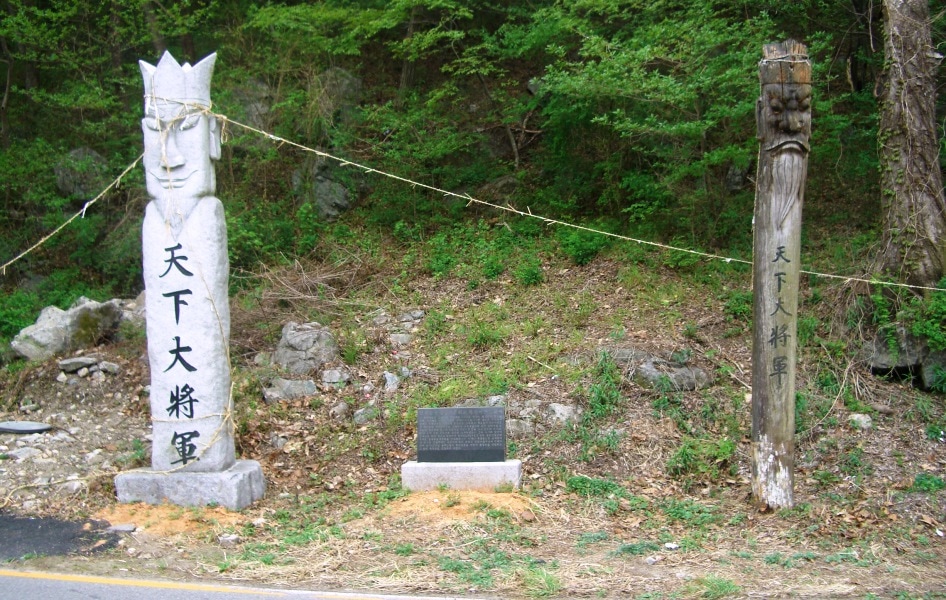
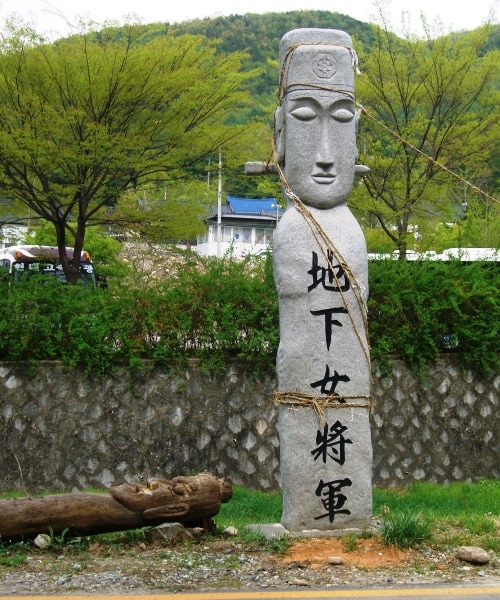
| Jangseung, Korea's folk-shamanic guardian-spirit poles |
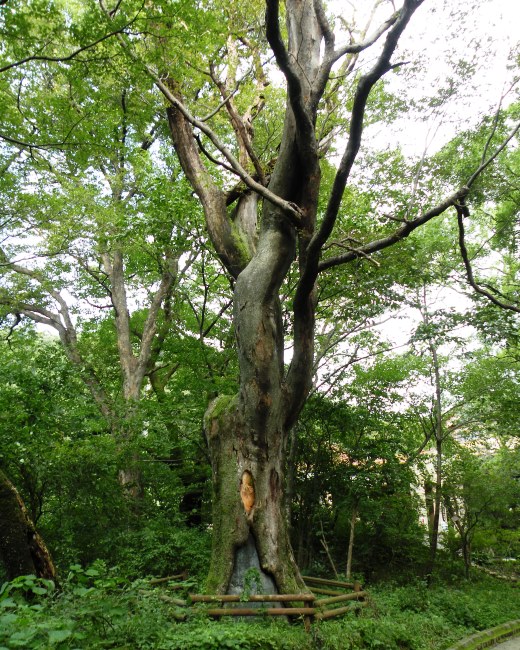
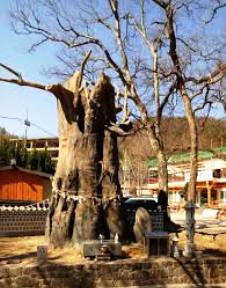
| sacred old trees |
| sacred old tree |
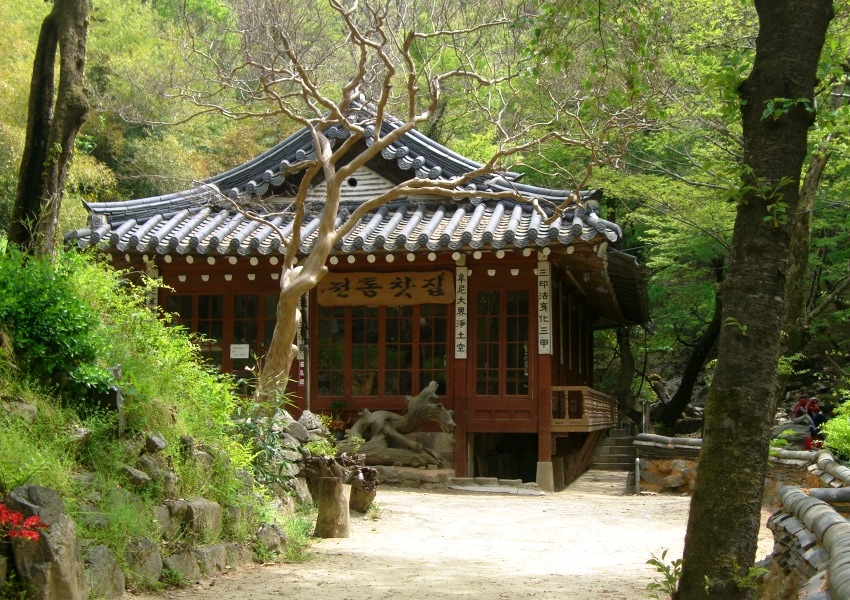
| public teahouse |
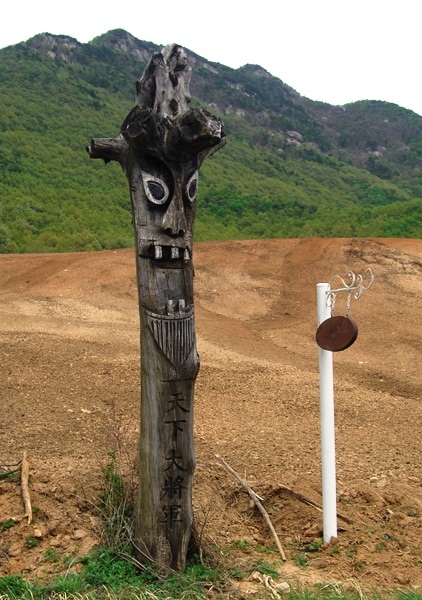
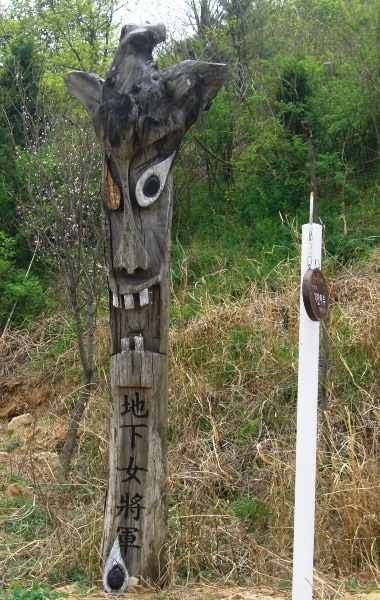
| a further variety of Jangseung, Korea's folk-shamanic guardian-spirit poles |
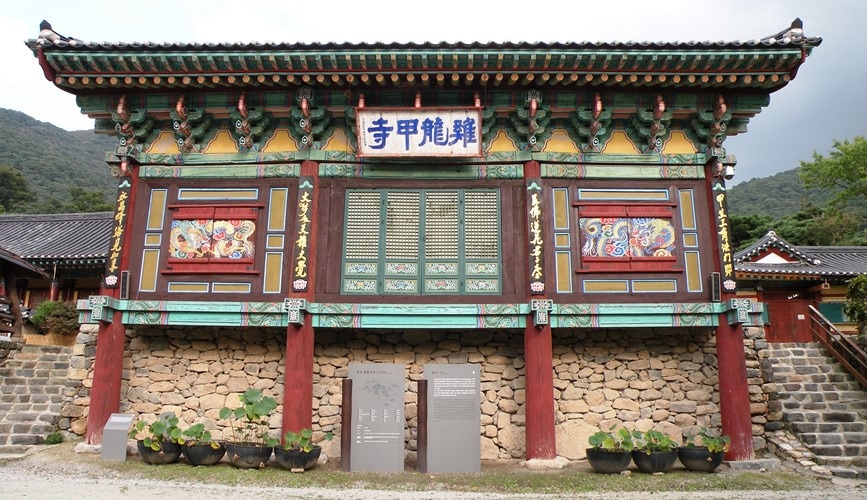
| Finally, the Boje-ru 보제루 普濟樓 or Universal Salvation Pavilion & Lecture-Hall, end of the entranceway and leading to the courtyard |
From my Encyclopedia of Korean Buddhism:
A two-story structure that is positioned between the Buli-mun 不二門 Non-dual Gate (if there is one)
and the Main Courtyard of the Buddha-Dharma Hall in most large temple complexes. Usually the
upper story is a lecture-hall while the first story serves as a gateway, the final entrance up to the
main courtyard; there are often steps within it and in some older ones the ceiling beams are quite
low, deliberately causing visitors to stoop in a gesture of humility as they pass beneath the studying
monks. Temples will normally hold their monastic lectures and non-ceremonial Beophoe 法會 or
Dharma Assemblies there, because it usually can accommodate more people than the Main Dharma
Hall can. The term boje [普濟, universal salvation] refers to the casting of a net across the Samgye
[三界, Three Realms of Samsara; those things which exist in the realm of desire, the realm of form, and the formless realm]
to rescue all sentient beings. The last Chinese character 樓 (pronounced ru in Korean, also nu)
means a raised pavilion or building of two or more stories.
A two-story structure that is positioned between the Buli-mun 不二門 Non-dual Gate (if there is one)
and the Main Courtyard of the Buddha-Dharma Hall in most large temple complexes. Usually the
upper story is a lecture-hall while the first story serves as a gateway, the final entrance up to the
main courtyard; there are often steps within it and in some older ones the ceiling beams are quite
low, deliberately causing visitors to stoop in a gesture of humility as they pass beneath the studying
monks. Temples will normally hold their monastic lectures and non-ceremonial Beophoe 法會 or
Dharma Assemblies there, because it usually can accommodate more people than the Main Dharma
Hall can. The term boje [普濟, universal salvation] refers to the casting of a net across the Samgye
[三界, Three Realms of Samsara; those things which exist in the realm of desire, the realm of form, and the formless realm]
to rescue all sentient beings. The last Chinese character 樓 (pronounced ru in Korean, also nu)
means a raised pavilion or building of two or more stories.
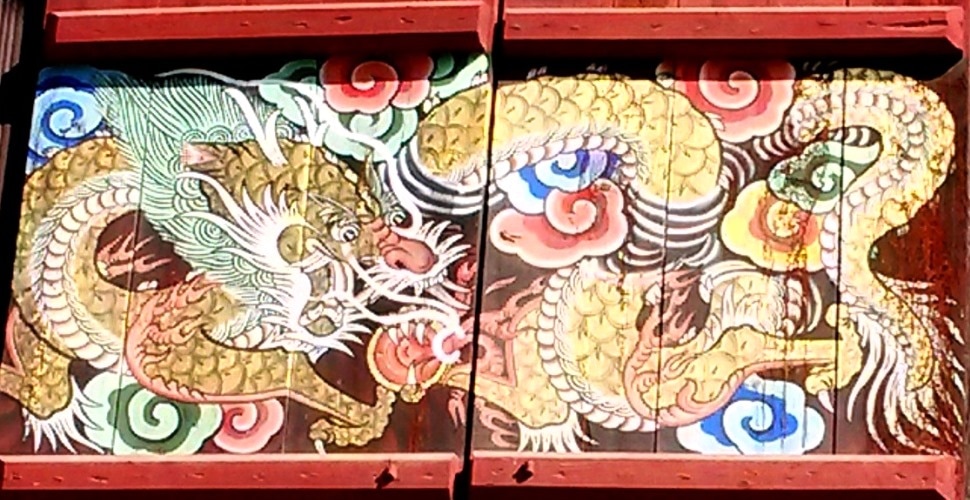
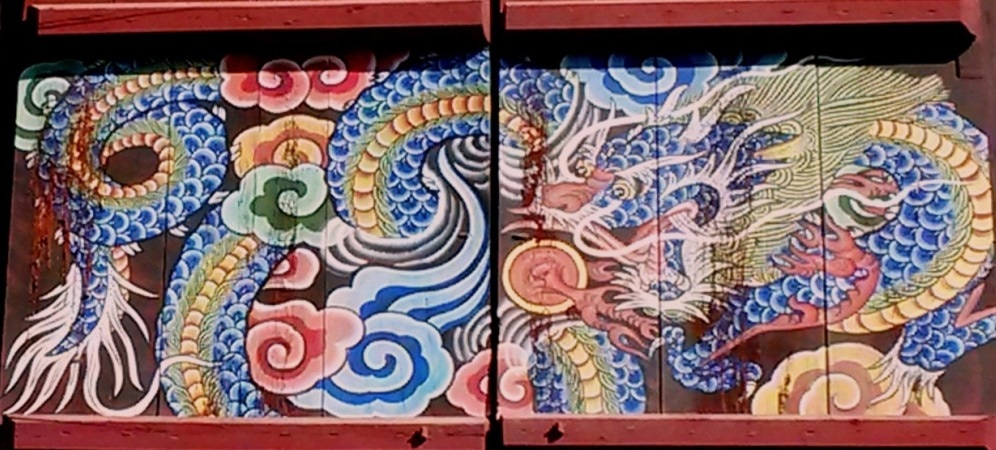
| Typical directional-dragon set according to ancient Chinese Daoism: Yellow Dragon on West, Blue on East |