| Gyeryong-san Gap-sa Temple's Gong-u-tap 甲寺 功牛塔 갑사 공우탑 Meritorious Ox Pagoda |
Daejeok-jeon Hall of Nirvana
Entranceway Features
Sa-Cheonwang-mun Four Heavenly Kings Gate
Dae-ung-jeon Main Dharma Hall
Samseong-gak / Three Saints Shrine
Pyochung-won Shrine of Heroes
Guryong-am Nine Dragons Hermitage
Yongmun Pokpo Dragon-Gate Waterfall
Shinheung-am with Boulder Pagoda
Main Gap-sa Page
Mt. Gyeryong-san Index Page
Sanshin Site Contents Page
Entranceway Features
Sa-Cheonwang-mun Four Heavenly Kings Gate
Dae-ung-jeon Main Dharma Hall
Samseong-gak / Three Saints Shrine
Pyochung-won Shrine of Heroes
Guryong-am Nine Dragons Hermitage
Yongmun Pokpo Dragon-Gate Waterfall
Shinheung-am with Boulder Pagoda
Main Gap-sa Page
Mt. Gyeryong-san Index Page
Sanshin Site Contents Page
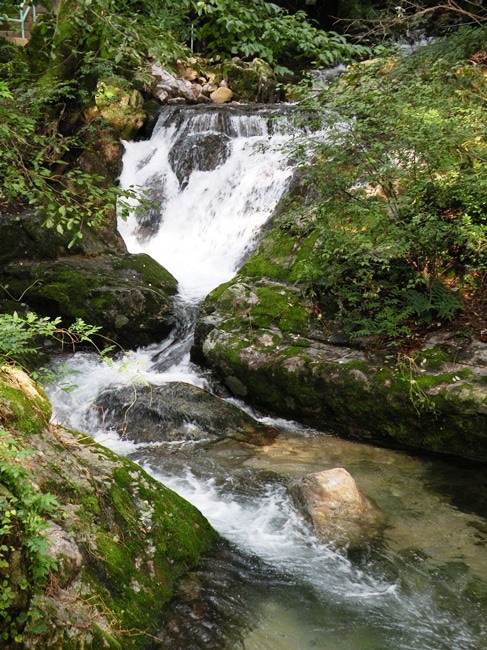
| On the main trail leading from Gap-sa to the Yongmun Waterfall, Shinheung-am and beyond, at its junction with the short trail going to the Daejeok-jeon, is the below charming waterfall -- and the Gong-u-tap Pagoda. |
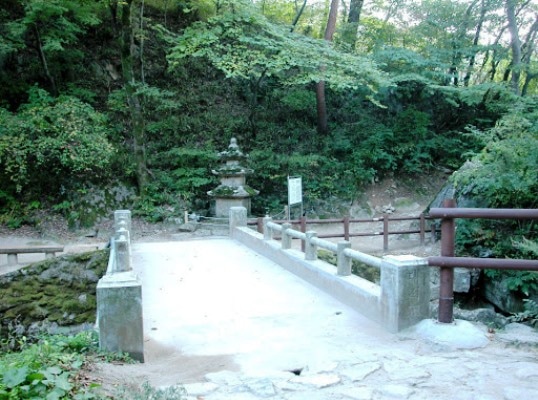
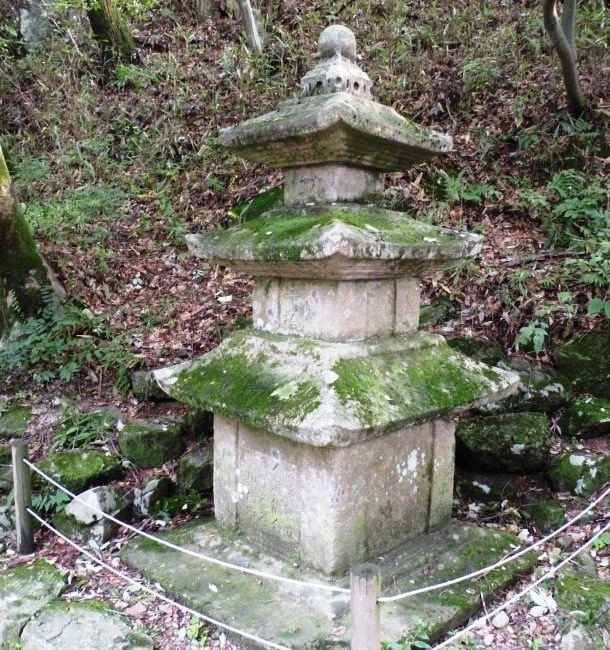
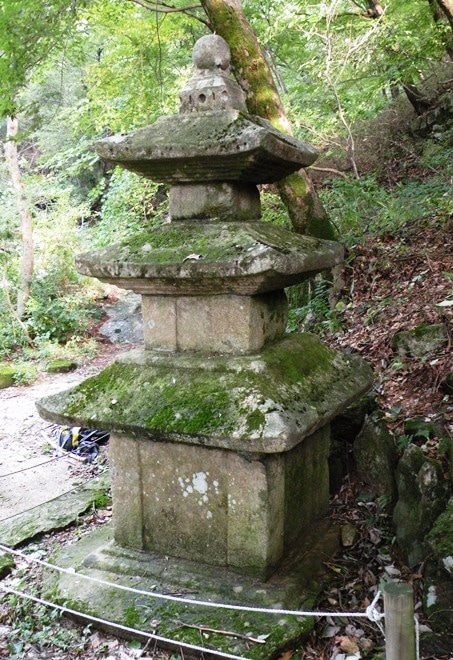
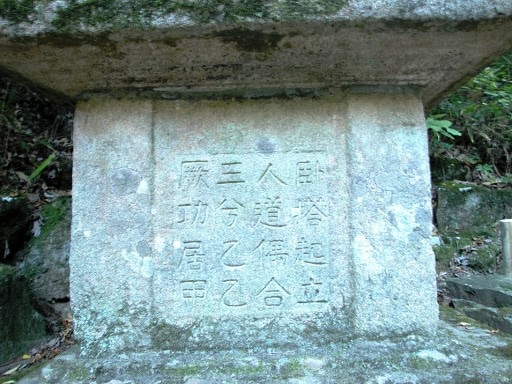
This is one of the unique stone pagodas in all Korea, although quite small, as it was dedicated to an ox (or bull, male
cow), not a master-monk or deity. It dates from over four centuries ago, but is not designated as any level of Korean
Treasure, due to the strangeness of its legend and questions about its authenticity. It enshrines the ox's ashes and
is therefore technically more of a Budo stupa than a pagoda. Oxen are already infused with deep symbolism in the
Seon [meditational] Buddhist traditions, due to the ubiquitous Ten Ox-Herding Paintings on outer walls of Main Halls.
The story goes that after the 1592-98 Imjin War (see Pyochung-won) once-grand Gap-sa lay in burnt ruins, and the
surviving monks who had fled the temple to escape the samurai's murderous destruction by gathered back at the site
one by one, and when the group was large enough swore holy ritual oaths to rebuild what had been lost by any means
necessary, appealing for divine aid and beginning to collect donations in the Gongju City area. Four leading monks
decided to travel east, west, north and south to seek whatever aid could be found. An especially sincere monk named
Inho headed to the east, crossing Gyeryong-san into the Daejeon City area.
One day, after spending days going from village to village collecting donations, Inho Seunim was going up a path into
the mountains to spend the night in a rough hut, when he heard a cow crying from over to one side. “It sounds sad; why
would a cow cry in this lovely mountain?” he thought. He walked in the direction of the piteous sounds, feeling a strong
compassion. He found a large ox in a thick grove of trees, being slowly strangled as its leash had become wrapped
around its neck and tangled in the branches. Inho untied the tangled rope from around its neck, with a short Buddhist
prayer of mercy. Then the ox, freed from the pain, stopped crying and circumambulated around Inho with a bowed
head as he were a pagoda, in gratitude. “Yes, yes, go ahead and go back to your master's farm” the monk said, and
with his heart feeling lighter, returned to his path.
A year passed, and the four monks were back at the Gap-sa site. Many generous donations of gold, rice, tools and
other precious things had been gathered from all the region. And further great good-news came, as the Joseon royal
government granted financial support in 1604, enough for purchasing materials necessary for a grand re-construction
of the monastery and hiring the workers needed. However, there was still a dire national shortage of labor, as so many
men had been killed in the war. They could not transport the lumber and iron that they needed for the huge project.
cow), not a master-monk or deity. It dates from over four centuries ago, but is not designated as any level of Korean
Treasure, due to the strangeness of its legend and questions about its authenticity. It enshrines the ox's ashes and
is therefore technically more of a Budo stupa than a pagoda. Oxen are already infused with deep symbolism in the
Seon [meditational] Buddhist traditions, due to the ubiquitous Ten Ox-Herding Paintings on outer walls of Main Halls.
The story goes that after the 1592-98 Imjin War (see Pyochung-won) once-grand Gap-sa lay in burnt ruins, and the
surviving monks who had fled the temple to escape the samurai's murderous destruction by gathered back at the site
one by one, and when the group was large enough swore holy ritual oaths to rebuild what had been lost by any means
necessary, appealing for divine aid and beginning to collect donations in the Gongju City area. Four leading monks
decided to travel east, west, north and south to seek whatever aid could be found. An especially sincere monk named
Inho headed to the east, crossing Gyeryong-san into the Daejeon City area.
One day, after spending days going from village to village collecting donations, Inho Seunim was going up a path into
the mountains to spend the night in a rough hut, when he heard a cow crying from over to one side. “It sounds sad; why
would a cow cry in this lovely mountain?” he thought. He walked in the direction of the piteous sounds, feeling a strong
compassion. He found a large ox in a thick grove of trees, being slowly strangled as its leash had become wrapped
around its neck and tangled in the branches. Inho untied the tangled rope from around its neck, with a short Buddhist
prayer of mercy. Then the ox, freed from the pain, stopped crying and circumambulated around Inho with a bowed
head as he were a pagoda, in gratitude. “Yes, yes, go ahead and go back to your master's farm” the monk said, and
with his heart feeling lighter, returned to his path.
A year passed, and the four monks were back at the Gap-sa site. Many generous donations of gold, rice, tools and
other precious things had been gathered from all the region. And further great good-news came, as the Joseon royal
government granted financial support in 1604, enough for purchasing materials necessary for a grand re-construction
of the monastery and hiring the workers needed. However, there was still a dire national shortage of labor, as so many
men had been killed in the war. They could not transport the lumber and iron that they needed for the huge project.
Quite a few alternate versions of this legend abound. There was a signboard here decades ago that places the entire
tale in the reign of Baekje King Biryu, 304-44 CE -- although that seems absurd, as the acceptance of Buddhism in
Baekje is dated at 384, and Gap-sa's foundation by missionary-monk Ado Hwasang is claimed to have been in 420.
Another version says that when it came time to lay the floor of the temple's Main Dharma Hall, the ox told assembled
monks that "The scented juniper is the best material for the beopdang flooring, being both just hard enough and just
soft enough. It is said that the best such lumber is from the slopes of Baekdu-san. Now let's go quickly to Mt. Baekdu,
although it is several months of travel from here." He had the four holy monks get up on his back, and trundled out of
the temple gate. Suddenly he began to gallop at super-speed, and then the monks suddenly found they were in a lush
juniper forest on Baekdu-san, as-if they had ridden a time-machine. They cut down several great trees, and the ox,
standing silently, simply raised its neck up and made a gesture to load the trees. The monks put the huge burden on
the ox's back, tied it well and then climbed on top. The ox began to move slowly, and then faster, and then arrived in
front of Gap-sa's front gate in an instant. "Huh-huh, that’s really amazing" proclaimed all the monks. And then a week
or so later, when another load of juniper of a different high quality was needed, the ox and four monks made a similar
magical journey to Ulleung-do Island far off of Korea's east coast.
tale in the reign of Baekje King Biryu, 304-44 CE -- although that seems absurd, as the acceptance of Buddhism in
Baekje is dated at 384, and Gap-sa's foundation by missionary-monk Ado Hwasang is claimed to have been in 420.
Another version says that when it came time to lay the floor of the temple's Main Dharma Hall, the ox told assembled
monks that "The scented juniper is the best material for the beopdang flooring, being both just hard enough and just
soft enough. It is said that the best such lumber is from the slopes of Baekdu-san. Now let's go quickly to Mt. Baekdu,
although it is several months of travel from here." He had the four holy monks get up on his back, and trundled out of
the temple gate. Suddenly he began to gallop at super-speed, and then the monks suddenly found they were in a lush
juniper forest on Baekdu-san, as-if they had ridden a time-machine. They cut down several great trees, and the ox,
standing silently, simply raised its neck up and made a gesture to load the trees. The monks put the huge burden on
the ox's back, tied it well and then climbed on top. The ox began to move slowly, and then faster, and then arrived in
front of Gap-sa's front gate in an instant. "Huh-huh, that’s really amazing" proclaimed all the monks. And then a week
or so later, when another load of juniper of a different high quality was needed, the ox and four monks made a similar
magical journey to Ulleung-do Island far off of Korea's east coast.
At this point of renewed worry and despair, Inho had a strange vivid dream in which the ox he had saved appeared
and spoke. "Monk, do you remember me? You saved me a year ago when I was about to die in my tangled leash."
"Ah, yes I remember" replied the dreaming monk, "But how does an ox speak and understand human language?"
Then the ox spoke again. "Do not mind that, honorable monk. I just came to help you, who now seems heartbroken
and in need of compassion." It then turned and walked away. Inho woke up from his dream, but it had been so
vivid that he pinched his own cheek, exclaiming “Is this a dream or real life?”
Inho got up early the next morning, finished his standard morning prayers and was about to go to work, but then was
startled at the sight of that same ox coming up the road into the temple outside the Ilju-mun [One-Pillar Front Gate]
carrying a huge load of construction materials on its mighty back. "This is unbelievable! That's the same ox that I
saved from torment a year ago and just appeared in my dream last night!" he proclaimed to the other monks there.
The ox let his load of big wooden beams, metal fittings and roof-tiles be unloaded at the main courtyard, and then
just left the temple again. After a while, he returned to the temple with another big load. "How did this ox get all these
excellent materials?" exclaimed the monks. "He must have been sent to us by the Cosmic Buddha."
Thanks to the ox's continuous trips back and forth for days and nights without stopping, the reconstruction of Gapsa
proceeded smoothly. Just when the final parts were built, the ox dropped-dead of exhaustion in the courtyard after
making his final delivery. The monks convened a holy council that decided that the ox should be given a funeral as-if
it were a human master-monk, to grant it the highest honor. They held a grand cremation ceremony with all the proper
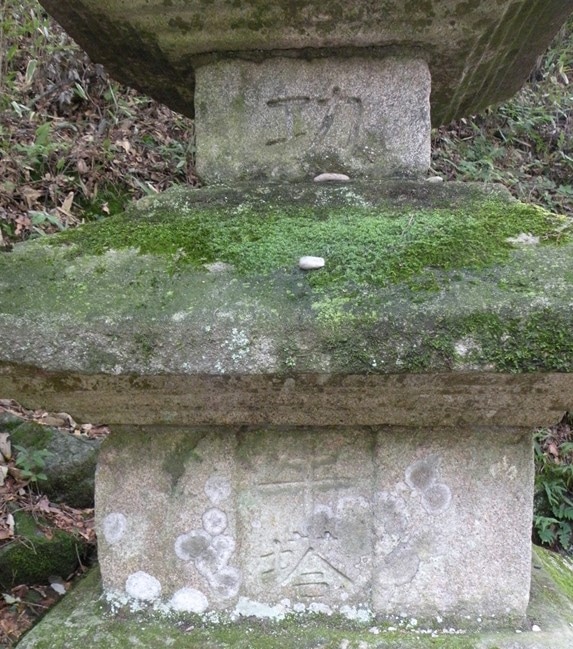
prayers chanted, using the posthumous appellation "U-bosal" [Ox-Bodhisattva]. They then carved this "Meritorious
Ox Pagoda" 功牛塔 공우탑 as the stupa to enshrine its ashes, to commemorate these events for future generations.
and spoke. "Monk, do you remember me? You saved me a year ago when I was about to die in my tangled leash."
"Ah, yes I remember" replied the dreaming monk, "But how does an ox speak and understand human language?"
Then the ox spoke again. "Do not mind that, honorable monk. I just came to help you, who now seems heartbroken
and in need of compassion." It then turned and walked away. Inho woke up from his dream, but it had been so
vivid that he pinched his own cheek, exclaiming “Is this a dream or real life?”
Inho got up early the next morning, finished his standard morning prayers and was about to go to work, but then was
startled at the sight of that same ox coming up the road into the temple outside the Ilju-mun [One-Pillar Front Gate]
carrying a huge load of construction materials on its mighty back. "This is unbelievable! That's the same ox that I
saved from torment a year ago and just appeared in my dream last night!" he proclaimed to the other monks there.
The ox let his load of big wooden beams, metal fittings and roof-tiles be unloaded at the main courtyard, and then
just left the temple again. After a while, he returned to the temple with another big load. "How did this ox get all these
excellent materials?" exclaimed the monks. "He must have been sent to us by the Cosmic Buddha."
Thanks to the ox's continuous trips back and forth for days and nights without stopping, the reconstruction of Gapsa
proceeded smoothly. Just when the final parts were built, the ox dropped-dead of exhaustion in the courtyard after
making his final delivery. The monks convened a holy council that decided that the ox should be given a funeral as-if
it were a human master-monk, to grant it the highest honor. They held a grand cremation ceremony with all the proper
prayers chanted, using the posthumous appellation "U-bosal" [Ox-Bodhisattva]. They then carved this "Meritorious
Ox Pagoda" 功牛塔 공우탑 as the stupa to enshrine its ashes, to commemorate these events for future generations.