| Gyeryong-san Gap-sa Temple's Yongmun Pokpo Dragon-Gate Waterfalls 龍門瀑布 & Daeseong-am Yaksa Yorae Bulsang Great Saint Medicinal-Healing Buddha Statue |
NEXT--> Shinheung-am with Boulder Pagoda
Features of Gap-sa's Entranceway
Sa-CheonWang-Mun Four Heavenly Kings
Dae-ung-jeon Main Dharma Hall
Pyochung-won Shrine of Heroes
Daejeok-jeon Hall Buddha's Great Silence
Gongu-tap Pagoda for an Ox
Guryong-am Hermitage
Gap-sa Temple Main Page
Gyeryong-san Index Page
Sanshin Site Contents Page
Features of Gap-sa's Entranceway
Sa-CheonWang-Mun Four Heavenly Kings
Dae-ung-jeon Main Dharma Hall
Pyochung-won Shrine of Heroes
Daejeok-jeon Hall Buddha's Great Silence
Gongu-tap Pagoda for an Ox
Guryong-am Hermitage
Gap-sa Temple Main Page
Gyeryong-san Index Page
Sanshin Site Contents Page
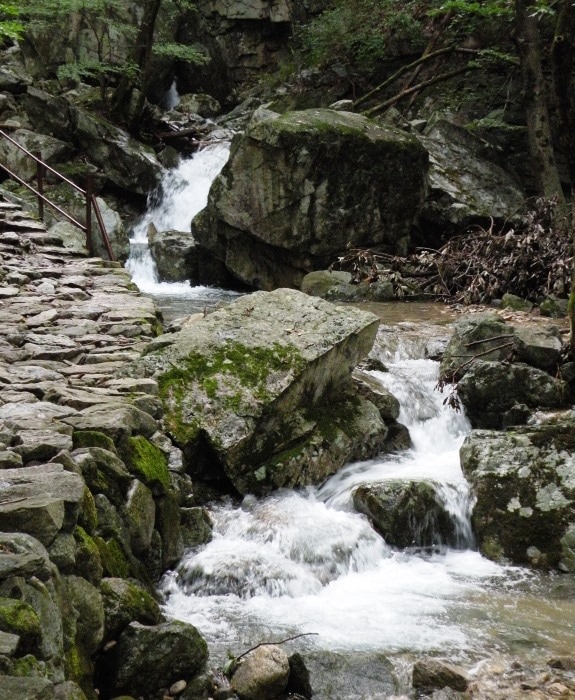
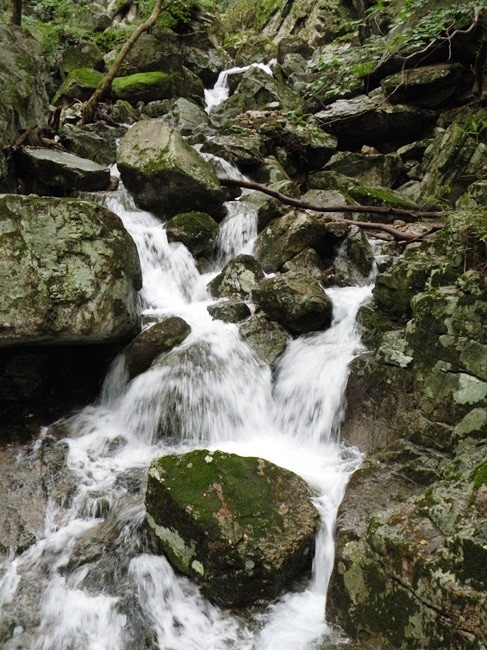
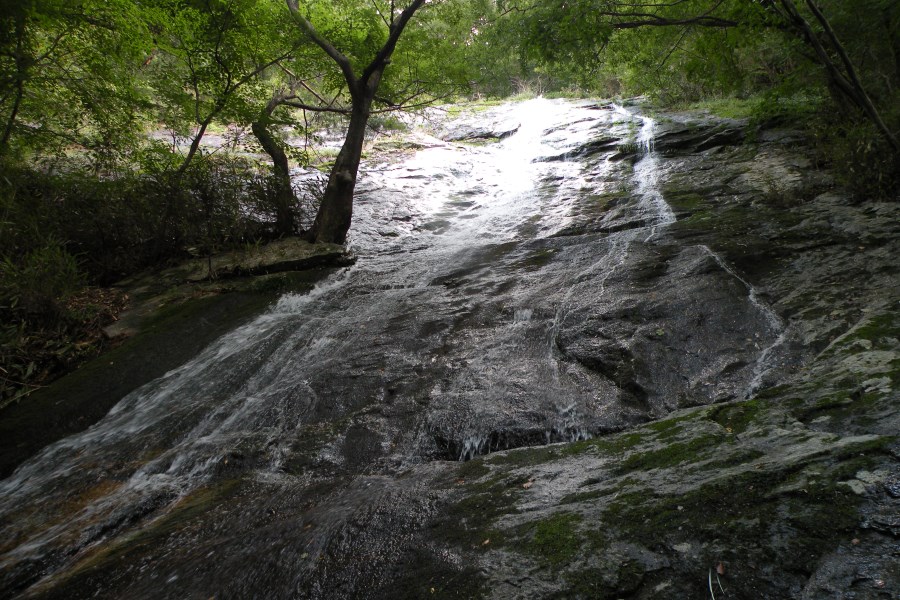
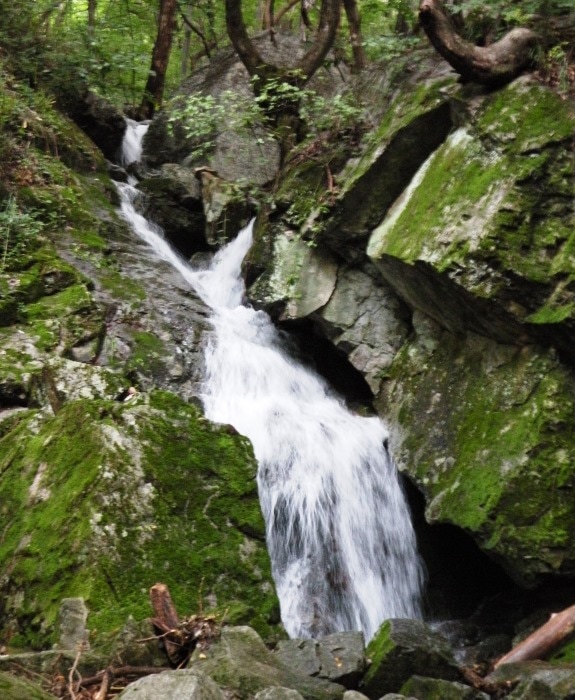
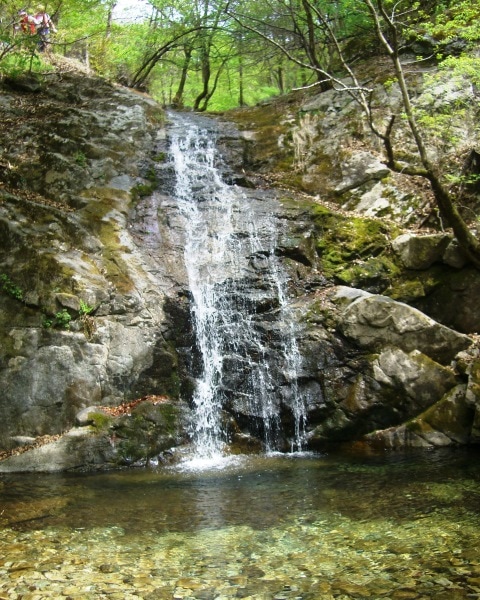
The term “Dragon-Gate” originated in Chinese Daoism to designate a narrow gorge between rocky
cliffs where a river, stream or waterfall passes through, like a dragon-energy charging out of its
deep-mountain origin and bursting out through the 'gate' into the mundane world, as a dynamic part
of the bio-hydrological cycle that sustains all life on earth. Therefore these are regarded as highly
sacred sites, quite auspicious for spiritual practices. South Korea has two major historic monasteries
named Yongmun-sa 龍門寺 at mountains with the same name -- one in Gyeonggi Province east of
Seoul, and the other in the northwest corner of North Gyeongsang Province; and many waterfalls
named “Yongmun-pokpo” (龍門瀑布). There are many such sites in China, regarded as scenic-sacred.
This site is less than 1000 meters up from Gap-sa Temple, and about the same below Shinheung-am.
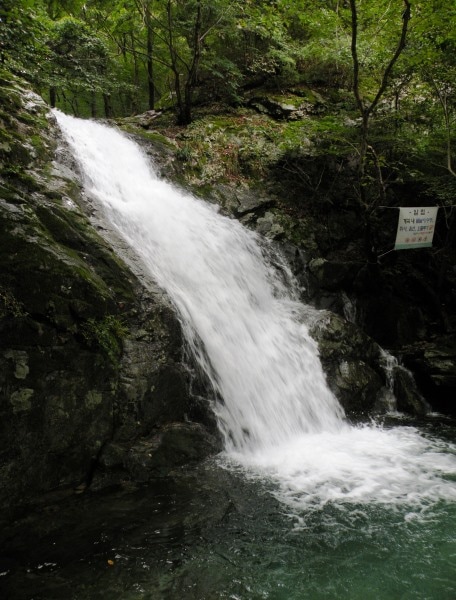
It has a dozen waterfalls through the narrow gorge, of many different styles. These photos are from
my visit in September 2012, with my friends Shawn and Yumi.
cliffs where a river, stream or waterfall passes through, like a dragon-energy charging out of its
deep-mountain origin and bursting out through the 'gate' into the mundane world, as a dynamic part
of the bio-hydrological cycle that sustains all life on earth. Therefore these are regarded as highly
sacred sites, quite auspicious for spiritual practices. South Korea has two major historic monasteries
named Yongmun-sa 龍門寺 at mountains with the same name -- one in Gyeonggi Province east of
Seoul, and the other in the northwest corner of North Gyeongsang Province; and many waterfalls
named “Yongmun-pokpo” (龍門瀑布). There are many such sites in China, regarded as scenic-sacred.
This site is less than 1000 meters up from Gap-sa Temple, and about the same below Shinheung-am.
It has a dozen waterfalls through the narrow gorge, of many different styles. These photos are from
my visit in September 2012, with my friends Shawn and Yumi.
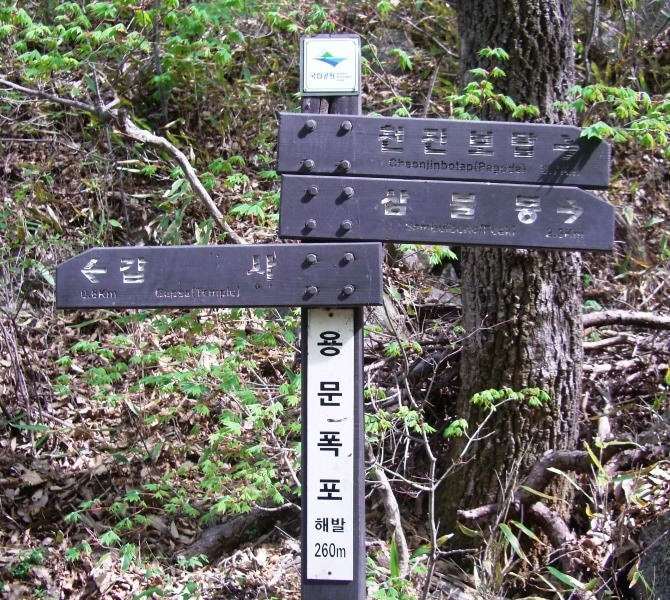
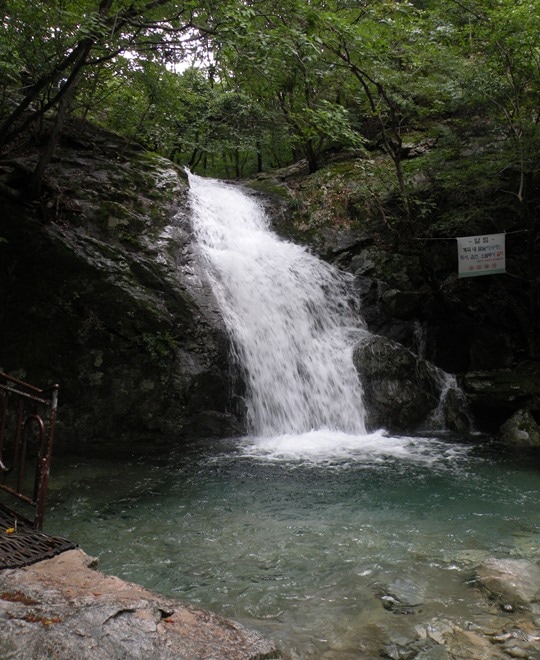
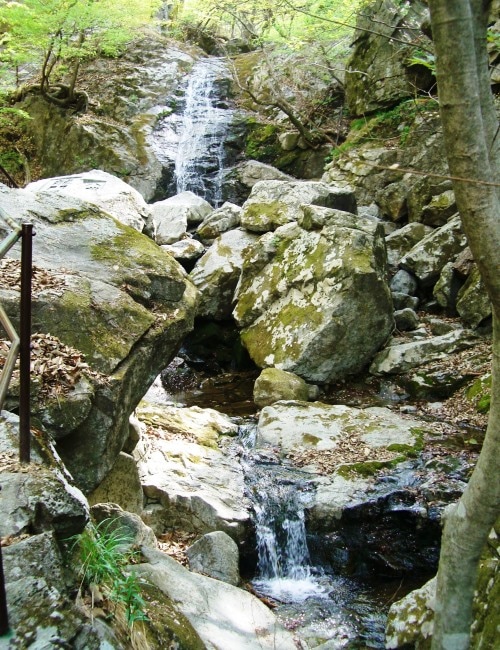
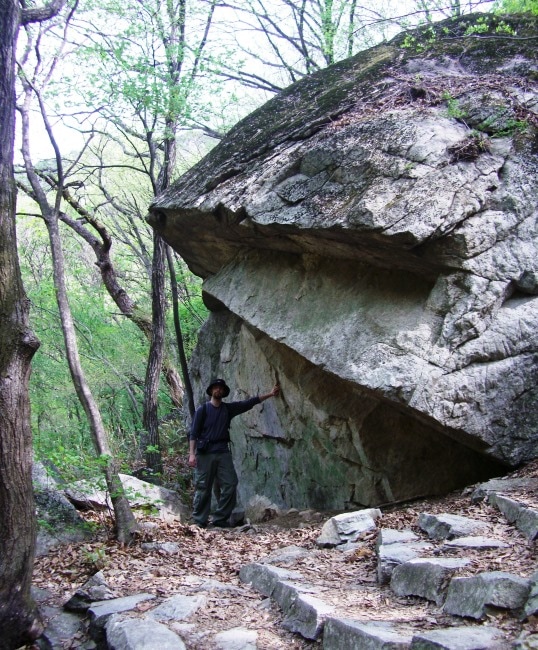
| Near the falls and next to the trail-stairs, Shawn stands by a boulder-overhang that was previously a shelter for shamans worshipping the dragon-spirits here. |
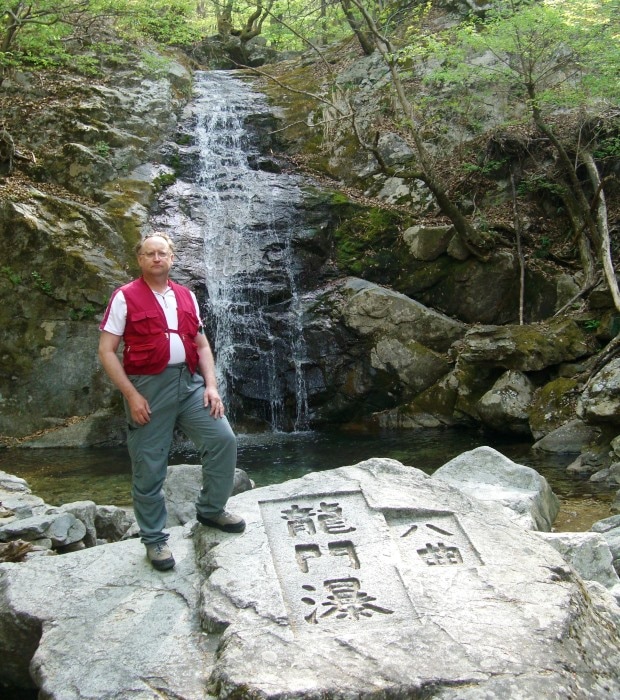
| Myself at the Joseon-era carving of the name "Dragon-Gate Falls" |
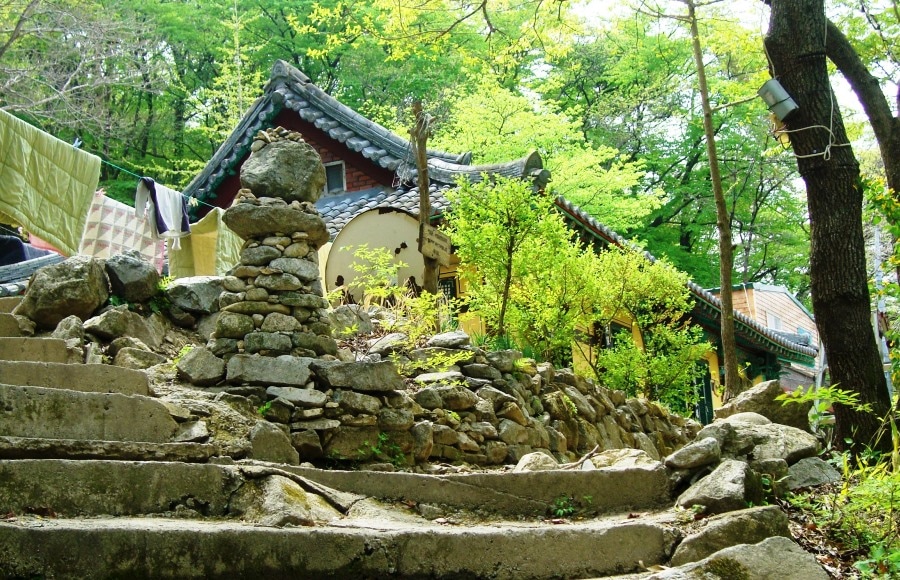
| Just downstream from the Yongmun Falls is Daeseong-am [Great Saint Hermitage], an ancient site that was rebuilt in the 1970s to house a special Buddha-statue. |
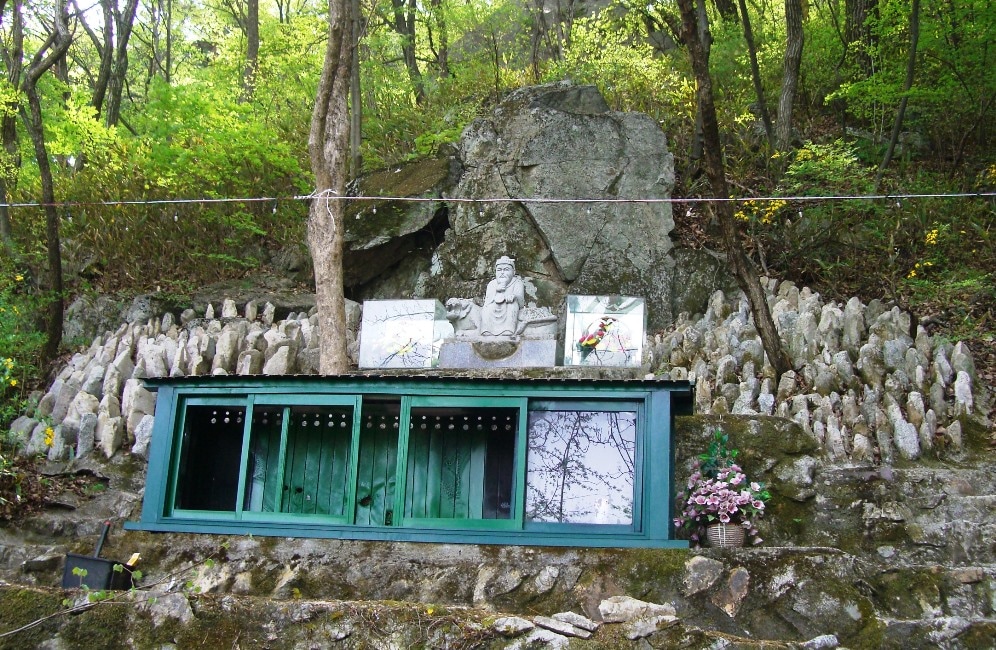
| Nice outdoor Sanshin-dan [Mountain-spirit Altar] of Daeseong-am; the 500 standing-stones may be intended as Sanshins, echoing the "500 Buddhas" motif. |
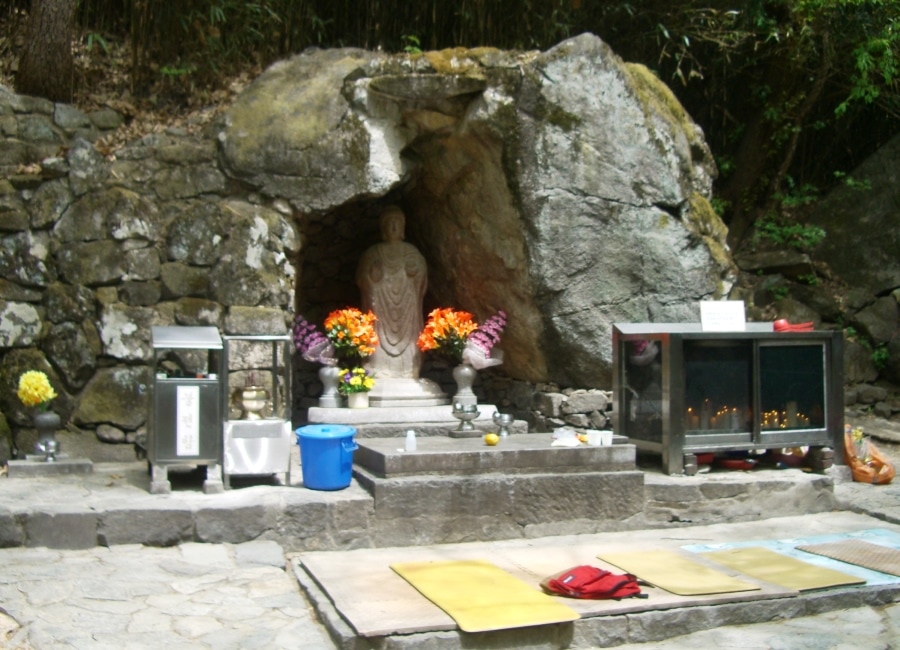
| The grotto-shrine for the antique Yaksa-yeorae-sang [Medicinal/Healing Buddha Statue] |
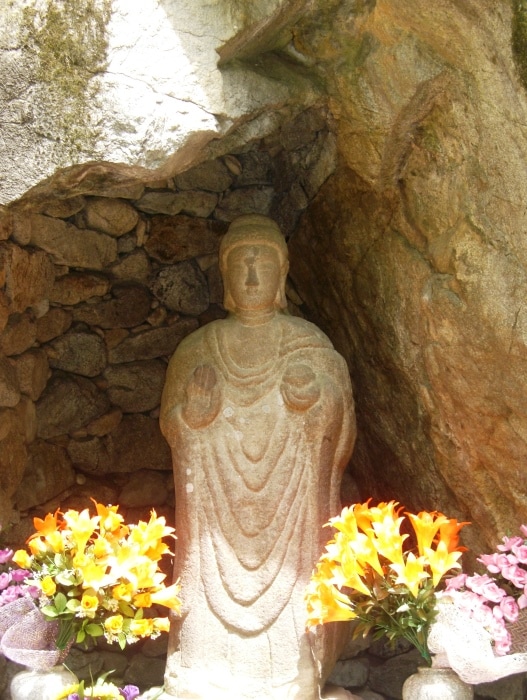
| The icon is believed to have been carved in the mid-Goryeo era (12th century). It was originally enshrined at a Yaksa-am Hermitage above Gap-sa, which was totally destroyed in the Korean War; so it was moved here to Daeseong-am in the 1970s, as a much better location for pilgrims to stop-by. At that time, the broken nose was crudely repaired with cement. |
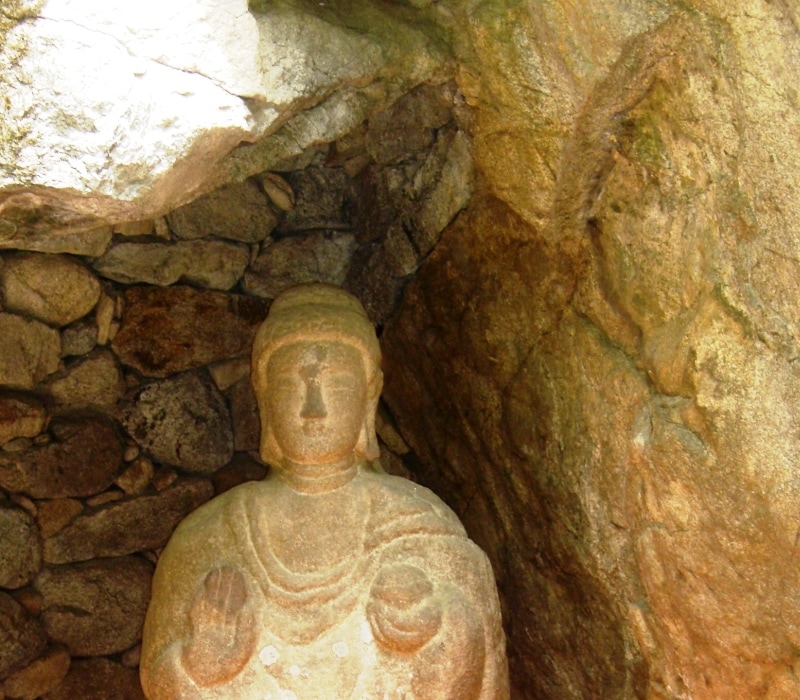
| Note the elfish face on the boulder top-right of the buddha! and what seems like a bird or angel-fish perched on a snakeish sword right-below that! These are natural patterns in the rock, not carved -- but are probably the reason for building the grotto here. Koreans are delighted by these kind of "miraculous manifestations" that show that "the mountain is alive, with a strong spirit".... |
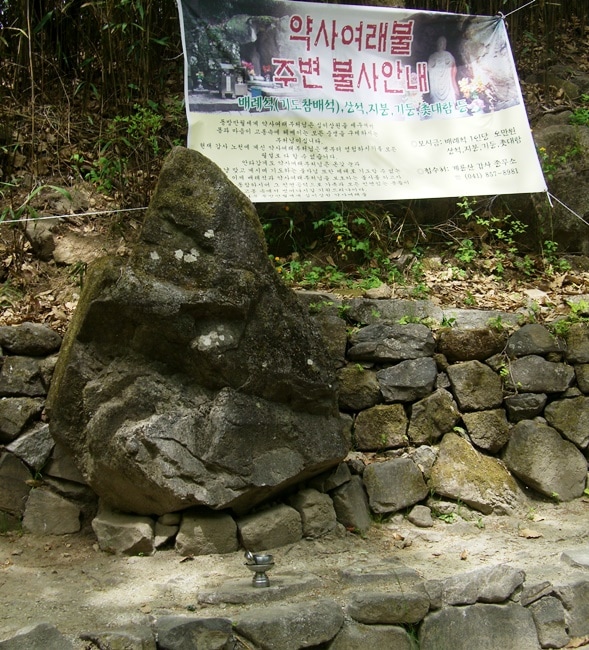
| Crude "natural" Sanshin-sang [Mountain-spirit Statue], for the "nature-spirits", enshrined near the Medicinal Buddha as another such "manifestation". |
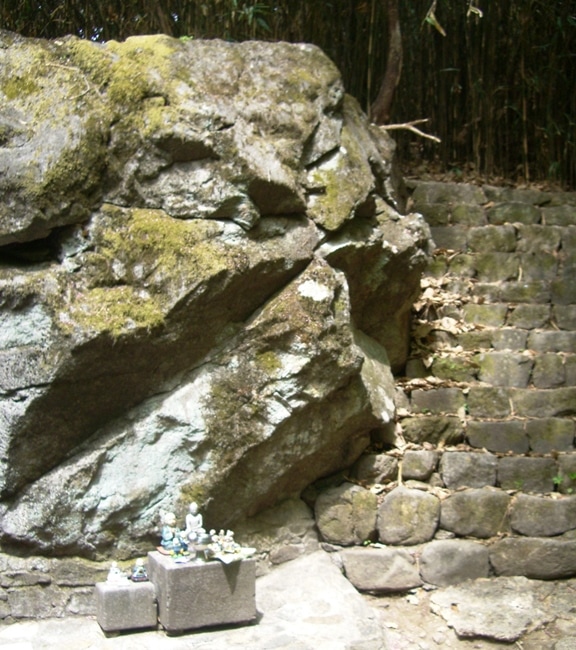
| Another great boulder with votive-offerings left on the blocks serving as crude altar; next to stone-steps leading-up to the Healing Buddha. |
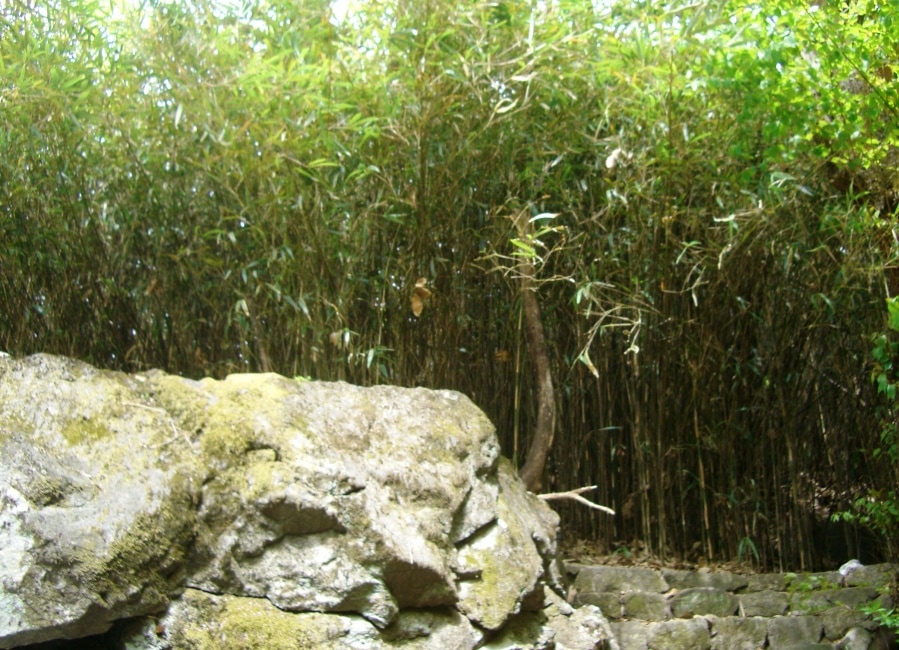
| Above that, a luxuriant stand of thin-shaft Bamboo -- rare to find this far north in Korea! |